

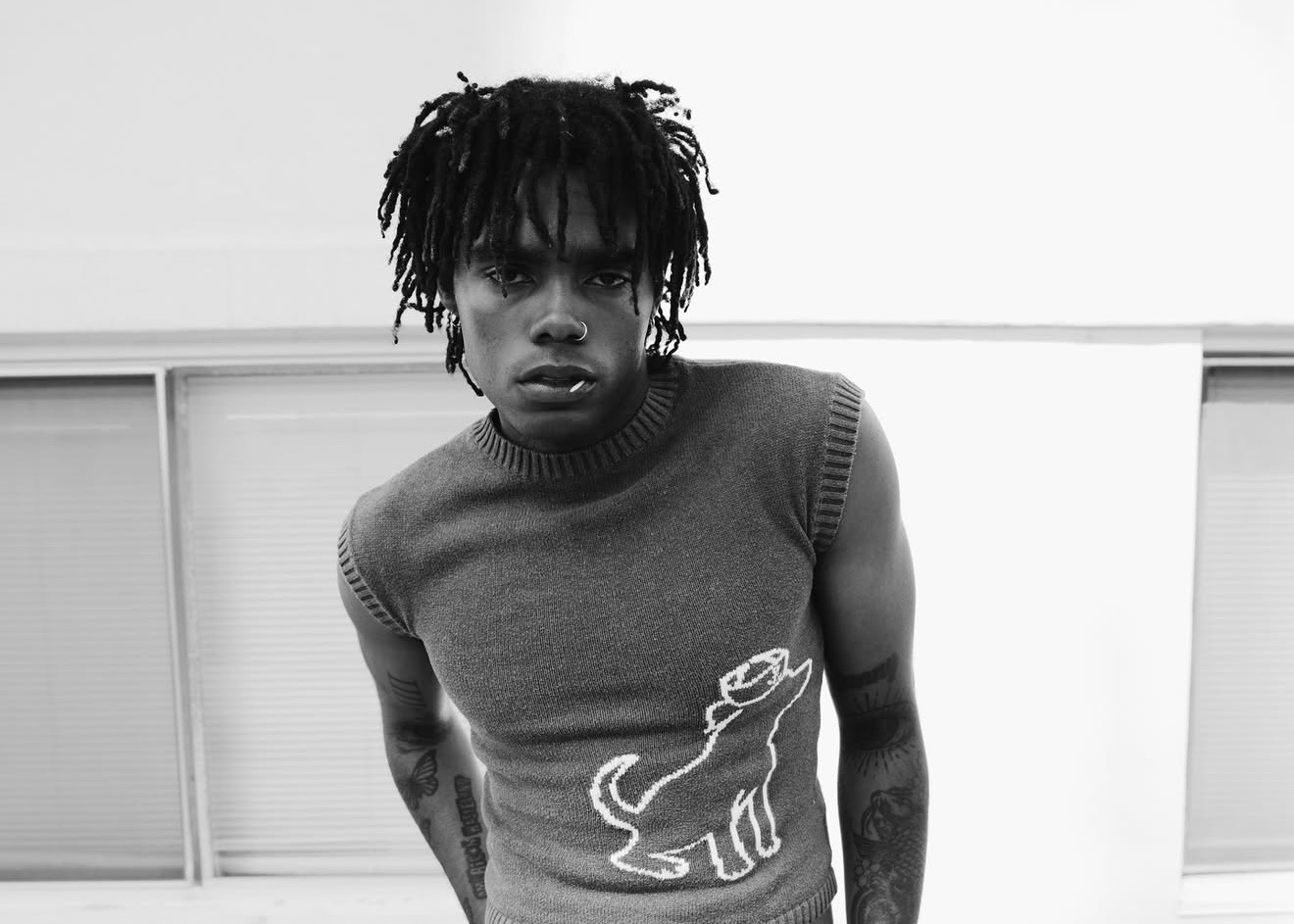
Carver Jones: 8, a Sonic Scrapbook & Rejecting Genre
Sometimes taking a chance on a passion can lead you to where you’re meant to be in life. This is arguably the case for Carver Jones, a 22-year-old singer-guitarist and songwriter from Omaha, Nebraska. Before taking a chance and pursuing music full-time, Carver was a star basketball player and had even received an offer for a college scholarship. Taking a gamble on your passions became a theme of Carver’s life. After choosing music, he began traveling across America in a van with a few of his friends, busking for people on the streets.
.jpg)
MB: What were your origins with music, and what did it look like being a musician in Nebraska? How was that time for you?
Carver Jones: I started doing music when I was like, 18. Prior to that, I played sports in high school, and that was more my thing. I always loved music…my dad always had a whole bunch of guitars around my house. So, it was something that was always there, but I didn't really take it seriously until I was 18. From there, I left Nebraska, actually. I was living in this van, doing this van life thing, street performing. That's when I started writing music. I guess when it comes to the Nebraska music scene, I was getting started in other places and then, as I got into it, I'd go home, and we'd play shows- college bars or wherever we could play and practice. It really started on the road.
MB: When you perform in front of audiences now, what would you say has changed in your approach compared to your van days?
Carver Jones: I think that it's a different thing when there are people in a room. Now I'm doing opening slots where I’m having to win over crowds that don't know who I am. It's a lot different when those people come to the venue to hear music, rather than being on the corner of the street and trying to win over people when this wasn't part of their day. Actually being inside of a room with music fans makes it a lot easier.
Busking was also really cool because there's absolutely no pressure. It was just like, I'm here, and either they like it, or they don't.
It’s in this busking and van era of his life that Carver found a new musical home in Nashville, Tennessee. He released a trio of EPS, AMERICAN DREAMERS Vol 1-3, and began to explore his sound; it’s guitar-driven, groovy, and tinged with rock band nostalgia. Notably, the American Dreamers is also the moniker used to describe the trio comprised of his friends, collaborators, and band, with Alec on bass and visuals and Max on drums.
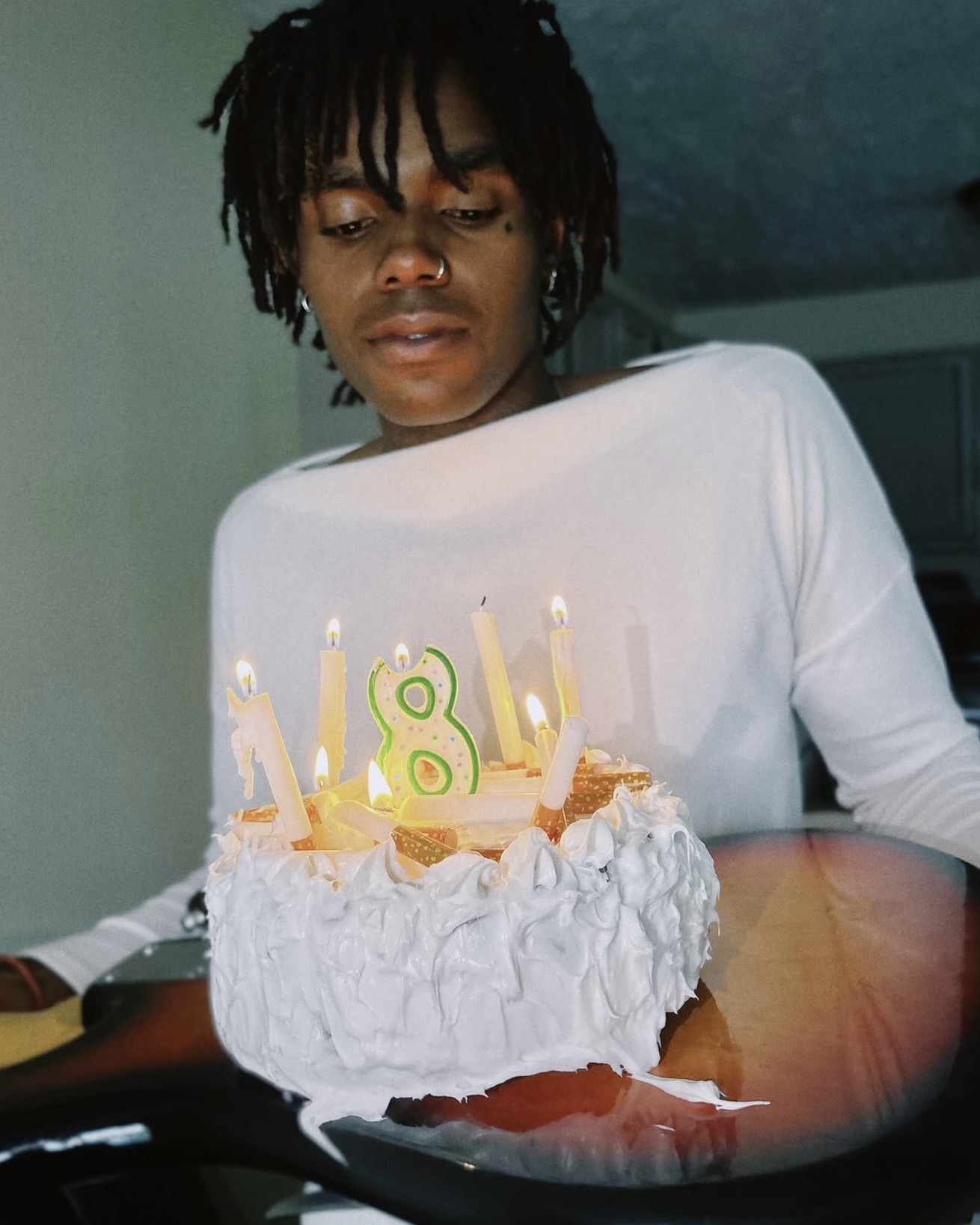
Jones often describes his music as a sonic scrapbook, a looking glass into the time period and experiences he had during its creation. A live album feels like a natural progression due to this, given the significance of performing in his career. So, LIVE FROM MOHAWK: AUSTIN, TX follows. Jones and his band spent 2025 traveling and putting on many performances; they markedly opened for 54 Ultra that fall. The sonic scrapbook needed a new page, but it wasn’t coming that easily to Carver to write. He was working on a project titled Hazard that he couldn’t make sense of. Ultimately, he released his EP 8 in July of this year. Jones credits the existence of 8 to a pursuit of genreless music-making. The EP is a blend of Indie-Rock, Pop, and R&B elements, and it exists in a realm of its own.
MB: So, Let's talk about 8. What do you know now, with 8, that you didn't know when you were making your earlier projects, the American Dreamers projects and CARV?
Carver Jones: I think I've always been like very, very, unintentionally genre fluid. I was always mixing multiple genres into these projects, but I think I was, maybe less aware of it. There's always been songs that I was like, oh, that's maybe too much of a rock song or sounds too R&B. With 8, I just leaned into that completely, and I was trying to take kind of the most, R&B song, and then the most, rock sounding song, and then something that's pretty pop sounding, and put them all together on one thing. That's what I know now: leaning into it instead of shying away from it.
MB: You have a very interesting view when it comes to music genres and how you'd approach using them for your own music. Can you tell me about that and the importance of genre-bending and the creative process?
Carver Jones: I think right now it's very important; a lot of people are listening to so much different music, where it's not just like this particular person listens to rock, this particular person listens to rap, this one listens to folk. It’s all so connected…with the internet, and the way that people interact there, where genre means less, especially to younger generations. I think that that's probably why it's important right now.
It’s really cool that the same kid that's listening to The Rolling Stones and The Chili Peppers is also listening to Future and Drake and Amy Winehouse; it’s all of these mixes of things. I think it's cool.
Jones raises a good point. It was common for past generations to be more strict when it came to the music they listened to, with some even swearing to never expand their tastes and venture outside of what they liked. The rejection of genre is arguably growing in popularity in younger music fans, and it’s amazing to witness those effects on the artists creating music as well.

MB: What does 8 mean to you, conceptually and sonically, and what do you hope people take from it?
“I think to me, 8 just means clarity and understanding who you are, and being kind of completely okay with that. Not trying to neglect any side of you to highlight another side.”
Carver Jones: Honestly, to me, it was really just this thing that I kept saying and running into. I was working on a different project called Hazard, which was pretty rock and roll. Very Chili Peppers, Soundgarden, very heavy. Nothing was coming easy; it was all really hard, and I kept running into this number 8. I had really odd dreams about it, and it just seemed to be following me wherever I was going. I was doing more research on the number and how it means change and transformation, all these things. Then I just was like, oh, maybe it should be 8. It all just made more sense. I think to me, 8 just means clarity and understanding who you are, and being kind of completely okay with that. Not trying to neglect any side of you to highlight another side. It's just clarity and honesty and truth, really. I hope that that's what people take from it. It's just me being me, and I think that's something that a lot of people can recognize within each other. Everyone can just be them at the end of the day and do what they love. I think that's what 8 is.
MB: What does world-building and storytelling with visuals mean to you when it comes to your music, and how did you go about creating the world you did for 8? What were your inspirations with it?
Carver Jones: Whenever I make a song that I really, really, really love, or if I'm actually actively in the studio, it’s like I can watch the music video [in my mind] as I'm making the song, to help me make the song. The visual side of it is really, really important to me, knowing exactly what this looks like, exactly where the song could be played. It's something that I don't consciously think about all the time. I'm always on Pinterest, or at the thrift, or watching a movie, or getting a recommendation from my friends. All of these combinations of things I'm taking in come out through the music and the visuals. It’s all me digesting everything that's coming to me in my own way. It's super important. I love shooting a music video and figuring out the whole concept. I think it's almost as fun as actually making the song.
It’s apparent when listening to Carver Jones that he has a knack for rock elements and guitar-led melodies. It’s only natural to wonder what his favorite records are, and where exactly he takes inspiration from.
EAR CHECK
MB: What songs and albums were most pivotal to you growing up? Would you say that they also shaped your sound today?
Carver Jones: Michael Jackson's Bad. The whole record was super important to me as a kid because we had all the music videos on CD when I was young. My brother and I would just sit there and watch them on repeat. That was the first time I ever saw something that was like the coolest thing you could ever do; it didn't seem like a real thing. That was a big one when I was really young. As I got older, though, John Mayer was always big for me. I grew up just like my dad being a blues fan, so seeing somebody that was mixing blues and also pop music and then also like rock. And it was taken widely by the masses. I always thought that was really cool. So, John Mayer has always been big. Prince, when I was young, those were like the two that stuck out for sure. I had the same experience, honestly, with Michael Jackson. I had his music videos on CD and just watched him on repeat, honestly. I feel like it's a thing most kids have, especially when, at the time, YouTube wasn't really that popping, and we didn't just have YouTube. So we literally just had music video CDs [where] you open it, and it's like 30 books of CDs. It was crazy, but super cool.
MB: What songs and albums were you most inspired by while working on 8?
Carver Jones: I've been listening to a lot of Lenny Kravitz at the moment. His Circus album. I think it's really, really cool. I was listening to a lot of D'Angelo at the time. Still I am. I would say Prince as well. The Most Beautiful Girl in the World specifically is a song that I love. If I had to pick 3, I'd go, Lenny, Prince. D'Angelo. But also, my classics. I'm always listening to Peppers and Radiohead and Jeff.
MB: Are there any artists you'd say you pull from or feel the most inspired by?
Carver Jones: I would say really just a mix of all those people. It's constantly changing though. There are moments in artists' careers that I pull from that, I think, are just so cool that I’ll keep going back to. There's Prince live in Syracuse,1985. It's something I'm always watching and listening to. That's a super inspirational thing. There's this Lenny Kravitz documentary that I found on YouTube randomly. It's called Live from Planet Earth. It’s like an hour and 45 minutes of just vlog-style stuff, but in the 90s, it's super cool. I think I'm always pulling from that. I think it's just a mix of everything I love.
MB: Top 5 or 5 to 10 albums of all time?
Carver Jones: Grace, Jeff Buckley. Miseducation of Lauryn Hill. Bad Michael Jackson. Californication. Purple Rain.
MB: What's next after you've released 8? What's to come for the rest of the year and beyond?
Carver Jones: Continuing to make music, I think that's always the number one priority. Getting back and finding songs that move me enough to actually want to put them out. Staying on a stage, playing shows, wherever I can. I'm sure there'll be another project, and I'll figure that out. Right now it's really just trying to make good songs, and then putting them on the stage for people.
When Carver Jones does write another page of his sonic scrapbook, it’s sure to be as captivating as each of the last. Until that time comes, he’s spreading 8 and its message far and wide; bringing things back to the beginning by performing on stage, the place he was always meant to be.


Comments
Loading comments…