

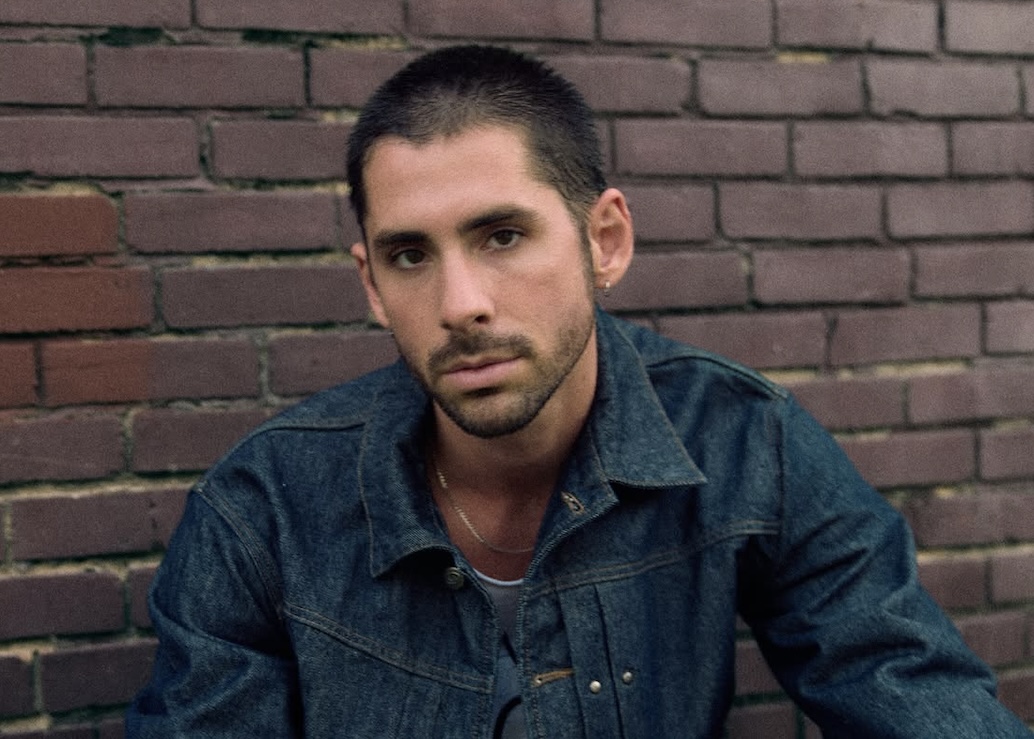
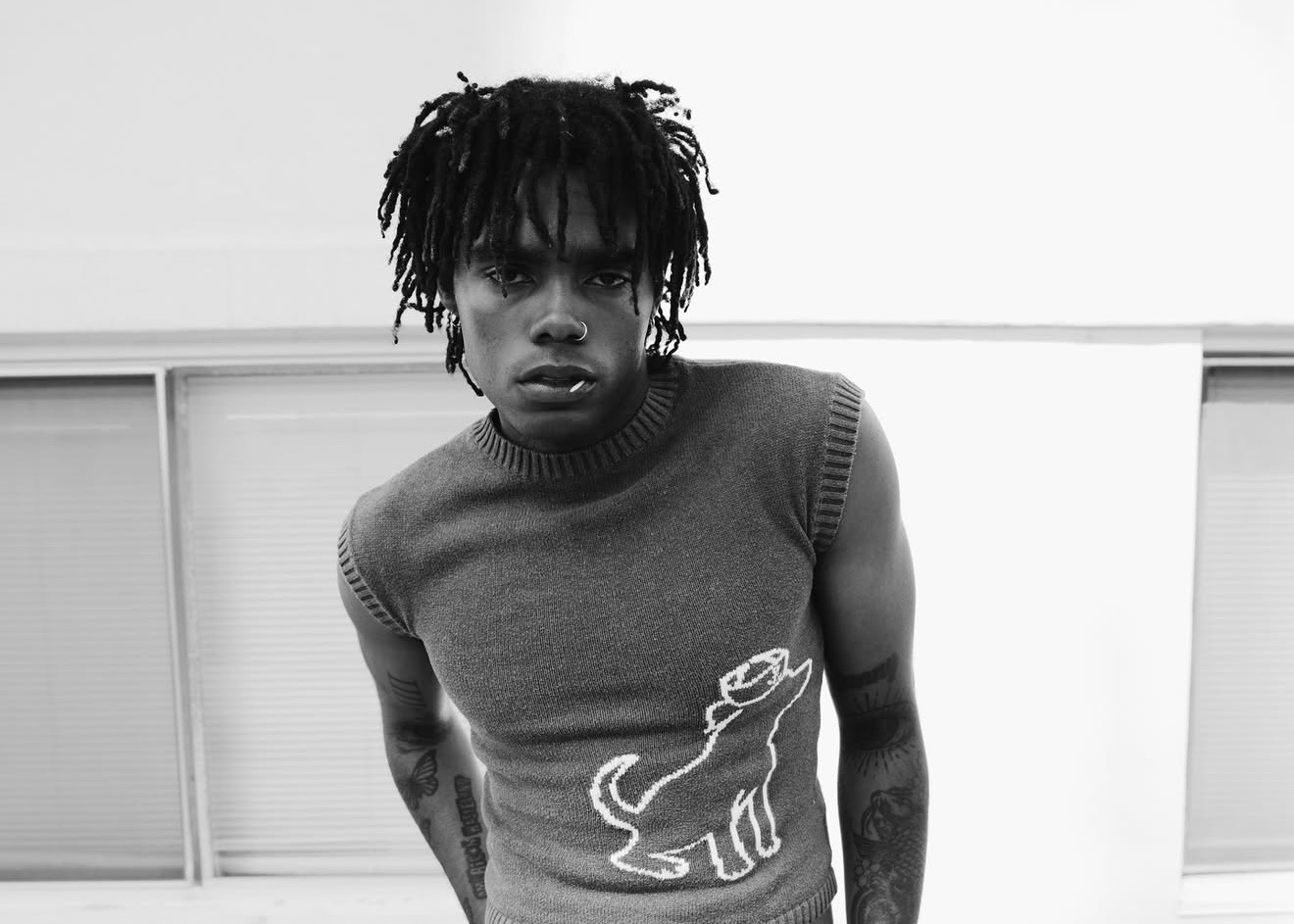
Mack Keane Is Wide Awake
The Los Angeles singer, songwriter and producer has spent years making things for himself, by himself. On Wide Eyed, the record he calls his real debut, he finally let other people into the room.
Mack Keane has somewhere to be. "I'm literally about to go work on some music after this," he says toward the end of our conversation, and he means it the way a runner means it when they say they're going for a run. He has just come off a tour for Wide Eyed, an album that took three years to write and that he has been living inside for most of that time, and the thing the road left him with wasn't exhaustion. It was appetite.
That is the thing to understand about Keane. He is a lifer. He was making beats on GarageBand in middle school, went to music school in New York, and has built a quiet second career behind the boards, with production and writing credits alongside Omar Apollo, UMI and Destin Conrad. He has put out projects before. And still he keeps calling Wide Eyed his debut, which lands less like a marketing line than a confession: it is the first record he made with anyone else in the room.
To understand why that took so long, you have to start with the house he grew up in. Keane was born and raised in Los Angeles, the son of a mother who taught at a performing arts center and a father with a home studio and a rotating cast of musicians moving through it. It sounds idyllic, and mostly it was. It was also a house where you could not get away with anything.
Let's start with LA. How did growing up there, and the background you came from, shape you as an artist?
Being in that kind of environment where support of the arts at the public schools I was growing up in really shaped my education for singing, performing, dancing, music, music history, too. I was really blessed to grow up in a place, in a community, with people that were very passionate towards the arts. My mom taught at a performing arts center, and my sister and I took dance there when we were little kids. My dad had a home studio growing up, and he worked with a bunch of artists from all different kinds of genres, and he was a musician himself, so I was raised in this environment. It was good, it was bad, it was up, it was down, it was very emotional. When you have very creative parents, it's a very emotional family, but it was amazing. I was actually just thinking about it earlier today, how blessed I am to really appreciate the craft because of where I'm from, because of my upbringing in LA. I really had to work at the craft and train for years. I feel like I got to love it because of all the teachers that I was able to have because of these arts programs that I got to go to in LA. I think that was really, really cool and really special. So, it definitely shaped a lot for me.
You see celebrity culture so differently [too] when you're growing up in LA. It's like, oh, that's just a job. I don't really see them as these gods. I just kind of see it as people that inspire me to be the best artist that I can be, and they put in a lot of work.
So I want to also put in that work, too, and discover what else it could bring out of me. The perspective is a little different when you're inside the belly of the beast, instead of being on the outside. I really early on got to see things for what they were and got to decide what matters to me.
You grew up in a very musical household. Did that make it easier or harder to become the artist you are now?
Honestly? Really both, because it felt like growing up in that household, you can't fake it. I had my whole family being like, "Oh, smile, you're flat. You need to, if you smile, you'll lift your pitch when you're singing." I'm like, dang, it's not like I could just be ignorant and not really care about the pitch. So, in some places it was hard because when you're a kid, you wanna get good, you wanna be good. It's all out of love. It's hilarious how I would do shows, and when I was in middle school, my dad could be like, "Yeah, you're good, but you're a little flat right there, you know. You could…if you do this," I'm like, oh, thanks. Sometimes it's funny because it was hard. I think it made the process longer because I really cared about it and I never wanted to fake anything because I knew how much it meant. It made me take my time because I felt it on a different level; it took time for me to really find my place in it even though I love the craft. But I was like, okay, well, where do I fit in?
Tell me about the early days of producing and writing. How have you grown since then?
I was making beats in middle school. At the time, it wasn't as accessible. I was just using GarageBand. I was just having fun back then; I wasn't thinking about whether it was good; it was just free creativity. I'd even go back to some of that stuff, and I'm like, dang, I wasn't even caring about structure and the parameters of songwriting. So in some ways, that was really, really cool. I didn't know as much, so it was a little lighter and more fun, but as I got older I really started understanding what it meant for me. I went to music school in New York, and I started meeting so many other artists that were doing the same thing as me. It really broadened my lens because in school I was one of the only people producing my own music and making beats and singing. Then you go to college and performing arts school, and everybody's doing the same thing. That was a really great experience because I was like, oh, I need to study my game. So I started learning more musical history from my classmates and teachers. I did get better at piano, singing, and discovering more with my voice. I just started to learn more, and I got better and better. It's funny because the more you know, it's almost more difficult to come out with something. You're way more attentive and intentional and creative. So as time went on, I became more intentional with what I was creating. Now I'm at this space where I definitely feel like I know myself way more. I feel good now.
That growth is audible. What separates Keane from a lot of singer-songwriters in his lane is that he hears the whole record, not just the top line: the instrumentation, the arrangement, the way a drum sits under a vocal. It's why other artists keep calling. I wanted to know whether writing for someone else feels like a different job.
You also write for other artists. Do you approach that differently from writing for yourself?
Yes and no, I think. Sometimes I write songs for me, and I'll have them, and I'll just present it to the artist and be like, look, I don't know if I'm gonna do anything with this; what do you think? Most recently, Ambré put out "The Art of Letting Go"; I did that song. It was kind of a B-side; it was potentially gonna be on Wide Eyed, but we weren't sure. I showed Ambré, and she loved it. I was like, okay, I think you should put it out. So it's things like that too, where I'm just kind of making music. If the song is good, the song is good, you know? But there are times where I'm going in for specific artists, and they're looking for this, and I'll kind of put my head in a different space, which is fun too, because it's a little less personal. But yeah, it just depends.
Let's talk about Wide Eyed. It isn't your first project, but you've said it feels like your debut because of how differently you made it. You went from working mostly alone to bringing in collaborators. What did that shift teach you?
To trust other people. To be a good leader, you have to trust other people.
I think that's really what I learned, and I was trusting other people when recording my vocals. I predominantly like to go record myself all the time, and I trusted somebody else to record me and help me with some songwriting. Letting my team do their job. I always have a hand in it, but just allowing people to do what they love to do, and not be a helicopter mom about it. Trust them, and [knowing] they're gonna get it done and I'll see it. And it was great. It was just like a family. When you're in a space like that, there's a lot of love and excitement altogether, and everybody gets to play a role, like a movie, and we're all excited about it together. I think that team mentality and camaraderie feels so much better when the music's out. In terms of a debut album, it's the first time I would say this is an album, whereas other things were kind of just playlists. The entries project was really like a mixtape to me: short songs, short journal songs, and ideas of self-productions that I did. But Wide Eyed to me is full-length.
Most of Wide Eyed was written over three years, in something close to real time. Keane describes the songs as journal entries; writing, he says, has always been an easier way to explain himself than talking. The process, as he lays it out, sounds less like composing and more like catching something before it leaves the room.
"I'd talk about something I'm going through with my friends that I trust, who I'm making music with, and we kind of just catch the feeling, and I start singing something, improv. It sounds like I'm saying something; the emotion of the song kind of comes through, and it might make me think of a memory, and I'll latch onto that. Or maybe I'm alone, and it's just what I'm feeling, and I just kind of go. It's interesting how it all happens. 'Cherry Red' all happened in a day, the whole song. The second verse we wrote first, which is interesting, and it kind of gave way to the whole thing. The story is my story, but I think I improvised 'Cherry Red,' and we were like, ooh, let's rock with that. I think the chorus kind of came."
Is there a song on the record you're proudest of?
It changes. I mean, I'm proud of all of them. I really like "Cherry Red," I will say, because it was all in a day. The way it all happened informed how I want to make music, honestly, going forward. It was very live, very free, very away from the computer, and it brought me back to myself. When I was a kid, I wrote everything on the piano, on paper, just the lyrics on paper, no computer. It reminded me to just take it back to the basics: let's write a song. It really informed me to go off of that again, and that turned into "Bloodshot," which I'm also really proud of because that came together in a day as well. It was started with me on the piano, from another voice memo, brought it to the guys, and we just made it. I guess "Cherry Red" really started how I wanted everything to go.
"Cherry Red" did more than set the tone. It sent Keane back through the record. "Ordinary Feelings," "Shadows" and "Never Easy" had all been built with Keane producing alone; after "Cherry Red," he brought in more musicians and producers and rebuilt them live, top to bottom. "It just brought out a whole different life," he says. "I wanted it to feel very human." You can hear it. The instrumentation on Wide Eyed breathes in a way programmed music rarely does, and at a moment when the human part of making art feels increasingly negotiable, the choice reads as a small act of defiance.
You just wrapped a really successful tour for the record. Congratulations. What did it teach you about performing?
It's such a relationship between me, the performer, and the audience. Going into the show, you know every audience is going to be different. Starting to tap in with yourself and go on stage and quickly feel out what the energy of this crowd is, and how can I engage them? How can I hook them in? How can I make them feel free? How can I make them feel seen by me as well? So I think that's what I learned on this tour: connecting with the fans and the people there to make them feel included because I'm just as excited that they're there as I am on stage. I really learned to connect with them in real time and discern what they're feeling.
If performing is one half of the exchange, the other half is what it gives back. For Keane, touring is where the circle closes on a project. It fills in the gaps, and it makes him want to go make another one so he can do it all again.
"As an artist, it puts gas in my tank. By the end of the album cycle, you put the album out, you're doing the rollout, you're doing the creative, social media, you're drained. Then it's like touring puts the gas back in the tank to be like, you know what? I want to make another album because I want to go on the road again."
The insistence on things feeling alive followed the album onto the stage. To build the live show, Keane got back in a room with the band, the same players who had helped write and produce the record, and jammed. They played the songs through, found new pockets inside them, and after a week of that, programmed a few of the original recorded elements back in, landing on a hybrid of the album and whatever the room had turned it into.
What was your favorite show, or moment, from the tour?
I loved LA because being from LA is special. I think LA crowds can notoriously be pretty stiff, and I would say it was the opposite. It was very, very energetic in the room, and the encore was really fun there. There was this moment in "Cherry Red" that was really special. Toronto was really special. I really, really liked Toronto. It was kind of the first time I was, like, man, are people gonna be in the audience, 'cause I've never done a show in Toronto. So to see everybody there when I stepped on stage and how they were excited. There was this moment where I finished the show, and they were calling for an encore. We didn't plan any encores because I'm kind of like, I don't want to save the best song for the encore. Let's just do the set, and if they want something, we'll figure it out. That was the first time we got to figure it out on stage and ask them what they want to hear. So, LA and Toronto maybe. I liked them all, to be honest.
What's next? Is there new music coming?
I'm already working on an album; I feel very inspired right now, especially after the tour and this project. I'm literally about to go work on some music after this. So, yeah, we can expect new music, more shows, some visuals. That's what we're, we're doing.
He isn't being coy. Asked if there's anything he wants to say to the people reading this, Keane keeps it simple: "I hope you guys listen to Wide Eyed, and I have more music coming soon. I hope you guys like the music, and definitely listen to Wide Eyed before anything else." Then he's gone, presumably to the studio. There's gas in the tank.


Comments
Loading comments…