


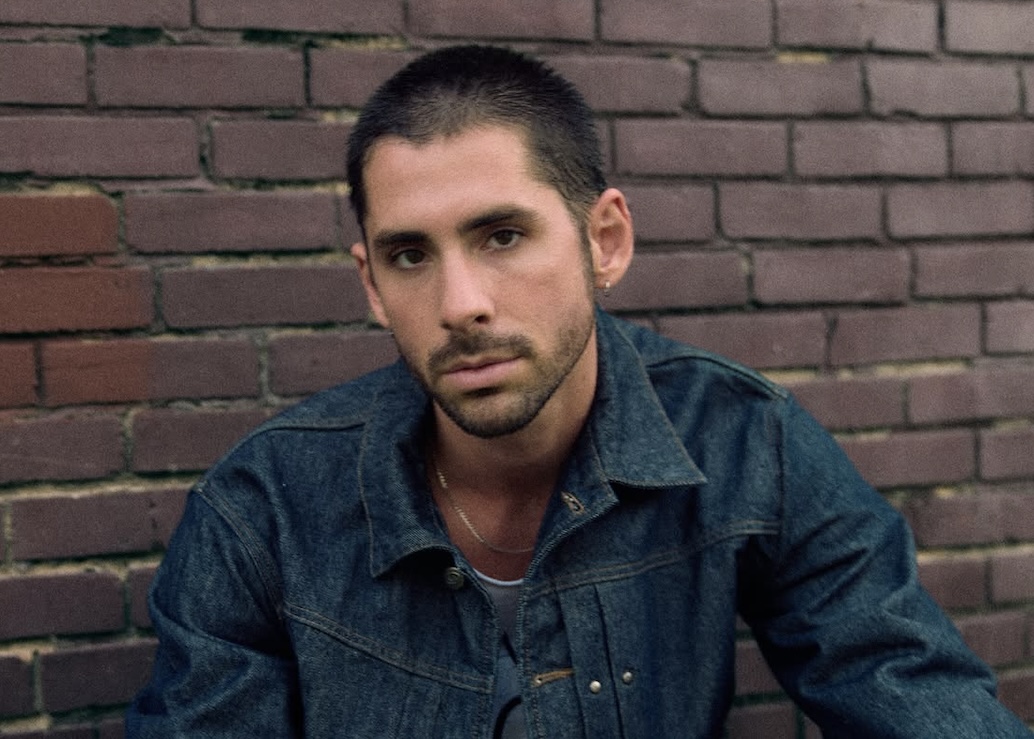
If Cautious Clay were placed in the NBA player-comparison discourse, his counterpart would easily be Jeff Teague. Not because of a shared 3-and-D play style or elite court vision (we'll get to that later). Nah, it's because, like Teague's endless stream of firsthand NBA stories that somehow involve him, the Cleveland-born singer, songwriter, producer and multi-instrumentalist seems to have found his way into every room in music. His résumé stretches from early connections with pop juggernauts FINNEAS and Billie Eilish to a contribution to Arooj Aftab's critically acclaimed jazz-fusion odyssey, "Night Reign," and a collaboration with hip-hop-soul legends Q-Tip and Raphael Saadiq as part of his "The Hours" trilogy. Cautious Clay is everywhere. His chameleon-like ability to move seamlessly between scenes has made him one of alternative music's most quietly connected players, all while playing the game on his own terms.

His latest solo effort, "The Hours: High Noon," marks the final chapter of the series. Where "The Hours: Morning" basks in early light and "The Hours: Night" chases after-hours plots, "High Noon" occupies the midday melancholy: the stretch when the day is fully in motion and so are your thoughts. Each of its eight songs is assigned an hour between 1 and 8 p.m., turning the afternoon into its own shifting soundscape. The album's opener, "Green Screen (1 p.m.)," introduces the record's bright palette and laid-back soundscape with a reggae-inflected groove.
Clay's path runs from classical flute lessons and Cleveland jazz sessions to SoundCloud remixes, high-profile songwriting rooms and a full-time career sparked by the breakout success of his single "Cold War." His latest release finds him in a reflective yet comfortable creative zone.
As for basketball? It is the hobby that gives him space to sweat, reset and build community when being a musician threatens to consume every hour. In conversation, Cautious Clay breaks down the musical education behind his genre fluidity, the inspiration that shaped "The Hours" and why, when he has a few extra hours to spare, he's somewhere getting shots up.
Medicine Box: You were born and raised in Cleveland, an underrated music city with deep roots in rock, jazz and funk. How did Cleveland shape you as an artist?
Cautious Clay: In the Midwest, I was exposed to a distinct level of musical taste from an early age. People forget that Ohio might have invented funk music. There is a deep musical history in Ohio and Cleveland. I started playing flute when I was 7 and had an incredible teacher from ages 7 to 9. I reconnected with him a few years ago, and he lives in Brooklyn now. He was very influential to me as both a musician and a creative. Cleveland also has a robust classical and jazz scene. When I was 12 or 13, I would go to jam sessions and play saxophone with older musicians at bars. My parents also had incredible taste in music. Their tastes complemented each other, but they were different. I heard everything from Luther Vandross, Carole King and Chaka Khan to the Great American Songbook and heavy jazz. My dad would play "Kind of Blue." I did not like it at first, but I knew there was something interesting there. I was exposed to a ton of music.
%20is%20out%20now.%20What%20a%20nebulous%20time%20of%20day%20to%20be%20vulnerable.%20Runnnitttt%E2%9C%A8%F0%9F%AA%88%F0%9F%87%AF%F0%9F%87%B2%F0%9F%87%B1%F0%9F%87%B7%F0%9F%AA%88%E2%9C%A8.jpg)
Medicine Box: Your mother is half Liberian, and your maternal grandmother was Jamaican. Were you exposed to much Liberian music growing up?
Cautious Clay: Not really. My mom grew up very much within Black American culture. Her parents were immigrants, but she was primarily raised by my grandmother, so there was not much opportunity for her to learn about Liberian music. I have reconnected with family members who live in Liberia, but I still need to ask them more about the music there. I explored parts of that family history on "KARPEH," which was inspired by my family's story and my grandparents' relationships. My grandfather was Liberian, and I am technically Kru. The Kru people span parts of West Africa, including Liberia and Côte d'Ivoire. Those communities predate national borders, so there is a lot of cultural overlap across countries.
Medicine Box: Flute was your first instrument. What was your early classical training like, and how did it shape the way you understand music?
Cautious Clay: I started playing flute when I was 7 and took private lessons. My teacher introduced me to Handel, Mendelssohn, the Suzuki method and other things you learn in classical training. I could read music, but music came so naturally to me that I often learned by ear. He would play something, and I would play it back. Reading sheet music took me longer, so if I could hear something, I would rather learn it that way. For a long time, I thought that meant I was not smart because I processed information differently from many people in classical music. In reality, reading music simply was not the fastest way for me to understand it. My ear is very strong, and that lets me interpret music at a high level. I can talk to someone with extensive theoretical knowledge and confidently say, "That note should change." My relationship with music has always felt natural, fun and exciting.
Medicine Box: How did that classical foundation intersect with your interest in R&B, pop, jazz and electronic music?
Cautious Clay: I found writing music fascinating because it felt like a new frontier. My first three CDs were Creed, the Isley Brothers and Lil' Bow Wow, so my taste was broad from the beginning. In my teens, I became obsessed with jazz after watching Ken Burns' documentary series "Jazz." I learned to play saxophone for jazz band when I was 15. Around 17 or 18, I got into electronic music, dubstep and Skrillex, then moved into the SoundCloud world and artists like Kaytranada. That led me to making beats.
I was a musical sponge. My influences range from Eric Dolphy to Kaytranada to Hilary Duff. I would take the parts I liked, internalize them and let them guide me creatively. Eventually, I realized I did not want to become a Chris Potter-level saxophonist. I love saxophone and creating melodies on it, but I did not have the discipline to master one instrument. I wanted to be good enough to get my ideas out. Creation was always the end goal, and that is what led me to where I am now.
Medicine Box: When did music shift from something you pursued alongside work to your full-time career?
Cautious Clay: It happened after college. I graduated from George Washington University in Washington, D.C., and worked there for a year before getting fired. I immediately moved to New York and found another job in real estate advertising sales. I stayed there for about a year. During those two years after graduation, I had built an audience of about 20,000 followers on SoundCloud through remixes and production work. While studying abroad in London, I messaged MNEK and told him I played flute. I ended up playing on his song "In Your Clouds," and he paid me about $600. That was one of the first times I made money from music. People also began paying me roughly $500 to make remixes. After moving to New York, I started writing my own music and recording my voice. I had connected with Billie Eilish and FINNEAS through SoundCloud, and that world eventually helped connect me with the manager I still work with. I did not know anything about the music industry, but I decided to see where it could go. Then I released "Cold War," and it took off through Hype Machine. Spotify noticed that momentum, and things grew from there.

Medicine Box: Across "The Hours" trilogy, each of the 24 songs represents a different hour of the day. How did you translate specific times into the soundscape of each track?
Cautious Clay: Every hour has a distinct feeling to me. It is similar to how you might have oatmeal or eggs for breakfast, then pasta, lasagna or jerk chicken for dinner. Those choices help define different parts of the day. You probably are not eating jerk chicken in the morning, although you could. Music works the same way for me. I want to hear certain things at certain times. I kept asking myself, "Does this sound like 1 p.m.? Does this sound like 2 p.m.?" I was trying to turn something completely subjective into an objective sonic landscape. The trilogy gave me a fun framework for writing about what happens at different times, how people feel and the energy each hour carries. I am a night person, so "The Hours: Night" was the most fun. "The Hours: Morning" is softer and slower. "The Hours: High Noon" feels more focused, with midtempo and reggae-influenced moments. Songs such as "Green Screen (1 p.m.)" and "Trail Mix (3 p.m.)" have a little more bounce.
Medicine Box: Why did you save "The Hours: High Noon," the daytime chapter, for the end of the trilogy?
Cautious Clay: That was always the plan. Morning and night were easier for me to define because their contrast is so clear. They are the yin and yang of the day. The afternoon is more nebulous. I had to ask myself, "What does that time actually sound like?" It took longer to conceptualize, so it made sense for "High Noon" to come last.
Medicine Box: On "The Hours: Night," "5th Floor (10 p.m.)" brings you together with Raphael Saadiq and Q-Tip. How did that collaboration happen?
Cautious Clay: Raphael and I mostly produced the song together. We spent a couple of days writing at his compound in North Hollywood. It was an incredible experience. I also met No I.D., who shares a studio there with Raphael.
Then Q-Tip jumped on the record, which was crazy because he does not do many features. I did not expect it. He is one of my favorite artists, so I was honored to have him on the song. The energy was great, and I love that record.
Medicine Box: You recently organized a basketball tournament tied to the album. Why has basketball become such an important outlet for you?
Cautious Clay: I really hoop. As I have gotten older, I have realized I need hobbies. I cannot do music all the time, even though I am doing music all the time. Hobbies are a healthy way to build community, spend time with friends and meet new people. Basketball makes that easy. You can pull up to almost any court and find a run. All you need is a ball and some shoes. It also works with my schedule and my desire to move my body. I do not enjoy going to the gym, but basketball lets me work out while using my mind and thinking through the game. I decided to throw a five-on-five tournament with six teams and a prize at the end. It was connected to the album, and basketball is a daytime activity, so it fit "High Noon" perfectly.

Comments
Loading comments…