

The internet’s favorite robot
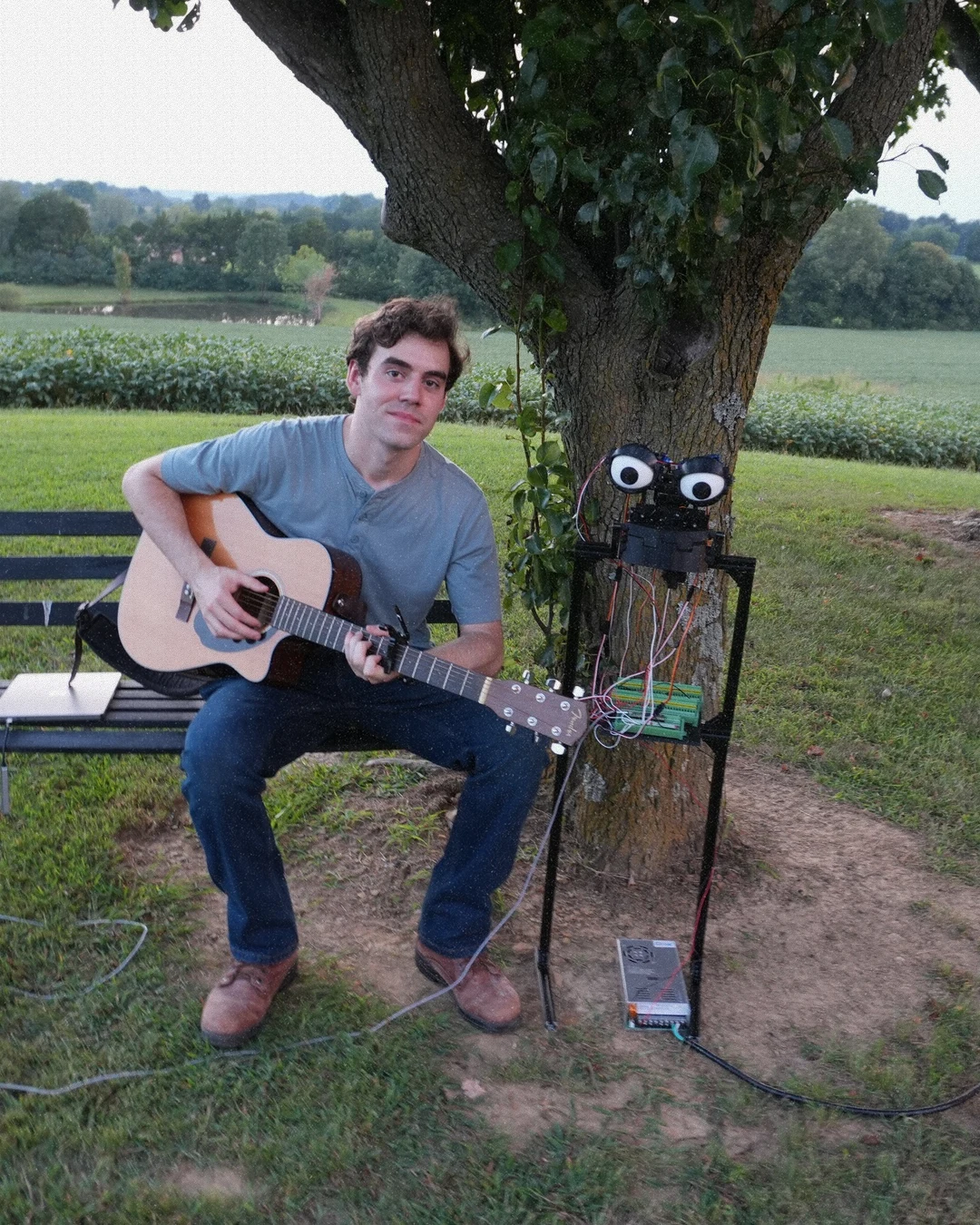
Somewhere on your feed right now there is a robot singing Frank Ocean. It has a mouth, two eyes and a neck, and it moves them in time with the music, and the voice coming out of it is sad and yearning. The audio is hauntingly addicting, which is the whole reason I reached out.
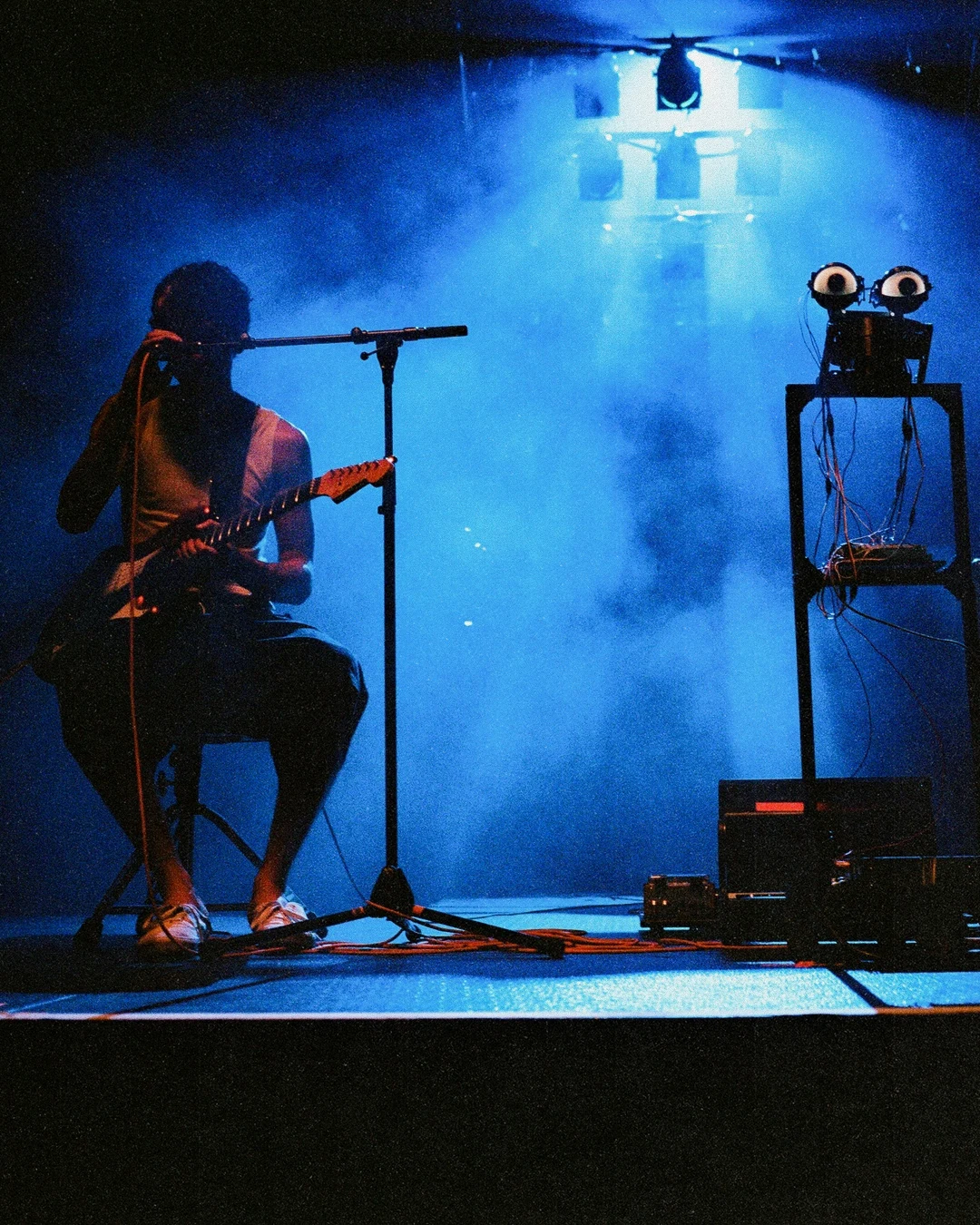
The robot’s name is Tobor, robot spelled backwards, which is also the name of the robot in Sharkboy and Lavagirl, which is why roughly half of the comments under any given video are people saying Sharkboy and Lavagirl. The other half are people asking him to put the full song somewhere. Lil Yachty reposted the Frank Ocean one. Dominic Fike liked a video before anyone on his team had said a word to him. Then his team reached out, and then Tobor was on a stage in Austin with Dominic Fike.
All of this is happening in a corner of the internet that, as a rule, hates anything with AI or robotics in it. Artists hate it. Listeners hate it. And yet under these videos there isn’t a single negative comment. I went looking.
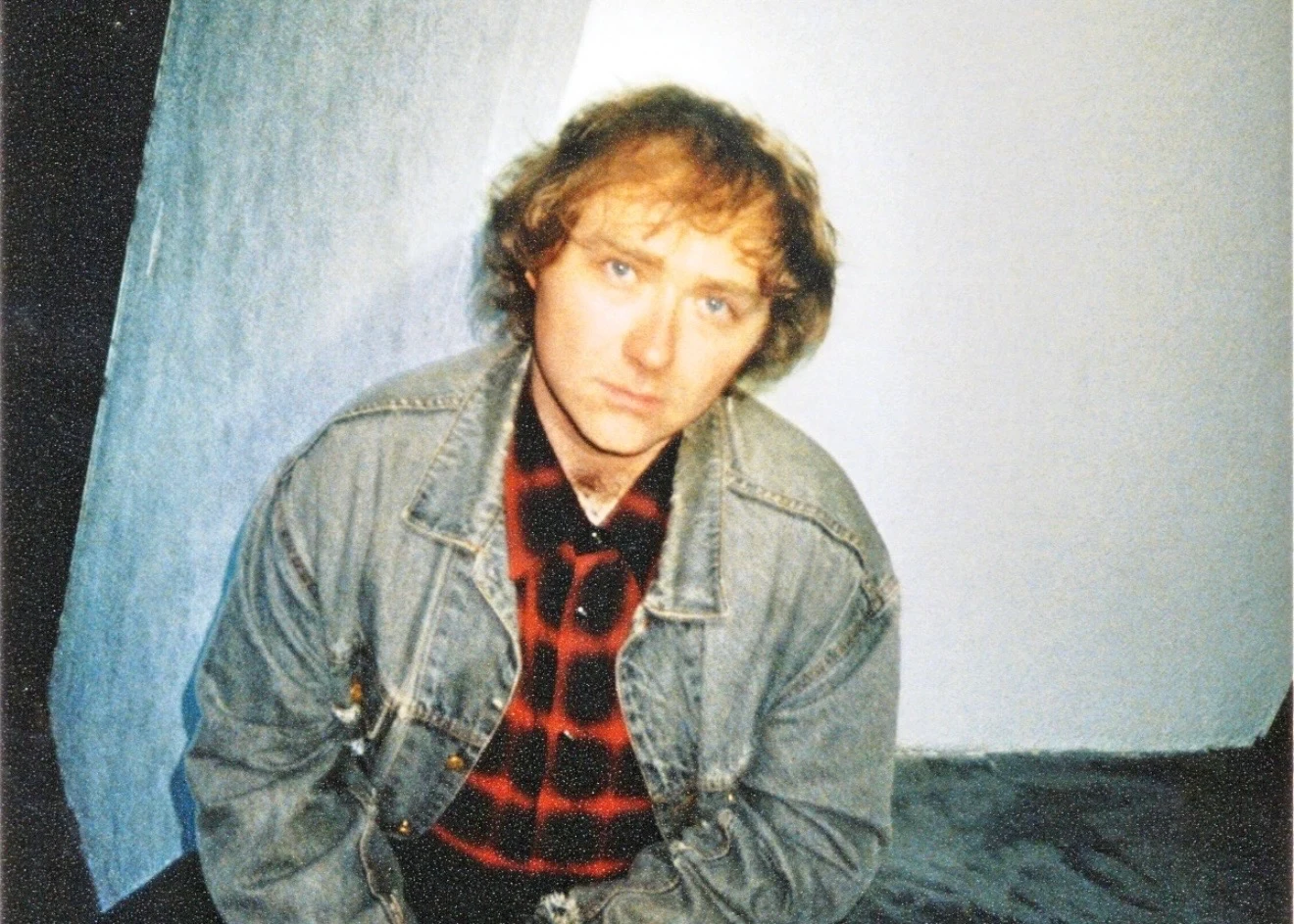
Dylan Skaggs, the person behind Tobor, is an electrical engineer in Kentucky who will tell you he is not especially good at music and not especially good at robotics. “I’m just a jack of a few trades,” he says, “and those just seem to complement each other.”
A jack of a few trades
When I reach him he is in a hotel room. He programs industrial manufacturing lines from home, and then his job sends him wherever the line is to load the program and make sure it runs.
He studied electrical engineering, and in school he did what he calls generic robotics stuff, including an animatronic hand he controlled with sensors. He liked the math well enough, but what he really liked was building things, which is not what his first job out of college asked of him. It was manufacturing, and in his words not super creative, and the job after that was even less so.
“You didn’t really get to express anything,” he says. “Of course it’s manufacturing, so it’s not really meant to be creative.”
He still had the longing, and he still had music, so he started posting guitar videos, which went nowhere. “I was a dime a dozen,” he says. The robotics clips did a little better on TikTok, and then he came across a guy in Ohio whose robots played guitar and drums and thought it was the coolest thing he had ever seen. It gave him ideas, one of which was an animatronic guitar that he still has and that still doesn’t work that great. It is, he says, still in the works.
Tobor was built about two years ago. Tobor singing over Dylan’s guitar, the thing people know him for, started about a year ago.
Someone at an airport recently saw him carrying his guitar and asked if he was a musician. He told them he wasn’t sure he would call himself that. He has since landed on a better answer. “I’m a hybrid,” he says.
“I’m half musician and half not.”
He has a degree in electrical engineering and will tell you, unprompted, that you don’t need one. “There’s so much on YouTube university that you can just learn,” he says. “Obviously it’s necessary to get a job in electrical engineering. But to build things, to be creative with robotics and technology, anybody is capable of doing stuff like that.”
He wants to make a video about this at some point. “You can just start now. You don’t have to wait until you get a degree. I played the waiting game before too.”
The gray area
Ask him why nobody is mad and he doesn’t claim to know.
“I also noticed that,” he says. “I don’t know if I got lucky or if I just got really nice people coming my way.” It isn’t AI, he will tell you that much.
“There’s no AI in it beginning to end.”
But he has never said so in a caption, and he doesn’t advertise it.
What he does do is leave the work out where anyone can see it. Scroll far enough down his page and you hit the build videos: him at a desk, actually putting the thing together. He calls them cringy. He left them up on purpose. “This shows me actually doing it,” he says. I told him people love the process too. He figured he would get a lot of comments calling Tobor AI, and he hasn’t gotten many. His guess is the page itself. The disclosure is the process, posted in plain view.
The truth is a lot of his audience already knows. On his second video ever, someone in the comments described the exact signal chain. “I was like, dude, you’re really good, because that’s exactly how it works,” he says. He replied and told them so. “It’s no secret. It’s just a process. And sometimes trying to articulate that process, I don’t know if it’s going to get lost in translation.”
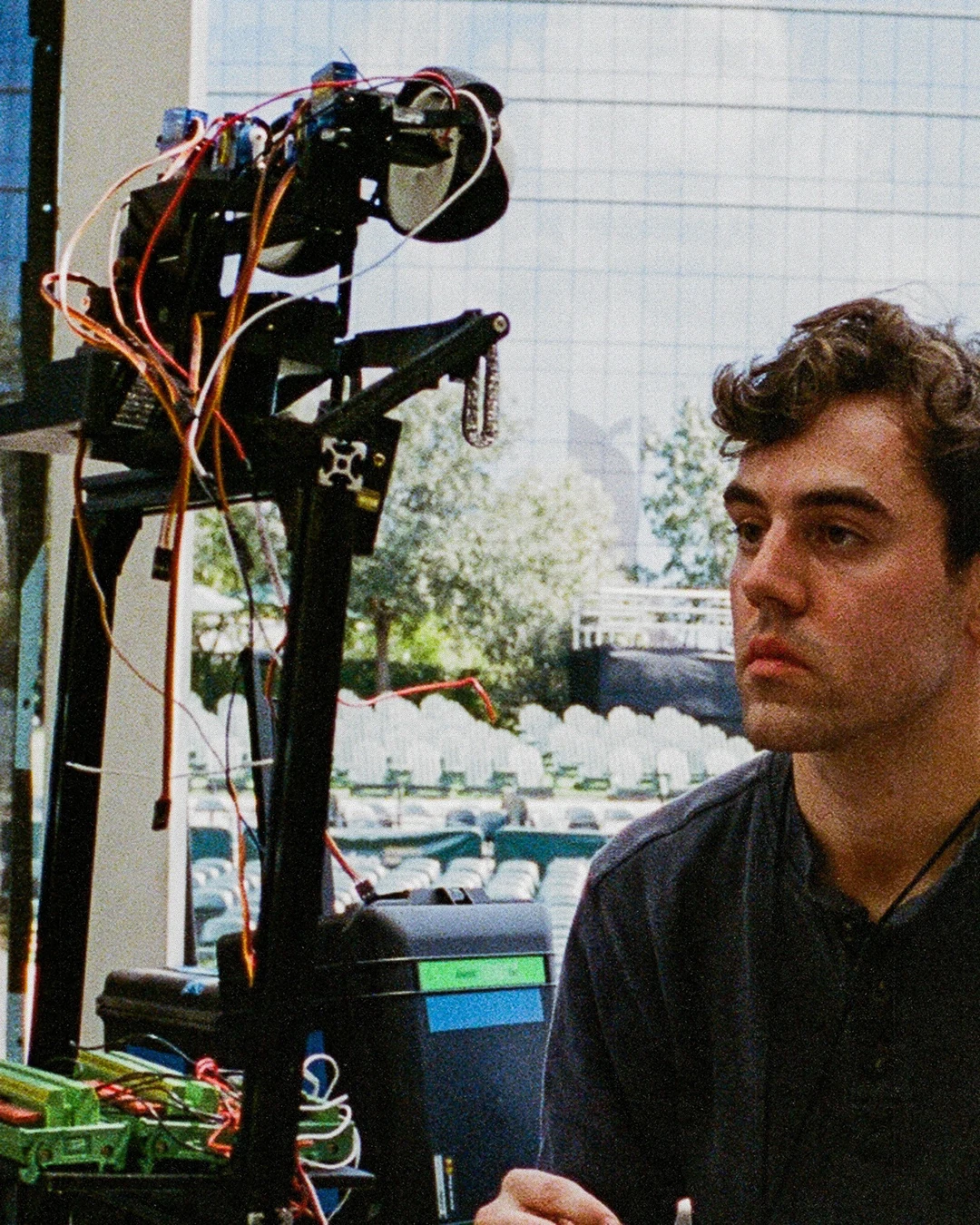
How it actually works is less mysterious than it looks. The microprocessor inside Tobor is set up as a MIDI device, which means Dylan’s music software can talk to it the same way it would talk to a keyboard. A servo is the little motor that moves a part: one for the mouth, one for the eyes, one for the neck. He programs rules. If the software sees a middle C, open the mouth. If it sees some other note, shut the eyes or turn the head. Then he records a performance and Tobor plays it back.
The voice is the part people get wrong. There is no Frank Ocean sample in there, and no sample of anyone. The vocals are MIDI, played by hand in his music software and stacked in layers, doubles and triples, until they sit right. “It’s all me,” he says. “Everything that you hear is fed from me.” He does not type a prompt. “It’s not like I go in there and type in, give me a robot Frank Ocean song. I actually have to physically do it. Play the keys, do this, do that. It takes some time.”
Until it sounds right
I asked him whether he built the sound to feel that way on purpose.
He didn’t, exactly. “If you go back and listen to the very beginning and then you go to now, it’s changed quite a bit,” he says. “I don’t know if I intend it to be that way.” What he does is loop a part and play over it, and play over it, and play over it, until it sounds right to him. He doesn’t have perfect pitch. He isn’t well versed in theory. “I literally just go off, okay, does that sound good? No, that does not sound good. Oh, this? Okay, that sounds cool. Maybe I could try this.”
The system has gotten more deliberate. He now layers the voice: one take a little higher, one a little lower, one in the middle, and then he cuts the low one if the song doesn’t want it or the high one if it doesn’t fit.
“It’s not super down to a specific science right now,” he says. “I’m just playing with it.”
He was almost too nervous to post the Frank Ocean one. He hadn’t done anything quite like it before and couldn’t tell if it sounded good, because his ears are going to be different from everyone else’s. He posted it anyway and it did super well. “Mission accomplished,” he says. “People enjoy it.”
He goes back and watches his early videos and cringes at the code. “But they did good, you know? People enjoyed it, and that’s the end goal.” He is still, by his own account, figuring it out as he goes. “I didn’t know what I was doing when I started. I still don’t know what I’m doing. To be honest with you, I’m kind of just going with it.” He reads the comments to learn what people respond to. When Tobor was only a pair of eyes, people said it looked like Tobor from the movie. When he designed the rest of the face, it ended up looking strikingly like Tobor from the movie. “That might be intended,” he says.
Dominic Fike
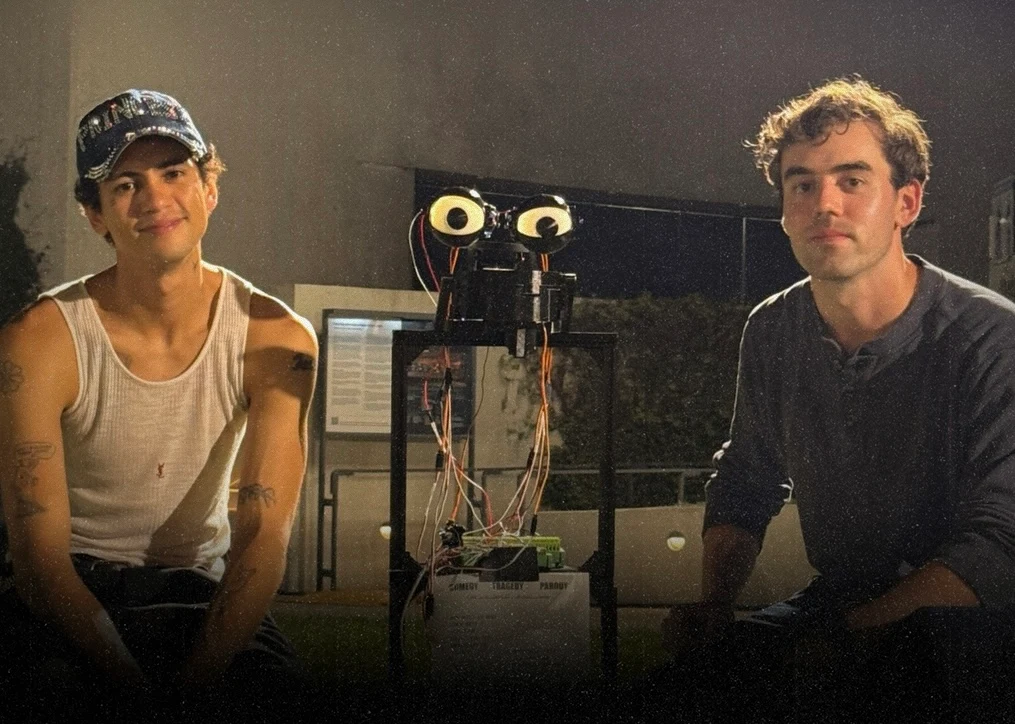
The message came while he was at home. Reed, on Dominic Fike’s manager, wanted to know if Dylan was interested in doing something with Fike. He went around showing people his phone, asking if it was real. Fike has been in his top five on Spotify for years.
“Anybody else other than Dominic Fike, I probably would have said, hey, I can’t do it right now,”
he says. “It’s not ready for stuff like that.” He said yes anyway.
He drove to the Austin show from Kentucky, thirteen hours, instead of flying. He had never done anything like it, and he was so nervous about something breaking that he printed every extra part he would need to build a whole other robot and brought them along in the car. Tobor and Fike performed together. Fike turned out to be, in his words, extremely nice, and so were the people around him. Then LA, his first time there, where he worked with Fike a little more.
What stuck with him was the live part. “Dude, this live stuff is amazing,” he says. Fike is a master at it now, a well-oiled machine who knows exactly how to command a crowd, and Dylan liked the idea of that.
Pass it forward
The job is the thing that pays for all of this, and he is honest about that. “I don’t think I’m going to do my whole life traveling,” he says. “There’s going to be a point where I want to settle down. I would love to focus on this a lot more, but I need some form of income to help sustain it.”
What he wants to do with the time he has is mostly what the comments keep asking for. People want full versions, and he is about to start making them, long form, for YouTube. “I have a lot of ideas in my head, and I’m slowly getting them out into my own DAW for my own music,” he says. “I don’t want to be just a cover guy.” One he is working on goes back and forth between him and Tobor, a human and a machine trading parts. “I think people like that kind of thing,” he says.
Then there is live. He is trying Twitch, and he lives close to Nashville, so the plan is to try it there, see what people like and don’t like, and if they don’t like any of it, drive home. “With the live, it’s really easy. Just end the live if something goes bad.” Eventually he wants to take it places. He also wants to build more robots, specifically ones that play instruments. “Anything that I would like to see, I think other people might like to see.”
I asked him what he hopes is true in five years. He gave two answers. The first was more music, his own, out in the world. “People say that all the time, it’s a universal language, but I think it really does bring people together.” The second was bigger and smaller at the same time.
“I just want to inspire more people to do stuff like this. Doesn’t have to be this exactly. If I inspire one other person to start creating, then I think I’ve done a pretty good job.”
He mentions the guy in Ohio again, the one with the robots that played guitar and drums. “He inspired me. So I inspire someone else, and kind of hand the torch down.”
I told him I was already very much inspired. He said he hopes he can get to more than one.
For now, Tobor travels in a foam case, or did. Dylan recently bought the big red Milwaukee tool boxes, the kind you keep tools in, and is trying to make one of those work instead. It is not super efficient yet. Two weeks somewhere, Tobor comes along. A couple of days, probably not.
Comments
Loading comments…