

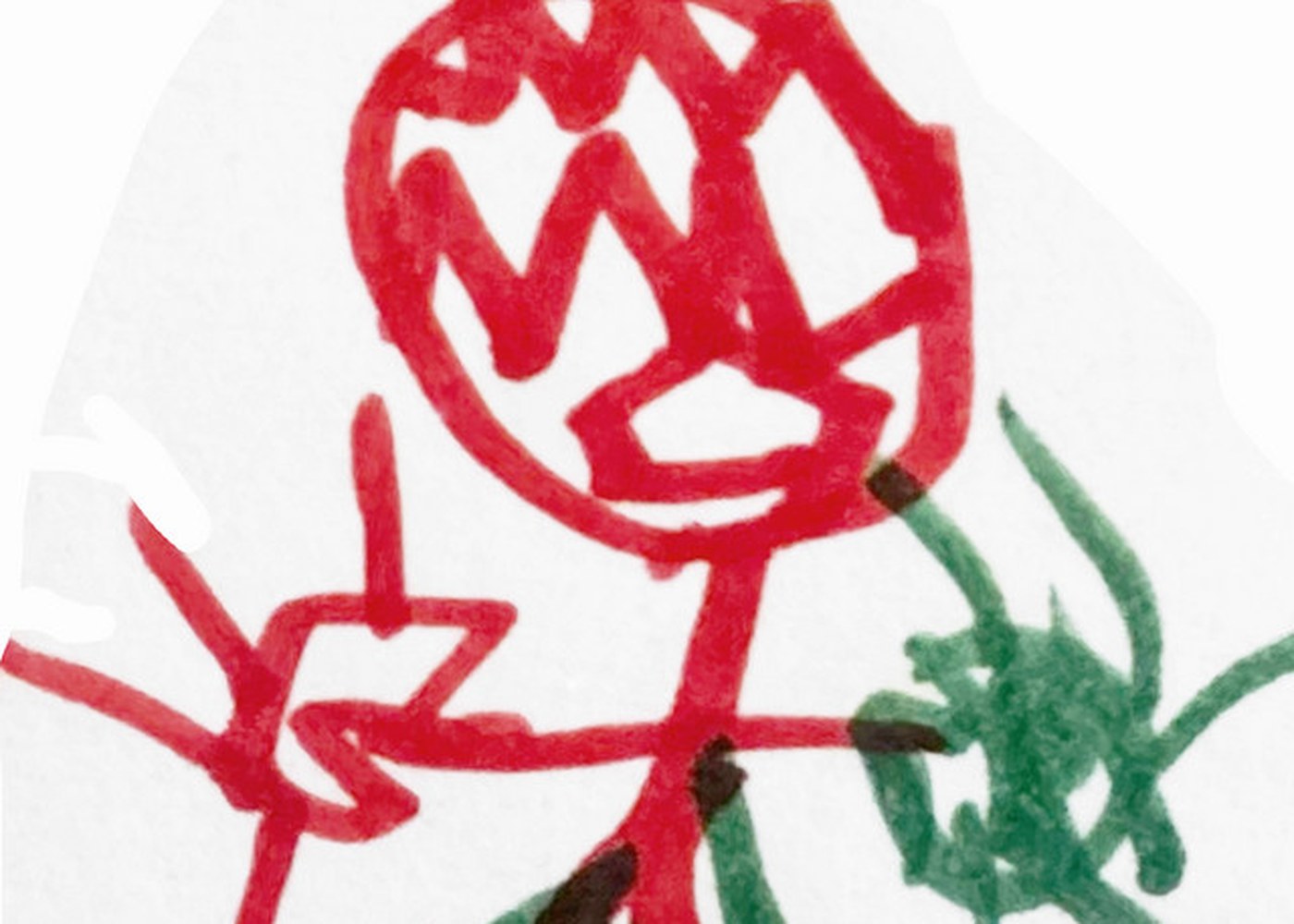
"Illusion of choice" follows a narrator with an itch that won't leave, maybe passed down from their mother, who keeps insisting they never had a say in anything. The song wins its argument against its own title. In the final verse they admit to a thought they can't even finish saying, then choose to say it out loud anyway, and that choice is the point.
Most songs about wanting to disappear pick a register, the whisper or the scream, and stay there. "Illusion of choice" opens with a chorus that's almost bouncy, a little scolding, wagging a finger at you for asking what went wrong, and then lets its own sentences break apart one at a time until all that's left is counting. The whole song claims fate is driving, while the narrator keeps grabbing the wheel in plain sight. By the last verse, the title is the only thing in the song that stops being true.
Start with that chorus, because it's sneakier than it sounds. "You never had a choice at all" works as comfort and dismissal at once, the kind of thing you tell yourself so you can stop replaying every decision at 2am. Verse 1 builds the case with a ledger that never closes, a price paid without ever breaking even, and then hands the blame down the family tree.
"Maybe I get it from my mother / I know it's running in the family"
The image that follows is the creepiest one in the song: "I hear their footsteps when I'm standing still." Something is walking up behind a person who isn't moving, which is exactly how inheritance feels when you've tried to outrun it and realized you never left the spot. "Thought I was different, but how can I be?" Case closed, apparently.
Then Verse 2 breaks. The narrator is describing a partner who's always there, who can tell they're slipping, who asks if they really love her, and the reply "even though I say it every single..." just stops. What comes next is a quoted speech, delivered straight to her:
"I love you, baby, but I'm not even a person / So your love's always going straight through me"
It's a ghost's apology. Her love is real and aimed correctly, but there's no solid body there to catch it, so it passes through and hits nothing. And "it's never been your fault" is the narrator protecting her even while describing their own absence. The next image explains how that absence works from the inside.
"The sound keeps on going out of sync with the movie"
Anyone who's watched a badly encoded file knows the feeling: the mouth moves, the words arrive a half-second late, and you can't stop noticing. That's the narrator's life. They say "I love you" and the feeling lags behind the lips. Then "wish I could be alone and you could still have me" repeats, and on the third pass "alone" becomes "gone." One word, and the song gets much darker.
From here on, nothing finishes. "If I said it out loud, would that...?" The refrain keeps leaning toward a confession and pulling back, and the line "Thought I would've made my choice by now" slowly slides from "I" to "you" by the second refrain. You could hear that "you" as the partner, or as the listener, or as the narrator talking to themselves in the mirror, and a fan who reads the whole song as fatalism winning has real ammunition there. I still hear it as the narrator handing the decision outward because holding it alone got too heavy.
Verse 3 moves the ledger into public. At a meet-and-greet, a fan says the narrator saved their life, and the narrator can't accept it: "How could I save your life when I'm feelin' like this?" The response is to offer to pay to cover up the fan's tattoo, which is, admittedly, a rough way to take a compliment. "The money in the world still wouldn't break even" brings back Verse 1's debt, except now it's owed to someone else. The irony is sitting right there. Whatever saved that fan was probably songs like this one, someone saying the unsayable thing so you don't have to say it first.
Which brings us to Verse 4, the only stretch of the song with no chorus voice telling anyone they're powerless. "It's so hard sometimes, to know I thought of s..." cuts off again, but the lines around it, "wish I could be gone," "that's why I'm still breathing," make the missing word hard to miss. Then the narrator starts choosing, out loud, one line after another: back and forth "'bout a hundred times," "rather live my truth," lost friends who "still" show up in dreams. Then this:
"I'll probably hear this in the morning, put that in a vault / But I would rather say it now than not say it at all"
The line I keep coming back to is the vault, because the song is describing itself getting shelved, and you're hearing it anyway. Morning-self might bury it, but the narrator decided tonight. "Rather" is a choosing word. It shows up twice in two lines.
The outro counts down toward one, over and over, never cleanly landing, while a voice keeps repeating "when you wake up tomorrow." Late in the count a stray "(Five)" slips in like somebody resetting the clock. You can hear dread in that, a countdown that won't resolve, but the backing vocal assumes a tomorrow exists and that you'll be awake for it.
So the chorus was wrong, or at least lying to make things easier. The narrator never got to choose the itch, the family footsteps, or the out-of-sync soundtrack, and the song admits all of it. What they did choose was to open their mouth instead of the vault, and a song that started by telling you nothing matters ends by proving that saying it out loud was the one move that counted.
Frequently Asked Questions
What is "Illusion of choice" by Quadeca about?
The song follows a narrator dealing with a dark, recurring feeling they believe runs in their family, and who insists they never had any control over it. Over the verses their sentences start breaking off, until the final verse where they choose to say the hard thing out loud anyway, which undercuts the idea that they had no choice.
What does "I'm not even a person, so your love's always going straight through me" mean?
The narrator tells their partner that they feel so absent and numb that her love has nothing solid to land on, so it passes through them like they're a ghost. They pair it with "it's never been your fault," making clear the problem is their own disconnection, and the related line about sound going out of sync with the movie describes feelings lagging behind their actions.
What does the counting at the end of "Illusion of choice" mean?
The outro counts down toward one again and again without cleanly finishing, and a stray "five" appears near the end like a clock being reset. Paired with the repeated "when you wake up tomorrow," it can be read as a numb countdown that never resolves, but one that still assumes there will be a morning to wake up to.
Lyric analysis powered by Scalpel.


Comments
Loading comments…