

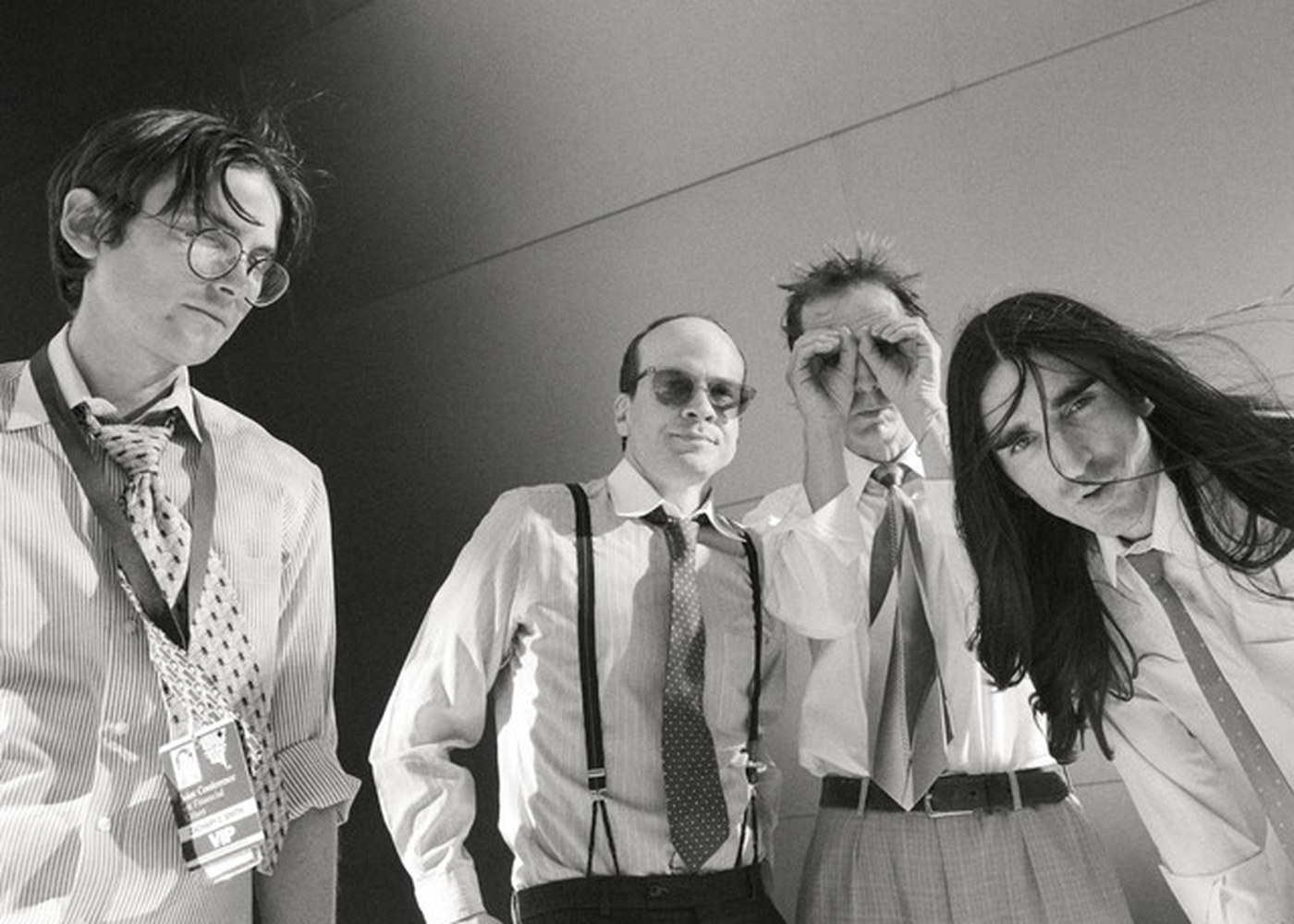
A billion dollars by twenty-four. The fastest car. A plane described as "some kind of big old fucking plane," which is the tell. Nobody who actually wants a plane talks about it like that. The narrator in "Trillions" is performing desire, and the performance is already slipping before the first chorus lands.
The song's argument is blunt: the billionaire fantasy is a closed loop. You accumulate, you win, and then you die holding things no one ever touched. DIIV runs that logic straight to its endpoint and dares you to find the point in it.
The Wish List That Eats Itself
Verse one reads like a child dictating a birthday list to someone who isn't listening. Big house. Big floor. Gold. A billion dollars. A brain described as "big," as if intelligence is just another acquisition. The escalation is fast and vaguely comic, each item bigger than the last with the connective tissue of pure want and nothing else.
The comedy is real but dry. "Some kind of big old fucking plane" is the line that gives it away. The profanity is almost performative frustration, as if the narrator ran out of specific desires and had to gesture vaguely at the category of "plane." It punctures the grandiosity without the song ever winking at you about it.
Then the chorus arrives and strips the whole list bare.
"For nothing / For who? / For no one to use"
No commentary. No ironic distance. Just the answer to every item on that list, asked and answered in six words. The chorus doesn't editorialize; it reports. That restraint is where the song actually lives.
Verse 2: The Endgame Written Out
The second verse is where the logic sharpens into something harder to shake off. The narrator expands into media ownership, land, waterfront property. Then:
"I will own a ton of art that no one can see"
Art is usually the counterargument to this kind of accumulation. You can say that hoarding money is empty, but art has value beyond price, right? The song folds that escape hatch closed. The art gets locked away with everything else. It exists to be owned, not seen. The act of possession has swallowed the thing possessed.
Then the final line does something the rest of the song has been building toward without announcing it:
"And then when I'm old, I'll die and I will take it all with me"
This is the line I keep coming back to, because it shouldn't be funny and it kind of is, and that uncomfortable tone is the whole point. It's pharaonic logic delivered flatly, the ancient instinct to be buried with your goods updated for a world where one person can own a billion dollars and seventeen houses and a vault of unseen paintings. Death doesn't reset the accumulation in this narrator's worldview. It just ends the game with the score locked in.
The move from "no one can see" to "I will take it all with me" completes a closed circuit. The art isn't for the world. The wealth isn't for anyone. It's hermetically sealed from any social function, and the narrator frames that as the point, not the problem.
"I Win, And You Lose"
Three words. Four, counting the conjunction.
The post-chorus is the song at its most exposed. After the chorus asks "for who" and answers "no one," the narrator still insists on a scoreboard. Winning requires a loser, but the chorus has already established there's no one in the game. The audience is gone. The purpose is gone. The competition is with a void, and the narrator is still running the score.
That contradiction is the engine of the whole song. Extreme wealth accumulation is often justified as competition, as earned dominance, as a signal of merit. "Trillions" takes that framing seriously enough to follow it to its conclusion: you win, yes. And then what? For who? For nothing. For no one to use.
A fair counterreading: you could hear the narrator as genuinely aspirational rather than satirical, the song documenting a mindset rather than interrogating it, and letting the listener decide. The lyrics don't tip into explicit condemnation. The flatness could be neutrality. But the structural placement of "for nothing" as the answer to every desire makes that reading hard to sustain past one listen.
The Song's One Move, Repeated Until It Settles
"Trillions" doesn't develop. It repeats. The chorus comes back, the same six-word verdict, and the post-chorus tacks on its hollow scoreboard each time. By the third pass, the accumulation of the song mirrors the accumulation it's describing: more of the same thing, adding up to the same answer.
That formal choice earns its keep. A song with a bridge that complicated the narrator's certainty, or an outro that offered some release, would soften the indictment. This one just runs the loop until it stops. No resolution. No exit. Exactly like the thing it's about.
The billionaire fantasy, in "Trillions," is not critiqued from outside. The song steps inside the logic, speaks it plainly, and lets it collapse under its own weight. The house, the art, the plane, all of it amounts to a closed system, sealed at death, operated for no one, justified by a competition with an empty room. That's the reading I walk away with. The scoreboard is real. The game was never.
Frequently Asked Questions
What is "Trillions" by DIIV about?
"Trillions" catalogs the extreme wealth fantasy, big houses, planes, art collections, media empires, and then asks what any of it is actually for. The answer the song keeps returning to is "nothing" and "no one." It traces the logic of billionaire accumulation to its endpoint: a closed system that serves no one, taken to the grave.
What does "I will own a ton of art that no one can see" mean in "Trillions"?
The line captures how extreme wealth can absorb even things that exist to be shared. Art is typically understood as having social or cultural value beyond its price, but in the narrator's worldview it becomes just another possession, locked away and stripped of its function. Owning it matters more than anyone ever experiencing it.
What does "And then when I'm old, I'll die and I will take it all with me" mean?
The line exposes the terminal logic of pure accumulation: the narrator frames death not as a return of wealth to the world but as a final act of possession. It echoes ancient burial practices where rulers were entombed with their goods, updated for modern hoarding. The wealth was never meant for anyone else, and death just locks that in permanently.
Lyric analysis powered by Scalpel.


Comments
Loading comments…