

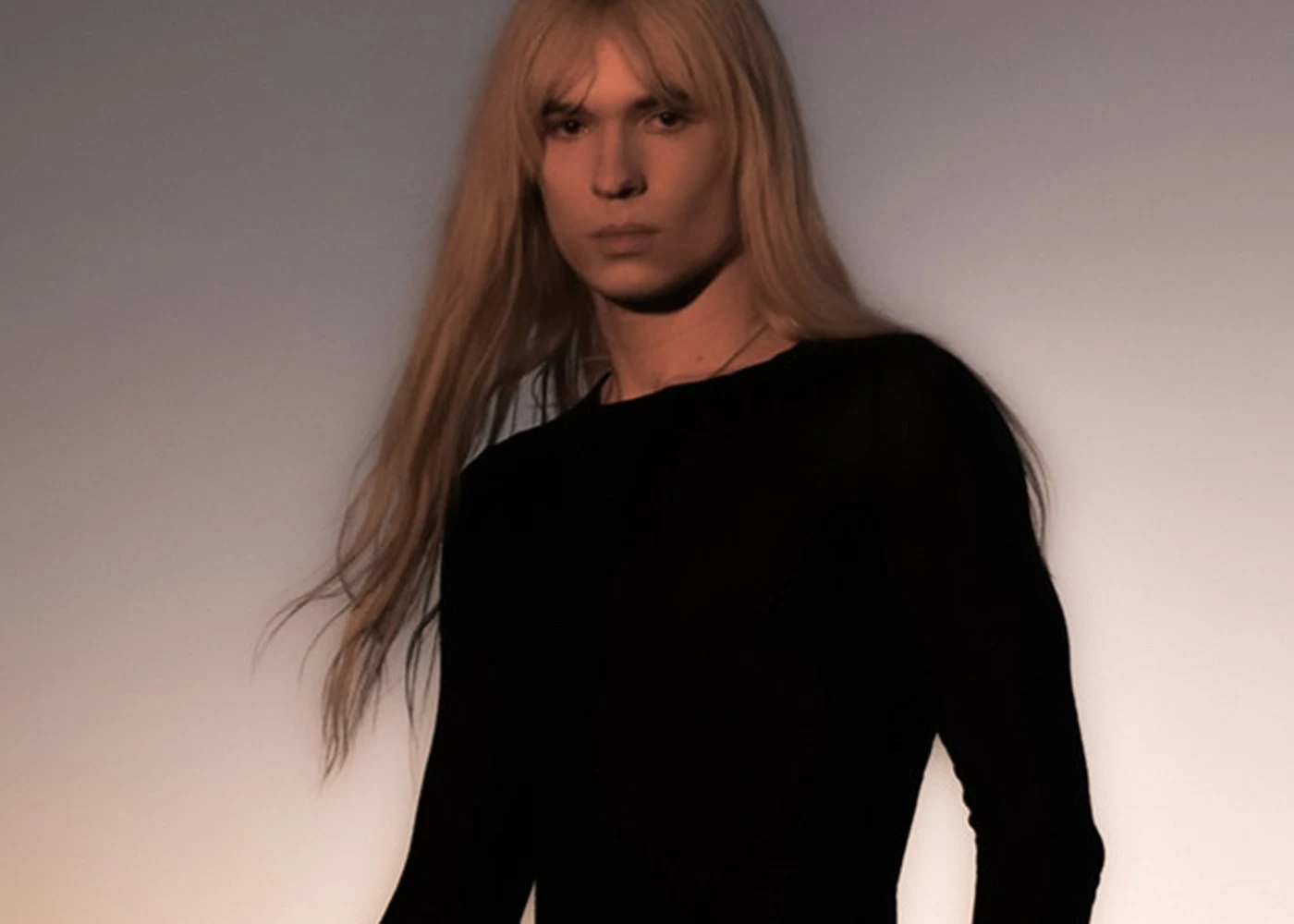
"Human After All" is a song about waking up inside a body and needing someone to accept it before you can. The narrator has crossed some threshold, from something digital or constructed into something physical and therefore vulnerable, and the entire track is basically one extended plea: I changed, I'm here now, please don't flinch. That's the whole emotional contract, and 2hollis holds it open for three and a half minutes without resolving whether the other person accepts.
The Opening Ask
The first two lines drop you straight into the tension without any setup.
"Please pull my distorted body close to you / I know my new face is not something that you are used to"
"Distorted" is doing a lot here, and not in the way a pop song usually uses a word like that. It's not self-loathing exactly. It's closer to acknowledging that the transformation was real and left marks, that this new self doesn't render cleanly, that there are artifacts. The narrator isn't apologizing for being distorted. They're asking to be held that way. And the second line makes the ask even more precise: the face is new, the person on the other end isn't used to it, and the narrator already knows this. They're not hoping the other person won't notice. They're pre-empting the discomfort and asking for love anyway.
That's the emotional core of the whole song. Not "love me despite the change" but love me including the change.
Past Life Digital: What Was Left Behind
The chorus builds out what the narrator actually came from.
"Give me what I want, past life digital / But now I'm human after all"
The phrase "past life digital" is the key. Whatever the narrator was before, it existed online or in some constructed, non-physical register. And now they're not. The word "but" in "but now I'm human after all" carries real weight because it frames the whole transformation as a contrast, almost a surprise. Like arriving at flesh was not the plan, or was not expected to feel this exposing. The physical world involves touch, trust, lust cycling back into love, beauty that can be undone. That's the trade: a "past life" where none of that could reach you, for a present tense where everything does.
And the chorus keeps hammering "human after all" not because the narrator is celebrating it, but because they're still convincing themselves it's true.
A Certain Pain So Raw
The back half of the song basically collapses into one repeating phrase.
"A certain pain so raw, I'm human after all"
It loops so many times it stops being a lyric and starts being a sensation, which is exactly the point. The pain of becoming physical, of becoming legible to another person, of needing to be touched and held rather than just perceived at a distance, that pain doesn't resolve. The song doesn't let it resolve. Each repetition piles on top of the last one and the effect is something like how an intrusive thought actually works, returning in waves that don't diminish, the phrase becoming more insistent the more it repeats. The rawness is the proof of humanity. You can't feel that scraped-open if you don't have skin.
The line I keep coming back to is how the song layers "kiss a miracle, I'm human after all" underneath those repetitions in the outro, the two threads running simultaneously. The miracle and the pain aren't opposites. They're the same thing viewed from different angles.
The Ending That Doesn't Land
Then the song does something genuinely strange. After all those loops and that crescendo of rawness, it ends with this:
"Yeah, yeah, I can talk about it / I, um, I feel like... that was the first time -- oh, is that not what you asked? / I'm sorry, what was the question? I-I don't understand the question"
It's a voice memo, or an interview clip, or some fragment of someone trying to articulate an experience and losing the thread mid-sentence. After three and a half minutes of the most emotionally precise language in the song, the narrator suddenly can't finish a sentence. The experience of becoming human, of physical vulnerability and raw feeling and needing to be loved in a new form, turns out to be something you can only partially put into words. The song built all that language and then admitted the language isn't enough.
A reasonable reading is that the confusion in this outro is performative, a bit, a character moment rather than a sincere crack in the narrator's composure. That reading holds. But either way, the effect is the same: incompleteness as honesty.
What It Adds Up To
"Human After All" is a song about the specific terror of being known in a body after existing somewhere safer. The digital past wasn't just nostalgia, it was a kind of protection, a way of being present without being reachable. Crossing into the physical means your face can be unfamiliar, your body can be distorted, your pain can be undeniably real. The ask the narrator makes of the person they're singing to is enormous: not just acceptance but active closeness, being pulled in rather than kept at a careful distance. Whether they get it, the song never says. The pain keeps cycling. The miracle keeps cycling. The question at the end goes unanswered. That's the whole deal.
Frequently Asked Questions
What is "Human After All" by 2hollis about?
"Human After All" is about the vulnerability of becoming physically present after existing in a more digital or constructed form. The narrator asks someone to accept and hold their changed body and new face, framing the transition into full human feeling as both a miracle and a source of raw, unresolved pain.
What does "Please pull my distorted body close to you" mean in "Human After All"?
The line is the song's central ask: the narrator wants physical closeness even though their body feels distorted or changed. "Distorted" acknowledges that the transformation the narrator went through left visible traces, and asking to be held that way means asking for love that doesn't require the new self to be clean or familiar before it's accepted.
What does "past life digital" mean in "Human After All"?
"Past life digital" refers to whatever the narrator was before this moment of becoming physically and emotionally present. It frames a previous existence as something online or constructed, where the full vulnerability of being human in a body didn't apply. The contrast with "but now I'm human after all" makes the transition sound like both a loss and an arrival.
Lyric analysis powered by Scalpel.

Comments
Loading comments…