

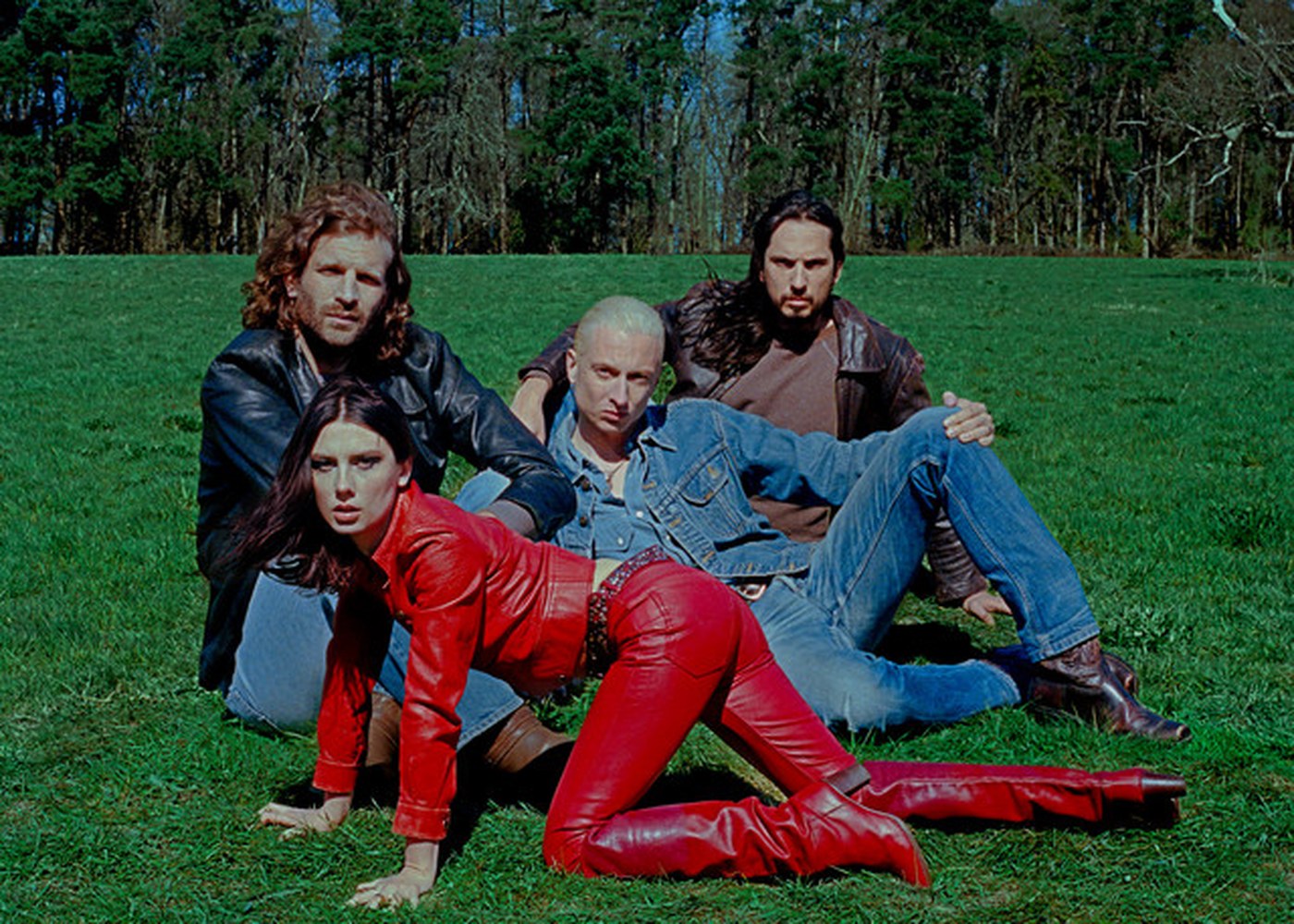
"Just Two Girls" follows two friends drinking palomas at a bar. One admires the other's hair extensions and gets told to just go buy some. The song trades that store-bought envy for something with no price tag: a friend who listens while you strip your thoughts bare. The repeated "You're so right" is how the singer slips out of the argument without ever winning it.
Introduction
Her friend's hair is perfect, and it came from a shop. The narrator clocks it from across the table, cigarette smoke drifting, drink in hand, and does the math on what beauty costs. By the last chorus she has stopped counting entirely. The song is about how a night out with the right friend makes everything you could buy look a bit beside the point, and how the narrator gets there by agreeing with everyone instead of arguing.
Envy with a price tag
The opening is funny and a little mean. The narrator stares at the extensions and lets rip:
"She looked so pretty, it was fucking offensive"
That's a compliment wearing a complaint's jacket. Anyone who has ever hated a friend for five seconds because she looked incredible knows this exact sting. The friend's answer is breezy and practical: if you want long hair, just go and get it. Beauty, in her world, is available on request. Bring a card.
Then the second verse throws a question that cuts against everything we just heard:
"When did you become so obsessed / With all the things you do and do not possess?"
The joke is in the placement. Seconds after coveting hair you can literally purchase, the narrator gets scolded for being fixated on stuff. "Do and do not possess" covers both sides of the ledger, the things you own and the things you're sulking about not owning, which is a neat way of saying the wanting itself is the problem. Who asks the question stays fuzzy. It could be the friend. It could be the narrator talking to the mirror in the bar bathroom. I lean toward the second, because nobody nags you about your materialism quite like your own head at 11pm.
Five ways of saying "you're so right"
Here's my disputable bit. The narrator never defends herself. Told to buy hair, she says "You're so right." Told she's too obsessed with possessions, she says it again and adds "you're so wise" for good measure.
That much agreement starts to sound like a reflex. Or a deflection. It's the conversational equivalent of nodding through a lecture so you can get back to your drink. She doesn't resolve the contradiction between wanting the extensions and being told to want less. She just agrees her way past it, and the song lets her.
Then Verse 3 flips the phrase. The palomas are still going, the night is young, and the narrator tells her friend the best part will be tomorrow's debrief on the hangover. "Yeah, you're so right" now answers a plan, and it's happy. Envy drops out of the song completely after this point. The comparing stops and the scheming starts.
A fair fan could hear every "you're so right" as sincere from the start, a narrator who genuinely admires her friend's good sense. I get that reading. But the shift in tone from verse two to verse three is too sharp for me to hear the early ones as anything but a shrug.
The thing you can't pay for
The pre-chorus is the song's heart, and it's built out of habits. The friend chain smokes "incessantly." She has "tiny epiphanies" when she's drinking with the narrator. Neither of those is flattering on paper. Both are offered as reasons for love.
And the narrator gets described back. Her friend likes the way she "over-hypothesize[s] / The people in the room." Translation: she sits there making up elaborate theories about strangers, and her friend thinks it's the best entertainment in the building. Then comes the line everyone wants unpacked:
"When I undress my every thought / The way that you can't pay for"
Undressing usually means clothes. Here it means thoughts, stripped down with nothing held back, which is the most exposed a person can be in a crowded bar. "The way that you can't pay for" answers the first verse directly. Hair you can buy. Someone who wants to hear every half-baked theory you have about the guy by the jukebox, you can't. The narrator never notices she has set the extensions up as the exact opposite case, and the song is better for her not noticing.
Watch the pronouns too. The friend starts as "she" and ends up "you." Halfway through describing her, the narrator turns and talks to her instead, which is exactly what happens when you're three drinks in and gushing about someone who is sitting right there.
A stage built out of a sentence
The chorus shrinks the scene on purpose. Two girls at a bar. Two kids in a park. A bar has no stage, so the narrator conjures one with a line: "Here's the stage, you're the star." She can't buy her friend a spotlight, so she makes one out of words.
By the end the chorus strips down to "just two girls," again and again. The phrase is modest and a little defiant. Nothing epic is happening here, no grand declaration, and the repetition insists that's enough.
Conclusion
The song opens with a woman pricing up her friend's hair and closes with her refusing to price anything at all. She never wins the argument about possessions. She just stops caring about it, nudged along by a friend, a second paloma and the promise of a noon post-mortem. The way I hear it, "just two girls" is the narrator's final answer to that nagging question about what she does and does not possess: she has the one thing in the bar nobody was ever selling.
Frequently Asked Questions
What is "Just Two Girls" by Wolf Alice about?
The song follows two friends drinking palomas at a bar. It starts with the narrator envying her friend's hair extensions and ends with her celebrating their friendship as something money can't buy, set against beauty that can.
What does "When did you become so obsessed with all the things you do and do not possess?" mean?
It's a teasing callout about materialism, aimed at the narrator right after she coveted her friend's bought hair. "Do and do not possess" covers both what she owns and what she's jealous of not owning. The speaker is left unclear, so it could be the friend or the narrator's own inner voice.
What does "The way that you can't pay for" mean in "Just Two Girls"?
It describes how the narrator can "undress" every thought in front of her friend, sharing everything unfiltered. That kind of closeness is the thing that can't be bought, unlike the hair extensions her friend told her to just go and get.
Lyric analysis powered by Scalpel.



Comments
Loading comments…