

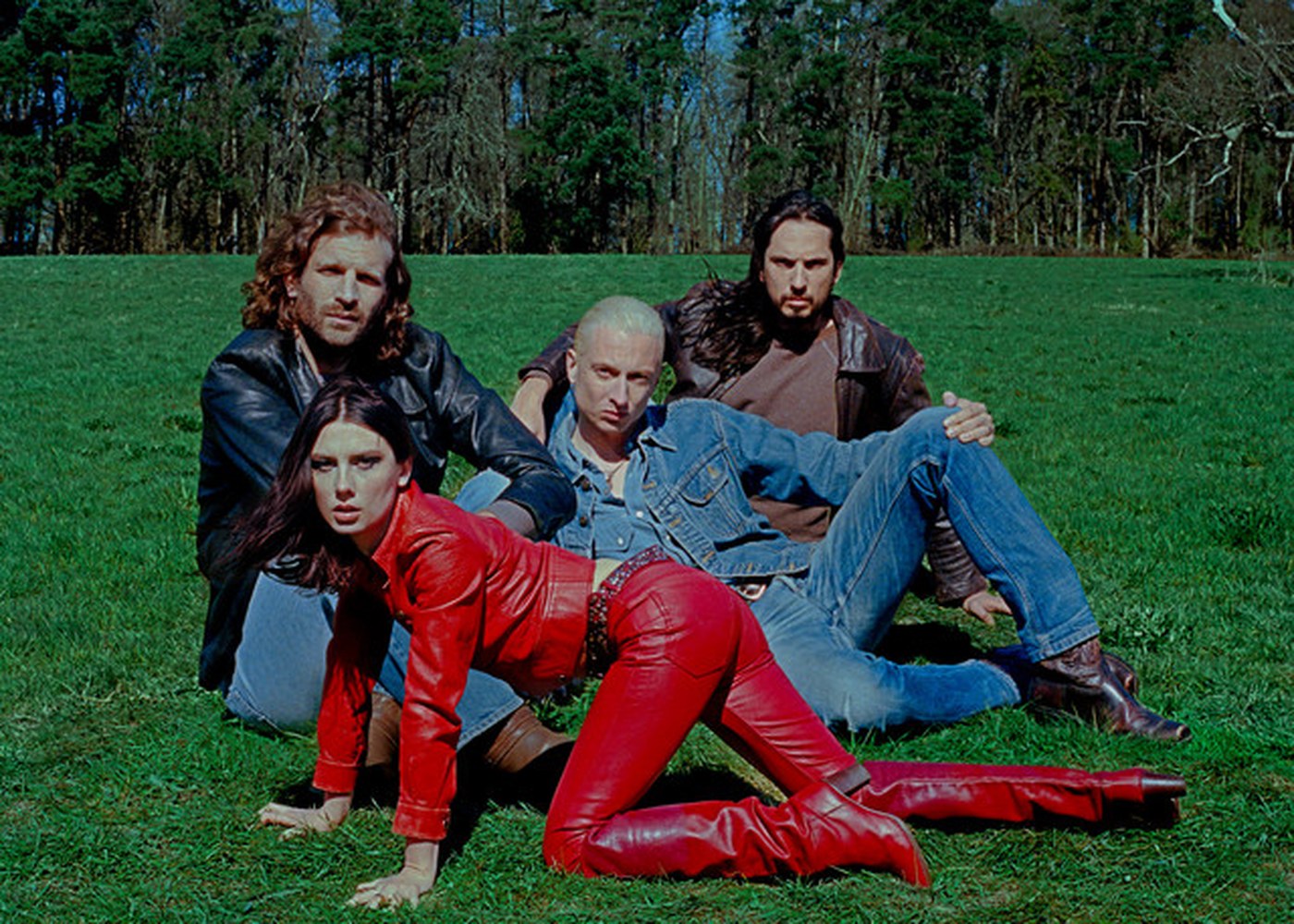
The narrator of "Don't Delete The Kisses" spends the whole song blaming fate for a problem that is entirely their own nerve. The other person has asked, out loud, to be taken out, and the only thing in the way is someone at a bus stop with a draft open on their phone, wondering whether love is "meant" for them at all. By the end they've got the hand, the exit and the drunk walk home, and they hand the credit straight back to destiny. The song is about getting out of your own way, and about how tempting it is to give your fear and your courage the same grand name.
The Hail Mary and the message that never leaves the phone
The fantasy date takes four lines and it's lovely in how unambitious it is: get to know you, take you out, a drink at somewhere called The Hail Mary, a snog afterwards. We never find out what The Hail Mary is, a pub or a venue or something else, because nobody ever goes there. The plan dies on the next word, "Instead."
"Rewriting old excuses / Delete the kisses at the end"
The kisses are the x's at the bottom of a text, and deleting them is about the tiniest retreat a person can make, stripping the one bit of warmth out of a message the narrator already knows they'll never send. It's a double cancellation: the text won't go, and even the version that won't go has had its affection sanded off. "Old excuses" tells you this has happened before, maybe many times. (Everyone has stared at one x versus two for longer than they'd admit to a friend.)
Then look at the title. It's the opposite instruction to the thing the lyric confesses, as if some wiser version of the narrator is standing behind them at the bus stop, reading over their shoulder. Leave them in.
That room, that crowd, and the night bus with a timetable
The verse that carries the song starts with the best line in it, a moment of pure tunnel vision where everything outside the other person simply stops existing.
"When I see you, the whole world reduces / To just that room"
That's what fancying someone actually does to your eyesight, and the narrator gets it exactly right, the pub or the kitchen or wherever it is shrinking down to one face. But the shrinking only lasts a line, because then "I remember and I'm shy," and the rest of the world floods back in as "gossip's eye," the mates and onlookers who'll clock it too soon. The room was private for a second, and then it's full of people again, all of them imagined.
Then comes the detail the whole song turns on, slipped in so casually you could miss it.
"You tell me to get over it / And to take you out"
The other person has already said yes before anyone asked. The obstacle was never them. It was always the narrator, "trapped, overthinking," offering up "probably self-doubt" with a shrug like it's a weather report.
So the night bus arrives, and it's the perfect escape, an exit with a timetable, a respectable reason to leave that nobody can argue with. The doors close, the other person waves, and the whole thing is staged like the end of a film where the leads don't get together yet. The narrator follows it with "I work better on my own," and I don't buy that line for a second, partly because it comes straight after "I like you, and I'll never let it show," which is about as far from self-sufficiency as a sentence can get.
Home, a little bit drunk, the chorus comes back with its question: "What if it's not meant for me?" Phrasing it that way lets fate do the deciding, which is convenient when the real answer is that the narrator got on a bus. Whether the lone "Love" after it is the thing being doubted or a person being called out to, the lyric won't say, and both versions hurt. Cowardice dressed as destiny.
A few days pass, and the dam goes
Three words of time skip and the narrator's resistance collapses, the other person having "taken over my mind" so completely that the lyric starts tumbling forward in long, breathless clauses. The giveaway is a confession about borrowed material.
"I'm retelling jokes you made that made me laugh / Pretending that they're mine"
So much for working better alone. The narrator has been carrying this person around for days, passing their jokes off in someone else's company like a stolen jumper. And notice the fate-talk hasn't gone anywhere: "I think that that's a sign" is the same habit of reading omens, only pointed the other way now.
Then the embarrassment kicks in, and it's very funny. A smile at a photo gets treated like a crime, "How awful's that? I'm like a teenage girl," and the narrator imagines scribbling "you rock my world" across a school notebook before admitting, sheepishly, "But you do, you really do." By "I'm electric, a romantic cliché / Yeah, they really are all true," they've stopped fighting it. The clichés were right all along. Mortifying.
From an Irish goodbye to a French exit
The song opens with the narrator "swiftly out, Irish goodbye," slipping off without telling anyone. At "that stupid party," the move is identical, only now it's "French exits from me and you": the same unannounced disappearance, done in company. The whole arc of the song is one gesture, flipped from solitary to shared.
And what changed? Nothing cosmic. They caught eyes at a party the narrator can't even be bothered to name kindly, and "I know exactly what to do," which is take a hand. Then home again, a little bit drunk again, and the question from the first chorus turns into a statement.
"Me and you were meant to be / In love"
It's a sweet line, and the narrator means every word. But it's also fate taking a bow for something the narrator did with their own hand at a party, and "some things don't change" plus that second round of booze leaves a faint pencil mark over the certainty. A reasonable fan can hear the ending as plain, earned joy, the giddiness of finally getting it right, and the song absolutely supports that; it just never quite lets go of its old habit of outsourcing the decision.
Conclusion
Both halves of the song end in the same place, the narrator home, a bit tipsy, talking to themselves about destiny. The only real difference between the doubting version and the certain version is that one of them got on the night bus and the other reached for a hand. Fate gets blamed in the first chorus and thanked in the last, and in between the narrator quietly does the one thing fate never could, which is act. To my ear, that's the point of the title: the advice was sitting there in three words all along, and it takes a whole song for the narrator to stop deleting the kisses and just send the thing.
Frequently Asked Questions
What is "Don't Delete The Kisses" by Wolf Alice about?
It follows someone who fancies a person, chickens out of asking them on a date, and goes home on the night bus wondering if love isn't meant for them. A few days later they can't stop thinking about the other person, take their hand at a party, and leave together, now convinced they were meant to be. The song is about getting past your own nerves, even while the narrator keeps crediting fate.
What do "Irish goodbye" and "French exits" mean in "Don't Delete The Kisses"?
Both phrases describe leaving a party without saying goodbye to anyone. Early in the song the narrator does it alone, an "Irish goodbye"; by the end it's "French exits from me and you," the same quiet departure but shared with the person they like. That swap from solo to shared sums up the song's whole journey.
What does "delete the kisses at the end" mean?
It refers to the x's people put at the end of a text message. The narrator types a message they know they'll never send, then removes even the kisses, pulling back the last bit of affection from a text that won't go anywhere. The song's title flips that into an instruction: don't hold back.
Lyric analysis powered by Scalpel.


Comments
Loading comments…