

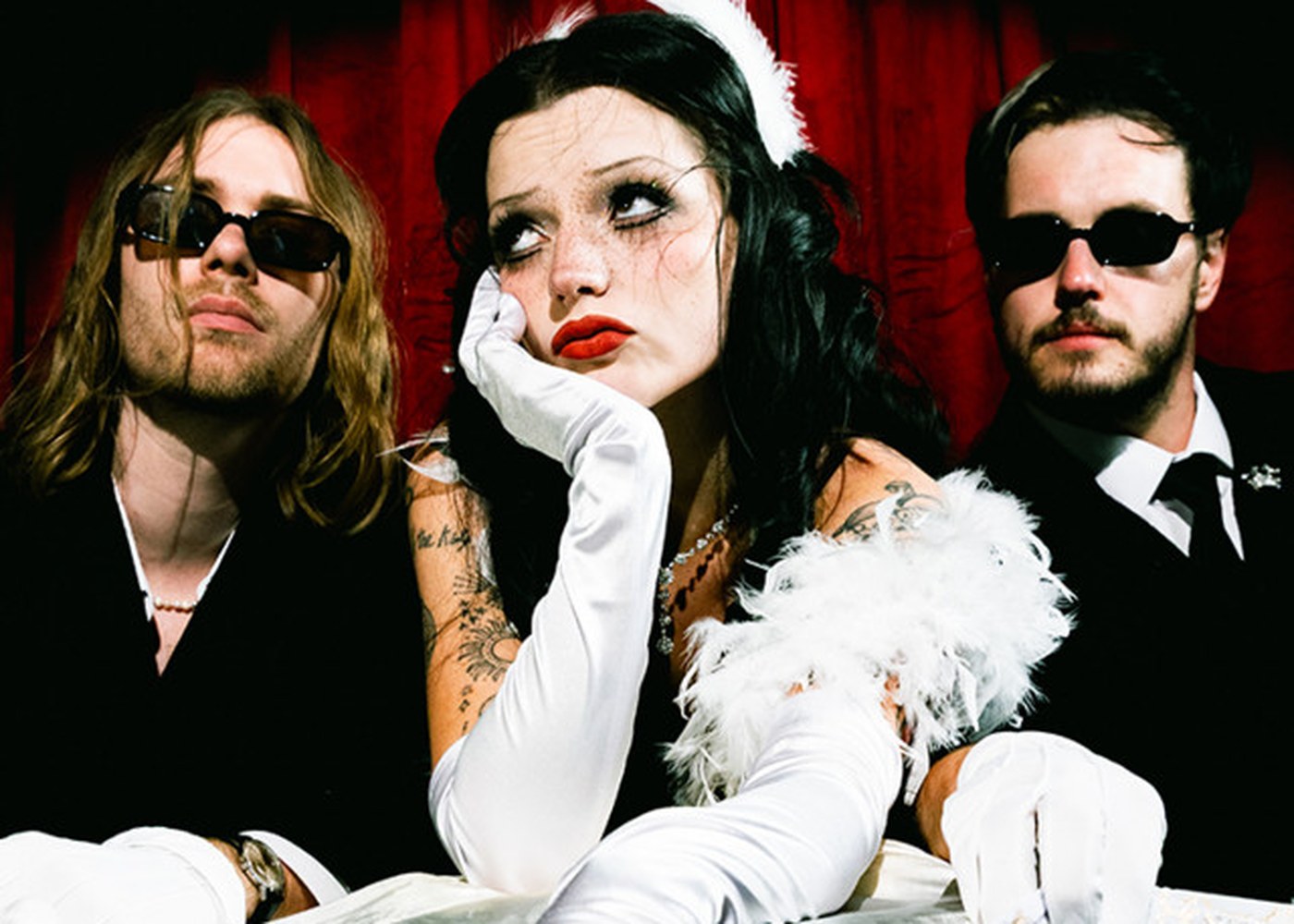
"Size Two" is an eating disorder told from the inside: purging with "a finger or two," dizziness, clothes hanging loose. The song climbs one verb at a time, from asking to praying to dying to look like someone. By the final line, that someone has vanished. All that remains is a number stitched into a clothing tag.
Introduction
Hum along to the first ten seconds and you have already been tricked. The melody is soft enough to rock someone to sleep, and the first thing it describes is a body being emptied on purpose. You end up swaying to it, which is exactly the trap the song wants you to feel from the inside. Every chorus asks to be pretty like an unnamed "you," and by the last line the song has quietly traded that person for a garment size, which is the whole horror of it.
The chorus: a gun word for a hand
The opening image is suffocation. "Let it consume me 'til I turn blue" asks for the thing to take over completely, all the way to the colour of a body running out of air. Then comes the line everyone stops on.
"Pulling the trigger, a finger or two"
The trigger is a finger, one or two, pushed down the throat. The narrator borrows the language of a gun for an act of purging, and the swap is deliberate. It tells you how violent this feels from inside, even when it looks like nothing from outside. No bang. No witnesses. Just a hand and a bathroom.
Then the chorus does the thing that makes it so hard to sit through. "I know it's killing me" is said flat, with full awareness, and the very next breath asks, "Can I be pretty like you?" Knowing changes nothing. The question still gets asked, and it gets asked politely, almost shyly, in the gentlest part of the melody.
Keep that verb in your pocket. "Can I" is a request. The rest of the song keeps rewriting it.
Verse 1: the culture whispering "better for you"
The first verse zooms out to the world feeding the illness. "Say the word 'skinny,' it's so taboo" names the word as forbidden, then sings it anyway, which is how that word works in real life too. Everyone acts like it's off-limits while it gets passed around constantly.
"A fad or a diet, it's better for you" has the exact cadence of a sponsored post, minus the discount code. The narrator repeats the sales pitch in the voice of the people selling it. Those breathy "Ah"s sit between every phrase, right where a full breath should go, like little gasps from someone who can't quite fill their lungs.
And the verb climbs. "Dear God, it's killing me" leads straight into "Pray to be pretty like you." God gets addressed, but only as a witness, never as a rescuer. Asking has become praying. The want has turned holy.
The bridge: the honesty that shuts its own door
The bridge is the only stretch where the mask slips, and it starts with the mask going on. "Putting makeup on my face" sits right beside "Swimming in my clothes, lost some weight." The face is the one surface still being added to while everything underneath is being taken away. Paint on top, less of you below.
Then the confession: "Heaven knows / I'm not okay." It gets echoed back, as if the narrator needs to hear it twice to believe it was said out loud. After two choruses of rehearsed pitch-speak, this plain sentence is pure relief.
It lasts about one line.
"Skin and bones, look away"
The line I keep coming back to is that final "look away." The narrator finally tells the truth and immediately begs not to be seen, inside a song that exists to be heard. The admission is real, but so is the shame wrapped around it. The bridge offers an open door and the narrator pulls it shut in the same breath, which is about as honest a picture of the illness as a song can give you.
Verse 2: the illness gets hungry
After the bridge, the song stops talking about culture or God. Verse 2 is all body.
"Eating up my time instead of food"
It's almost a pun, and that's what makes it sting. The narrator isn't eating, but something is: the disorder devours hours, attention, whole days of counting and planning and hiding. The illness has an appetite even when the person doesn't. Then the room starts spinning, "So frail" arrives, and the verb hits the bottom of its staircase.
"Die to be pretty like you"
We usually say "dying to" as a throwaway, like dying to see a movie. Here the phrase drops its joke and means it literally. Can, then pray, then die. Three verses, one want, and each time the price goes up while the request stays exactly the same.
Conclusion
The outro loops "Can I be pretty like you?" back to the beginning, as if the whole ladder never happened. Then the last line swaps the target. "Can I be pretty / In a size two?" The "you" disappears and a label takes its place. Whoever the narrator envied was never really the point. The goal shrinks into a tag sewn inside a waistband: small, cold, and never quite zero, so there's always further to go.
You could fairly argue that the "you" was the listener all along, which makes the ending even sharper, since it implicates whoever is humming along. Either way the song refuses to resolve. It hands you the voice that usually stays private, says it out loud, and leaves the question hanging in the air where it can finally be heard. If that voice sounds familiar, from you or someone you love, hearing it named is a real place to start.
Frequently Asked Questions
What is "Size Two" by VANITY about?
"Size Two" describes an eating disorder from the narrator's point of view, including purging, dizziness, and losing weight while admitting it's harmful. Each verse escalates the same wish, moving from asking to praying to dying to be pretty like someone else, and the song ends by replacing that person with a clothing size.
What does "pulling the trigger, a finger or two" mean in "Size Two"?
The line refers to self-induced vomiting, with the "trigger" being one or two fingers down the throat. Using gun language for purging shows how violent and self-destructive the act feels to the narrator, even though it happens in private.
What does the ending "Can I be pretty in a size two?" mean?
After repeating "Can I be pretty like you?" the narrator swaps the person for a number on a clothing tag. It shows the goal has narrowed from resembling someone into hitting a size, a target that keeps the narrator chasing smaller with no real finish line.
Lyric analysis powered by Scalpel.


Comments
Loading comments…