

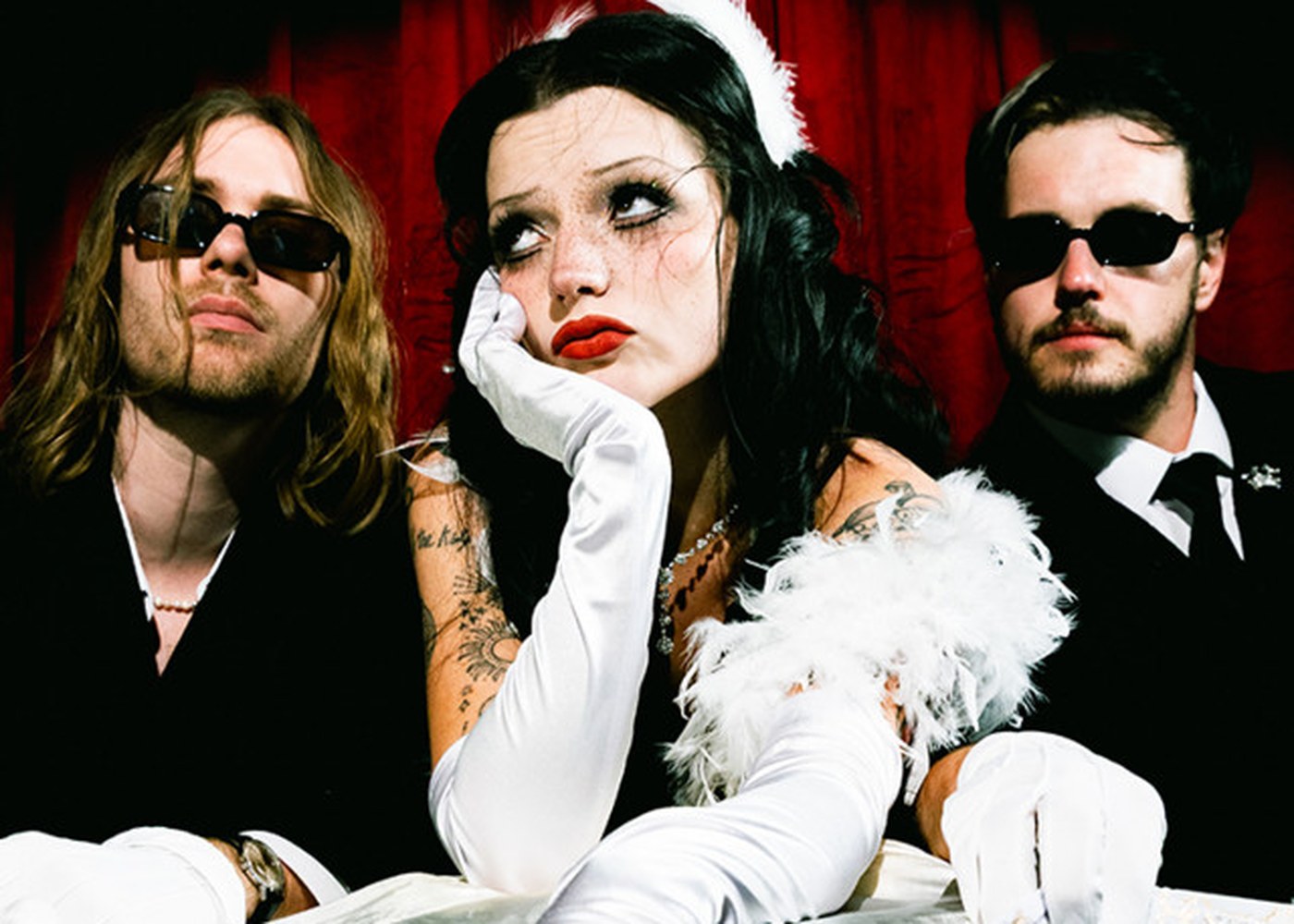
The chorus of "Manspreading In The Electric Chair" holds the softest thing the narrator says to anyone. It is also an open invitation to be killed. "Crush it, babe, till death do us part" borrows wedding vows and hands them to whoever is squeezing the narrator's heart, and the song wants you to hear the romance and the threat at full volume together. My read is that the "babe" lives inside the narrator's own crowded skull, which makes this a love song sung to the voices trying to kill them.
Look at how the song introduces its singer. Before we hear anyone else, the narrator has already split into pieces.
"Not my circus, I'm a fucking freak / Injectable, split head machine"
"Not my circus" is the old shrug of someone refusing responsibility, and the next breath confesses they are the main attraction anyway. The freak disowns the tent and stays in it. Then the head turns into hardware: injectable, something you put things into, and a machine, something that keeps running whether you want it to or not. The split runs straight down the middle.
Then come the attackers. "Got so many personalities / They've all got knives, they're after me." Every knife in this song points inward. The mob chasing the narrator wears the narrator's face, carries the narrator's blades, and lives at the narrator's address. There is nowhere to run, because the street is the inside of their own head.
So when the chorus says "we," it matters who is standing in that word.
"Maybe we die together / Maybe we make it to 25"
Twenty-five is a heartbreakingly modest finish line. The narrator dreams of a mid-twenties birthday, the age most people treat as barely the start, and treats it as a coin flip against a shared grave. If "we" means the many selves, then dying together stops being a metaphor. One personality cannot die without taking the whole crowd with it, so the line becomes a pact: we go down as one, or we limp to 25 as one. If you've ever lain awake at 2am honestly unsure about your next birthday, you know why that sounds more like comfort than doom.
The next couplet refuses the usual pep talk. "Don't know if it gets better / But it can get worse, you can't deny." Nobody here promises a sunrise. The only certainty on offer is that the floor can drop further, and the narrator dares you to argue. Then "Their hands around my heart" arrives, and "their" points right back at the personalities from verse one. The narrator answers those hands with a pet name. Crush it, babe.
The second verse is where the hunted picks up a weapon.
"It's a gun fight, but it's in my brain / Unload a couple clips till they take me away"
Read that first line slowly. A gunfight inside one brain has a single possible casualty. Every bullet the narrator fires at the knife-wielding selves lands in the same skull they share, so fighting back is just another way of getting hurt. The shooting stops only when someone outside steps in: "till they take me away." The war needs an outside authority to end it, because nobody inside can call a ceasefire.
Then, calm.
"And I'll sleep tight in my cell tonight / Famous last words, 'It feels good to be alive.'" The line I keep coming back to is that last one. It holds the song's only statement of joy, and the narrator says it while locked in a cell and immediately tags it as famous last words. Being alive finally feels good once the circus has four walls and a locked door around it. The narrator distrusts their own happiness so completely that they mark it as a death rattle the moment it leaves their mouth.
Notice what changes in the second chorus. "It can get worse" becomes "it could get worse." One letter shift, and a fact softens into a possibility. That sliver of breathing room is all the peace of the cell buys, and the song is honest enough to keep it that sliver and no bigger.
There's a fair reading where "babe" is a real person, a partner in a doomed outlaw romance, two kids betting on 25 like it's a getaway car. The chorus works beautifully that way, and I won't pretend it doesn't. But the outro tips the scales toward the crowded head. The knives come back word for word, "they're after me," as if verse two never happened. A lover would have changed something. A mind on a loop just restarts.
And then there's that title, which the lyrics never explain. Manspreading is the pettiest of public sins, taking up too much seat on the train. Drop it into an electric chair and you get someone sprawling across their own execution, knees wide, unbothered, owning the space. It recasts the cell's calm as swagger. The narrator refuses to sit small even at the end.
Back to the vow, then. "Till death do us part" usually promises loyalty to someone outside yourself. Here it pledges the narrator to the warring voices inside, the only partners they cannot leave and cannot outlive. The song holds out no rescue. It offers a marriage to the noise, sealed with the one exit both sides agree on, and the narrator delivers that vow sprawled out, mascara running, refusing to flinch.
Frequently Asked Questions
What is "Manspreading In The Electric Chair" by VANITY about?
The song follows a narrator whose mind is split into many personalities, all armed with knives and hunting them. The chorus turns that inner war into a dark love song, pledging to either die together or make it to 25, with the "babe" possibly being the narrator's own selves.
What does "It's a gun fight, but it's in my brain" mean?
The line places the entire battle inside the narrator's head, so every shot fired hits the same mind. The narrator goes from being chased by their personalities to fighting back, and the fight only ends when someone outside locks them away.
What does "Maybe we die together, maybe we make it to 25" mean?
The line treats reaching age 25 as an uncertain finish line, a coin flip against dying. If "we" refers to the narrator's many personalities, it becomes a survival pact: none of them can die alone, so they either fall together or survive together.
Lyric analysis powered by Scalpel.


Comments
Loading comments…