

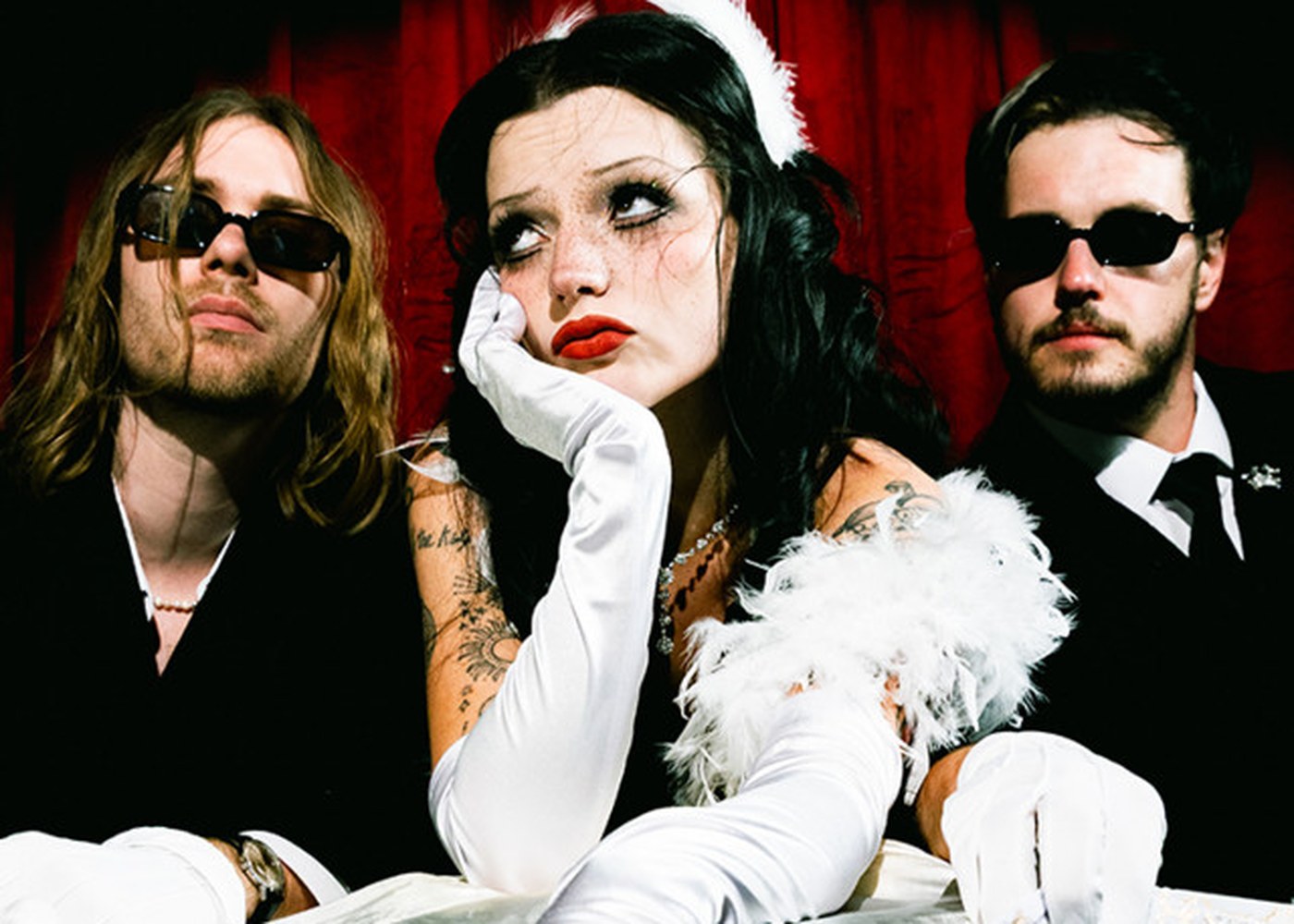
Mascara streaks down a painted face while a barker shouts "step right up," and somewhere past the tent flap a crowd is already laughing. VANITY's "Mascara Masquerade" builds an entire fairground around one person falling apart in public. The narrator is the main attraction, the act everybody bought a ticket for, and by the final chorus they are sobbing the same line over and over to people who came to watch. The song is about performing your own breakdown for an audience, and its darkest secret is that the performer would rather keep dangling from someone else's strings than risk the drop.
Start with the price tag. The opening verse runs through the usual fair attractions, illusionists and trampolines, cheap tricks and bouncing, and then makes one cold distinction.
"Animal balloons are free / But I'm the one you paid to see"
The balloons cost nothing. Nothing else does. The narrator has been bought, and they know it. "Think we'll need a bigger tent" brags about a growing crowd, but it also means more eyes, more pressure, more people to disappoint. And look at how the verse signs off: "We're hoping that you come again." Even before anything goes wrong, the show wants repeat customers.
Then the snacks get poisoned.
"Acid in my lemonade / Cocaine on my funnel cake"
Funnel cake already comes buried in white powdered sugar, so the cocaine hides in plain sight. It is a sly, almost funny image, and it sums up the whole song: the danger is dressed as the treat. Right after, the narrator steps onto a tightrope and says, "I hope it doesn't break." Hold onto that line. It comes back changed.
The chorus pulls someone close with "Welcome to the circus, babe," a greeting that sounds like a wink and a warning at once. Makeup runs. Tears fall. And then comes the couplet everyone wants decoded.
"Wax seal and a lipstick stain / Now I'm digging my own grave"
A wax seal closes a letter and makes it official. A lipstick stain is a kiss pressed onto something, maybe that same envelope. Put them together and you get a promise signed with the mouth, a commitment sealed shut. The very next line hands the narrator a shovel. Whatever that kiss agreed to, the narrator is now burying themselves in it, by their own hands. The song never opens the envelope, though. Was that kiss a love letter, a contract, or a goodbye?
The second verse is where the act collapses, plainly and in front of everyone. "My charade is crumbling / Main attraction fumbling." Then a line that cuts deeper than it first seems: "Survival is a luxury." In this circus, staying alive costs extra, and the performer can barely afford it. The narrator spits "I hope you're happy" at a crowd that is, apparently, laughing. Then they turn around and hold up a mirror.
"You're hating what you see / 'Cause you see yourself in me"
The line I keep coming back to, because it flips the whole tent inside out. Up to now, "you" was a paying customer. Now "you" is a reflection. The crowd laughs at the stumbling act because the act looks too much like them: the running mascara, the cracking smile, the performance of being fine. And since you're the one listening, you are in that crowd too. The pre-chorus makes it explicit: "Now we're both the same / Reflection shows you who to blame." The spectator and the spectacle trade places.
But the real confession comes next.
"Puppet master pulls a string / I hope it doesn't break"
Same words as the tightrope. The first time, the narrator was walking a line under their own feet. Now it's a string in someone else's hand, and the narrator still prays it holds. Being controlled is bad. Falling is worse. The song keeps the narrator suspended between two thin lines and never once asks to be cut loose. That's what makes it so bleak: the strings are the only thing keeping them upright.
The song also refuses to settle who's responsible. "I'm digging my own grave" takes the blame; the puppet master shifts it. A reasonable fan could hear "babe," "you," and the puppet master as the same person, and read the whole circus as a metaphor for a lover who controls and mocks. I think the song is bigger than one relationship, but that reading fits every line, and the lyric leaves the door open on purpose.
Then the ending just keeps crying. "Crying at the mascara masquerade" repeats until it stops sounding like a hook and starts sounding like a person who can't stop. Picture it playing at the mirror at 1 a.m., someone redoing smeared eyeliner before walking back into the party. That's the scene the song lives in. A masquerade is supposed to be about masks, yet the only mask in this one is mascara, the one disguise that melts the second you feel something. The show goes on because the narrator needs it to, and the face keeps washing off anyway.
Frequently Asked Questions
What is "Mascara Masquerade" by VANITY about?
The song uses a circus as a metaphor for performing a breakdown in front of an audience. The narrator is the paid main attraction whose act crumbles while the crowd laughs, and they end up clinging to a puppet master's strings because falling feels scarier than being controlled.
What does "You see yourself in me" mean in "Mascara Masquerade"?
The narrator accuses the laughing crowd of hating the act because it reflects their own hidden struggles. The line turns the audience into a mirror, so the people watching the breakdown are really looking at themselves, which the next line confirms with "Now we're both the same."
What does "Wax seal and a lipstick stain / Now I'm digging my own grave" mean?
A wax seal makes a letter official and a lipstick stain is a kiss mark, so together they suggest a promise or commitment sealed with a kiss. The following line shows the narrator taking blame for the damage that commitment caused, burying themselves with their own hands.
Lyric analysis powered by Scalpel.


Comments
Loading comments…