

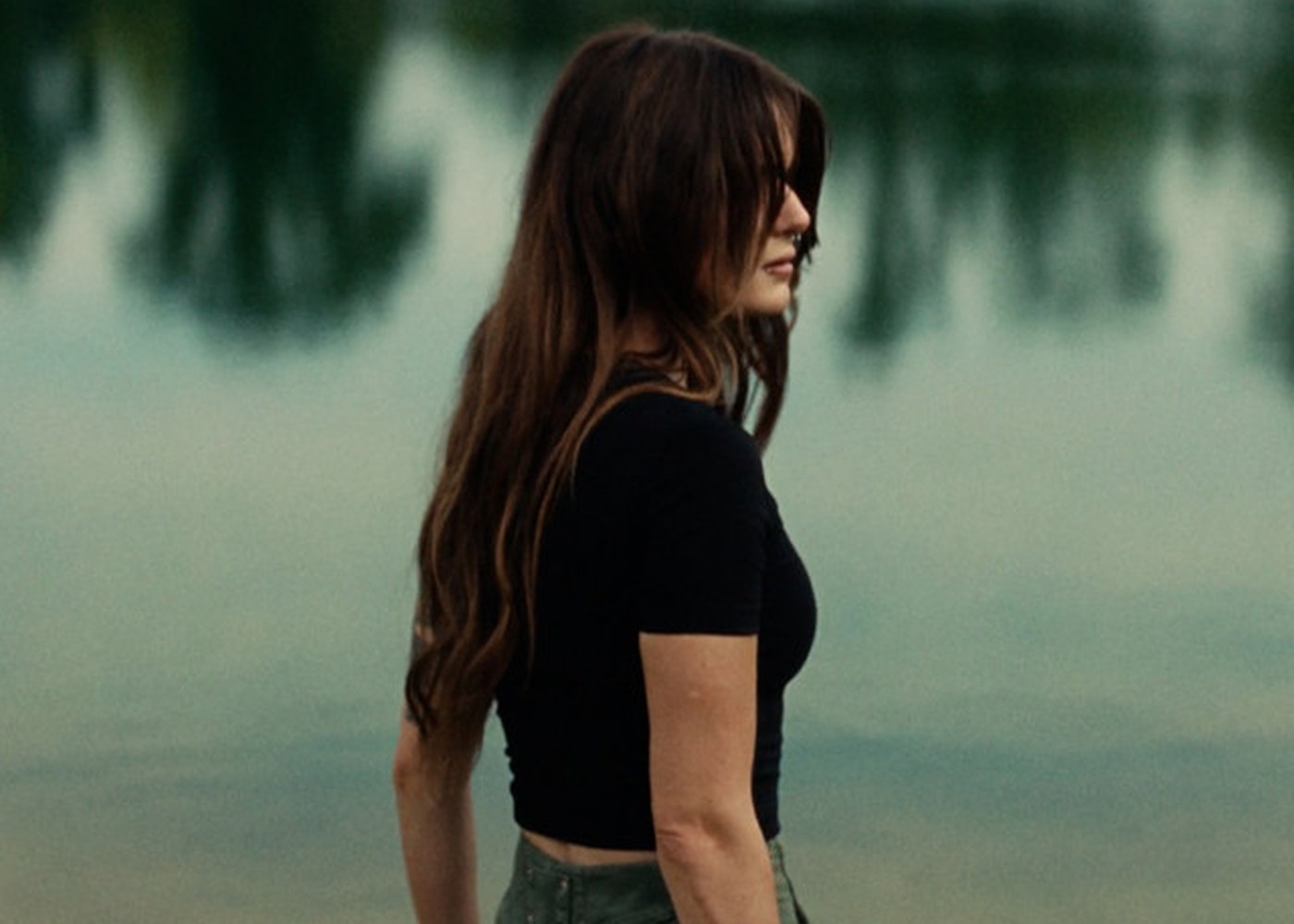
"Paradigm" is about wanting someone you can't reach and fixing that problem in your head instead. The narrator lies still, eyes shut, and edits the other person until they fit: "alter your timeline, mold you into mine." The song dresses this up as longing. The real engine is control. The narrator complains that God won't step in, then does the stepping in personally.
The narrator of "Paradigm" says "I feel fine" three times. Almost every other line in the song says otherwise. Both things hold, because the fine only switches on under one condition: both eyes closed, both lives rewritten, one person reshaped without being asked. The song is about a love that never leaves the speaker's skull, and about how quickly wanting someone turns into authoring them.
Start with the first line. It's strange.
"I'll know the time of when your lungs start breathing"
That is a watcher's line. Someone at a bedside, counting breaths, claiming intimate knowledge of a body that hasn't invited them in. Then comes the Venn diagram, a classroom chart dropped into a love song, used to find where the narrator's heart "starts beating." It's almost funny. The speaker needs a diagram to locate their own pulse, and the only place it shows up is in the overlap with someone else.
The verse ends with the line that sets the trap: "God will watch us, but he won't intervene." Remember that one. The whole song quietly answers it. A watcher who refuses to act is exactly what the narrator was in that opening line, until the chorus arrives and the narrator stops watching.
"When I close both my eyes, I rewrite both our lives"
Read it slowly. "Both" appears twice, and the symmetry is a lie. The narrator closes both eyes, a choice made alone, and rewrites both lives, a choice that should take two people. The other person gets no vote. The pre-chorus already told us where this happens: "a life lived only in my sleep." Sleep is the only room where the speaker has any power, so sleep is where the speaker uses it.
Then the chorus says the quiet part. "I see something you could be / Alter your timeline, mold you into mine." The speaker looks at a real person and sees raw clay. Altering a timeline is a god's job. It's the exact intervention the first verse said God declined. The narrator never seems to notice the job they've just taken.
The second verse is messier, and more honest about the cost. "Reach out my hand in a way you can't see" is the saddest gesture in the song, a reach built to fail. Words get stuck in the teeth and come up as spit. Every attempt at real contact goes wrong, which is precisely why the fantasy keeps winning.
But look at what the speaker wishes for: "Create a world where I'm not the one who saves me." That's a plea to be rescued. It also sits right next to a chorus where the narrator does all the shaping. The speaker wants to be saved and insists on being the sculptor. I don't think the song resolves that, and I'm glad it doesn't. The line about a "trench so deep" explains why. Walk the same path enough times and it stops being a path. It becomes a place to hide.
The bridge speeds up. Rhymes pile on rhymes: spaces, traces, races, replaces, chase it, face it. The narrator admits the method outright. Gaps in the real person get filled in. Anything the person actually says gets swapped out by a racing mind. Then the strangest line in the song lands twice.
"I think we're meant for fear, it was never real"
Two claims in one breath. The first is fatalism: some people are built for fear, and the speaker counts as one of them. The second is a retreat. "It was never real" could mean the fear, or the love, or the whole relationship. My read is that it means everything, and that the vagueness is the point. If none of it was real, then reshaping it cost nothing.
A fair listener could push back here. Maybe "you" was never a real person at all, only someone imagined from the start, and the song is a confession of loneliness with no victim. That reading has weight. Still, "mold you into mine" carries too much pressure to be about a ghost.
The outro is where the song gets its knife. The bridge lines drift under the final chorus like intrusive thoughts, doubt talking over the fantasy while the fantasy keeps playing. And then one letter changes. "Meant for fear" becomes "meant to feel / a pain that never heals." Fear moves. It wants out. Feeling a pain that never heals just sits there.
So the panic of the bridge settles into something flatter, and the flat calm is worse. The narrator ends exactly where the song began, eyes closed, saying "fine." What changed is that we now know what "fine" costs. It costs another person's right to be who they actually are. The speaker asked why God wouldn't intervene, then spent the whole song proving why nobody should.
Frequently Asked Questions
What is "Paradigm" by Showing Teeth about?
"Paradigm" follows a narrator who wants someone out of reach and copes by imagining a rewritten version of both their lives. The fantasy looks like longing, but the chorus line "mold you into mine" shows it is really about controlling who the other person gets to be.
What does "When I close both my eyes, I rewrite both our lives" mean in "Paradigm"?
The narrator only feels fine while daydreaming, eyes shut, editing reality. The line repeats "both" to show the imbalance: one person closes their eyes, yet two lives get rewritten, and the other person never agrees to it.
Why does "meant for fear" change to "meant to feel" at the end of "Paradigm"?
In the bridge the narrator says "we're meant for fear," a panicked, restless fatalism. In the outro it becomes "meant to feel a pain that never heals," which trades panic for a flat acceptance of permanent hurt, a calmer ending that is also bleaker.
Lyric analysis powered by Scalpel.

Comments
Loading comments…