

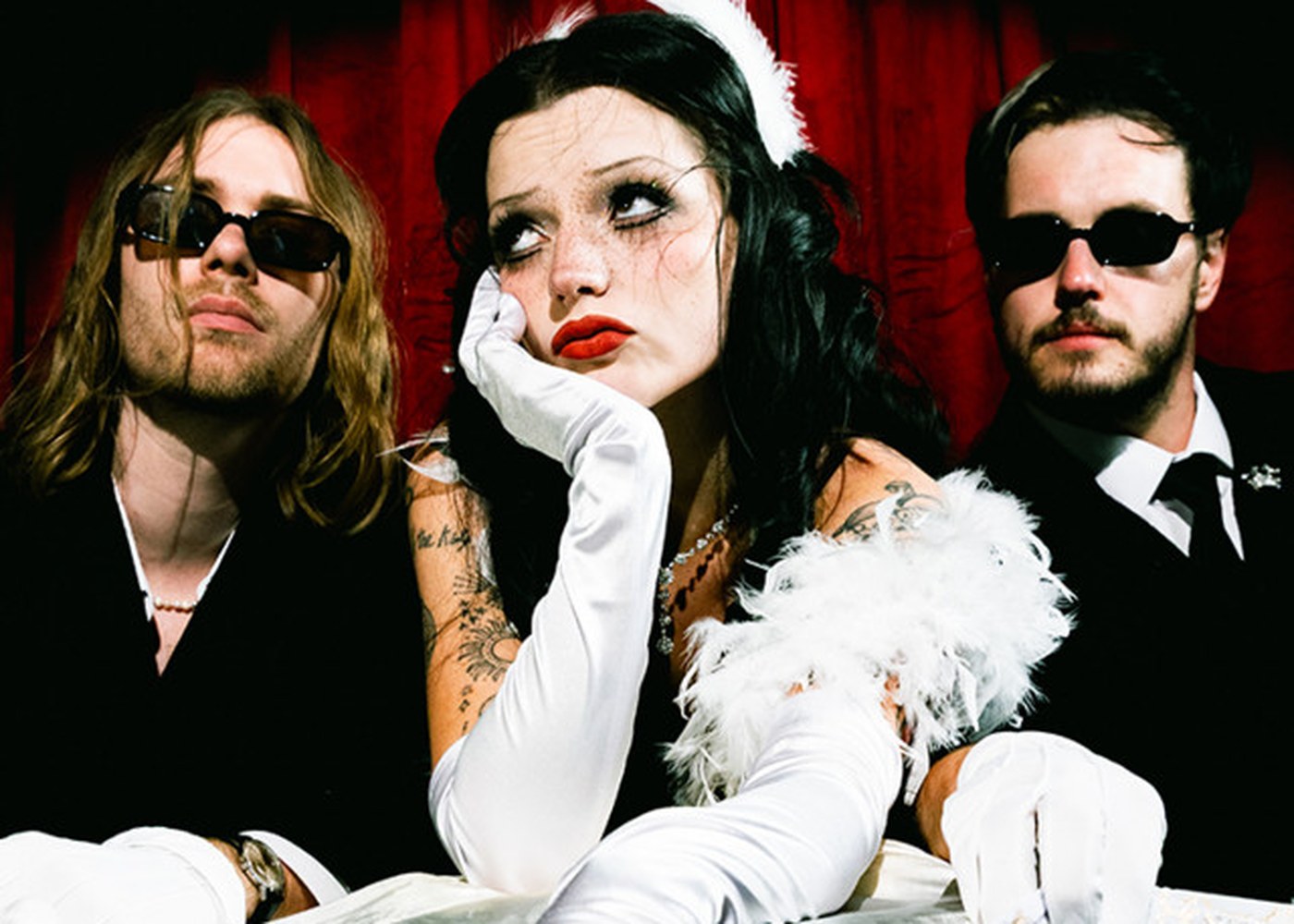
"LIFE'S A GAG" is about feeling dead while still breathing and going out anyway, half hoping the night ends you and half hoping it notices you. The chorus holds the key: a narrator straps on a bulletproof vest and an iron lung "so the night can take me out," and that phrase means both a death and a date.
This song wants to die, and it is also getting dressed up to go out. Both things are true on every chorus, in the same breath, with the same mascara on. VANITY folds the whole contradiction into one phrase, "take me out," and the narrator spends three minutes begging the night to do it, whichever meaning the night picks. Under the greasepaint, the song describes a person so hollow that being killed and being wanted start to look like the same rescue.
The first verse opens in a bedroom with no light in it. The body is running, technically, but the narrator talks about their own heartbeat like a machine part that came back from the shop wrong.
"Living dead, eyes are open / Got a pulse but I think it's broken"
Then the voice turns to a "rat trap baby, sucking your thumb" and sings it a lullaby: go to sleep and never wake up. It's the creepiest bedtime song you could write, and the baby sounds a lot like the narrator's own younger self. The baby soothes itself with a thumb. The narrator soothes it with oblivion.
The pre-chorus admits the worst part out loud. Help exists. Someone has reached in.
"Acting like a rotten dog / I bite the hand that helps"
A rotten dog was once a good pet, and the narrator knows it. Remember that bitten hand, because the song brings it back later in the form of a stranger on the phone.
Now the chorus, and the image I can't stop picturing. A bulletproof vest and an iron lung, worn so the night can take them out. An iron lung is an enormous metal tank that breathes for a body that can't. You cannot hit the town in one. Imagine trying to wheel it past the velvet rope. The picture is gothic slapstick, and it tells you everything: the narrator armors and life-supports the very body they are offering up to be destroyed. Nobody protects something they truly want gone. They protect something they want to be held.
So "take me out" splits right down the middle. One meaning is a body bag. The other is a dinner reservation. The narrator suits up for both because, from inside this much numbness, they feel identical: someone or something finally choosing you.
"One man cult, look what I've become / Desperate for a crowd"
A cult of one is a person worshipping themself, which sounds like vanity until the next line confesses the catch. Cults need followers. The narrator has built an altar in the mirror and nobody is kneeling at it, and the loneliness of that admission cuts through all the spectacle.
"Fucked without a safe word / Life's a gag stuck in my mouth"
The gag works twice. It's the object shoved in to keep you quiet, and with no safe word there's no agreed way to make it stop. It's also a joke, the cosmic punchline of being alive when you didn't ask to be, which is exactly why the iron lung image is funny in such an ugly way. The narrator can't scream stop. They can only keep singing the chorus.
The second verse is weirder, and meaner. "If you don't like what you see / Then you're the same as me" turns on whoever's watching and drags them into the mess. Then comes the line that sounds like a goth bumper sticker until you sit with it.
"Who am I if not deceased?"
Death has become the narrator's whole identity, the only costume that still fits. And yet two lines later the same voice argues for living: "Won't find out if you never live it." That flip is the most hopeful thing in the song, and the moment it's sung, a 911 operator cuts in asking about the emergency. Someone answered. The narrator wanted a crowd and got one voice on a phone line, which is the bitten hand reaching in again.
But the outro refuses to let the rescue stick. The chorus said "look what I've become." The final chant says "look what you've become," sung like a playground taunt at a big sore loser and a big crybaby. I hear the narrator scolding their own reflection, the thumb-sucking baby from verse one all grown up and still wanting to be numb. A reasonable fan could hear the accusation aimed outward instead, at the listener who didn't like what they saw, and the lyric leaves that door open on purpose.
Either way, the contradiction from the first chorus never resolves. The narrator still wants to die and still wants to be wanted, and the song never decides which kind of taking out the night will deliver. What it does reveal is that, for this narrator, both endings answer the same need: to stop being invisible. The vest stays on. The iron lung keeps breathing. Somebody, please, just show up.
Frequently Asked Questions
What is "LIFE'S A GAG" by VANITY about?
The song follows a narrator who feels dead while still alive and heads out into the night half wanting to be destroyed and half wanting to be noticed. The chorus phrase "take me out" carries both meanings, a death and a date, and the narrator dresses up for both.
What does "Life's a gag stuck in my mouth" mean?
"Gag" works two ways: a gag silences someone, and a gag is a joke. Paired with "fucked without a safe word," the line says life feels forced on the narrator with no way to call stop, and also like a cruel punchline they can't laugh off.
Why does the outro switch to "look what you've become"?
The chorus says "look what I've become," but after the 911 call the outro flips to "you've." It most plausibly turns the accusation on the narrator's own reflection, the thumb-sucking crybaby from the first verse, though it can also be heard as a taunt aimed at the listener.
Lyric analysis powered by Scalpel.

Comments
Loading comments…