

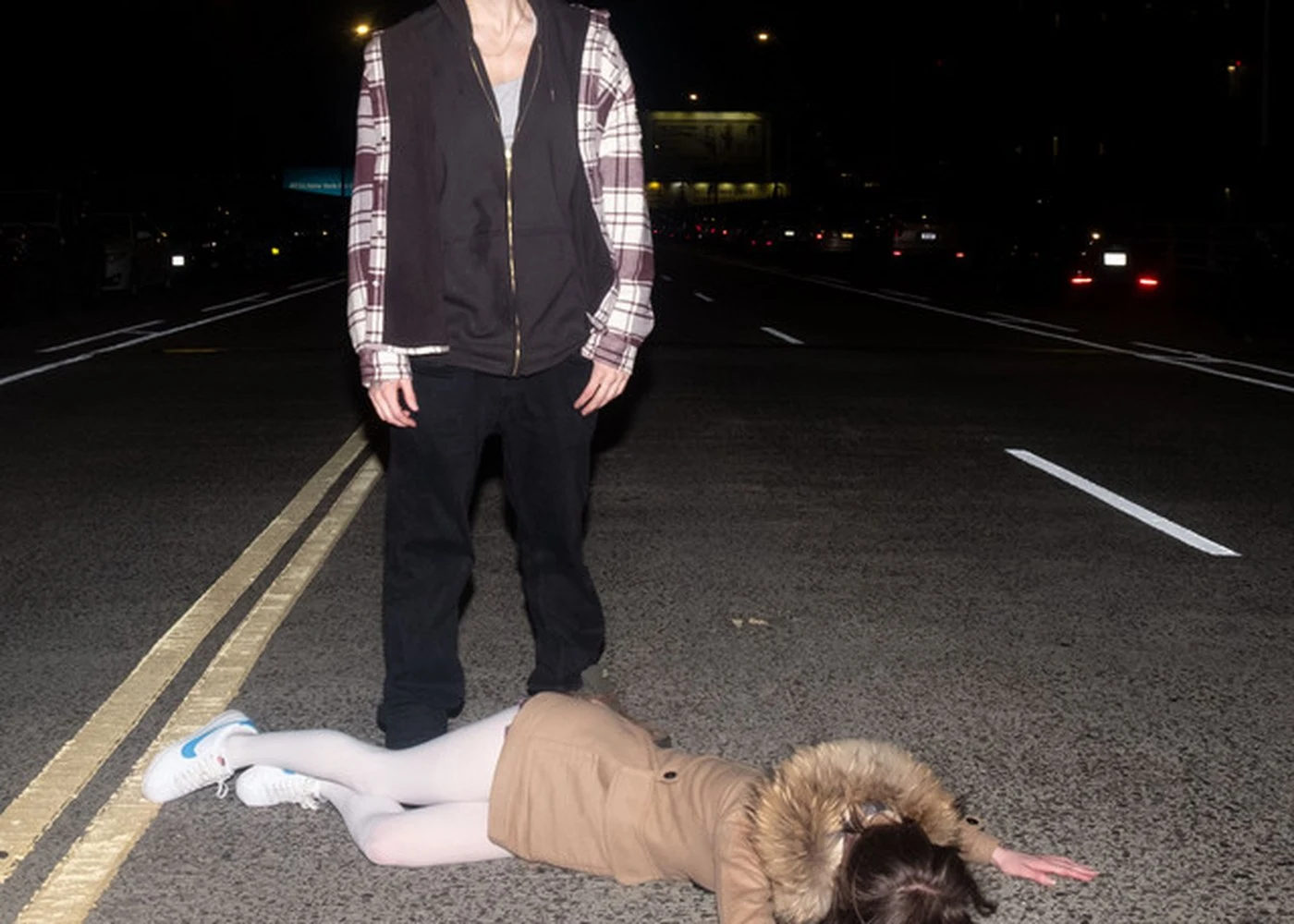
Searing burns. That's the entry point, no context, no preamble. Something hurts from the inside and the narrator can't name the source cleanly because the source is someone they're still reaching toward. That's the knot at the center of "Just Your Doll": the person burning you is also the person you're begging to catch you, and the only way to survive that contradiction is to hollow yourself out completely and hand the shell over.
The song's central argument is that submission here is a dissociative strategy. The narrator becomes an object because objects don't feel burns.
The Lie You Can Feel
The opening lines set up something most breakup songs leave vague. "It's like you can't decide / Searing burns / I hate feeling you lie" makes the lie physical rather than conceptual. The narrator doesn't say they know they're being lied to. They feel it, the way heat moves through skin. That distinction matters. Cognitive knowledge you can argue with. Physical sensation just is.
"Weigh it down" pushes that further. Whatever is happening between these two people has mass. It presses. And then:
"I'm blurring the line"
That line does something the rest of the song keeps circling back to. It doesn't say the narrator is confused. Blurring is active. They're doing it on purpose, smearing the border between self and other, between feeling and not-feeling, because clarity is what hurts. If the line stays sharp, they have to admit what's real. So they dissolve it. You've probably hit play on this at 2am with headphones in, in the dark, and known exactly what that dissolution feels like.
The Doll Logic
The chorus is where the coping mechanism shows itself fully, and it's genuinely unsettling once you hear it straight.
"Break my fall / Please don't let my veins constrict"
That second line is the one I keep coming back to. Constriction is a shutdown response, the body cutting circulation when it's overwhelmed. The narrator is asking someone, possibly the same person who's lying to them, to prevent their own nervous system from collapsing. They're that dependent. They've handed over not just emotional regulation but physiological survival.
Then immediately:
"I'm just your doll, I promise"
The "I promise" is what breaks it open. Dolls don't promise. The fact that the narrator has to verbally commit to being an object tells you they haven't actually managed it yet. They still feel. The doll identity is aspirational, a state they're trying to achieve because if they get there, nothing can touch them. Passive. Handled. Inert. Safe. That's the offer on the table: I will be nothing, please just don't let me feel this.
Hell With No Company
The layered section shifts the texture completely. "I'm, I'm lost-lost in hell / I'm the only one in hell" runs as both a main vocal and a counter-vocal stacked against the verse, and the effect is claustrophobic.
Isolation inside a relationship is a specific kind of pain. The person who made the hell is still right there. They're just not in it with you. The narrator burns alone while the other person remains undecided, unbothered, still somewhere in the gray zone above whatever this internal fire is. That's the cruelty the song names without editorializing: one person is consumed, one person hasn't made up their mind yet.
The repetition of "lost-lost" stutters like a glitch, which is exactly right. Dissociation doesn't feel like a smooth drift. It jerks. It repeats. It skips and comes back to the same frame.
What the Loop Closes On
The song returns to its opening lines and then lands on the same plea: break my fall, don't let my veins constrict, I'm just your doll. No resolution. No shift in circumstance. The narrator is still burning, still reaching toward the person who may or may not catch them, still performing objecthood as protection.
A reasonable reading here is that "just your doll" carries resentment, that "I promise" is loaded with something harder than compliance. The song leaves enough space that bitterness could be underneath the submission. That tension doesn't fully resolve, and the ambiguity is probably intentional.
But the read I hold is colder than that. The narrator has genuinely given up on being a subject. Not out of weakness. Out of exhaustion. When feeling everything produces only burns and isolation, becoming a doll is the most logical exit available. The horror the song carries is that it makes that logic feel completely coherent.
Frequently Asked Questions
What is "Just Your Doll" by Snow Strippers about?
"Just Your Doll" is about someone so overwhelmed by emotional pain inside a relationship that they attempt to cope by surrendering their identity entirely. The narrator offers to become passive and object-like, a doll, as a way to stop feeling the burns of being lied to and left in emotional limbo. The song frames this not as weakness but as a logical, if devastating, dissociative response to feeling trapped and alone in pain someone else caused.
What does "Please don't let my veins constrict" mean in "Just Your Doll"?
Vein constriction is a physical stress response, the body pulling inward and shutting down when it's overwhelmed. The narrator is describing a state of emotional overload so severe it registers as a full-body shutdown. Asking someone else to prevent that constriction shows how completely the narrator has handed over their sense of safety and self-regulation to the other person, even the person who is the source of the pain.
What does "I'm blurring the line" mean in "Just Your Doll"?
"I'm blurring the line" describes an active choice to dissolve the boundary between self and other, or between feeling and not feeling, as a coping mechanism. The narrator is not passively confused; they are deliberately smearing the line because keeping it sharp means facing the full reality of being lied to and abandoned emotionally. Blurring is how they survive the moment, even if it accelerates their sense of being lost.
Lyric analysis powered by Scalpel.


Comments
Loading comments…