

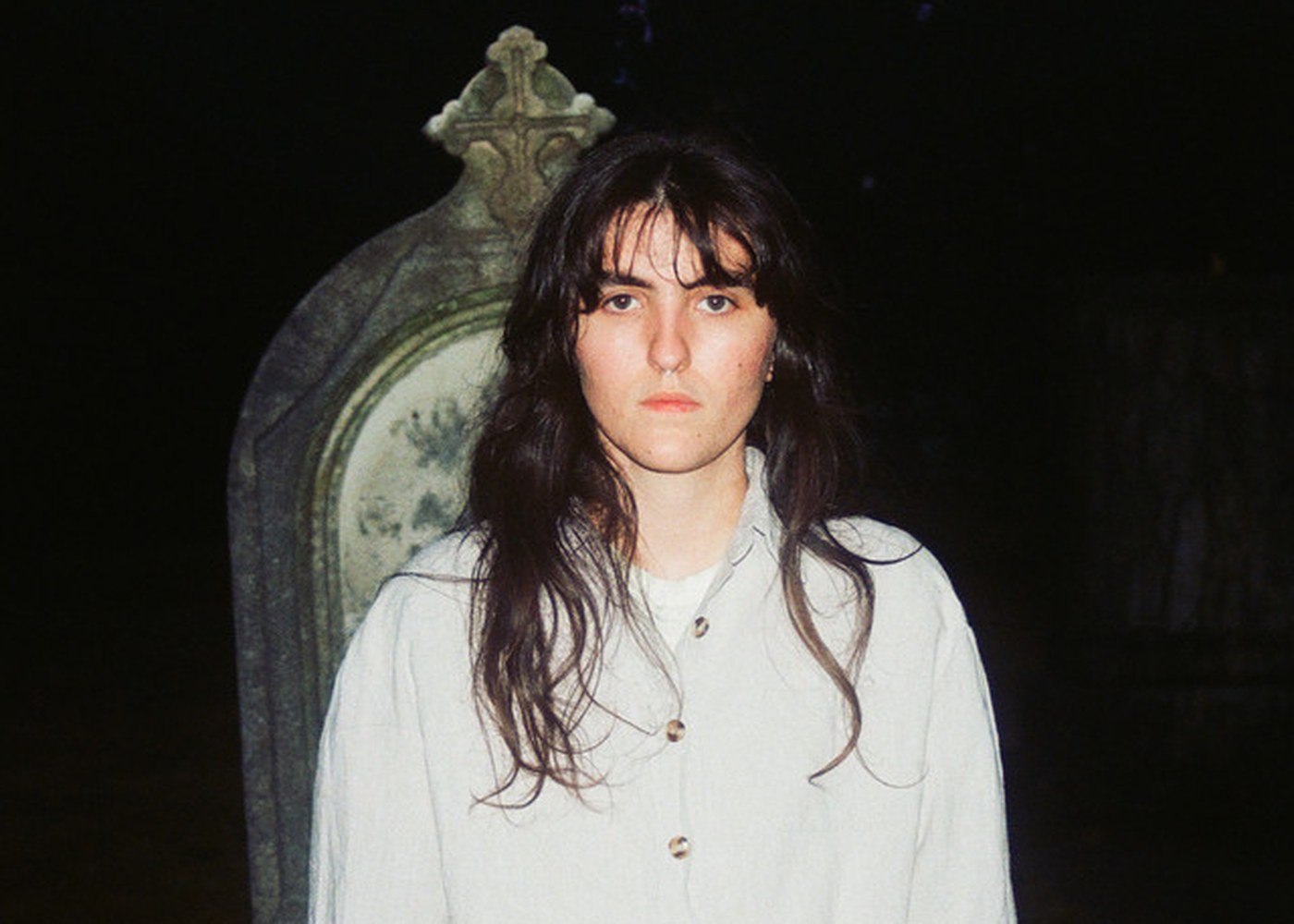
The title of this song tells you the narrator has more than enough, and the bridge admits the cup is only almost full. Both lines are sincere, and the song lives in the gap between them. A person who has finally stopped pretending to be someone else turns back to the younger, silent self they used to be, and offers that self an abundance they are still in the middle of collecting. Read that way, the song is a reassurance written by someone who hasn't finished reassuring themselves, which is exactly why it's so easy to believe.
A crow, and the terms of being near it
The song opens on a street and a bird that has rules. The crow lets the narrator watch him only from far away and only in silence, and the narrator accepts those conditions without complaint, standing still on the pavement most days of the week to be allowed a look.
"He lets me watch him there as long as I stand far away / And as long as I am quiet"
Then the trade begins. The narrator's honey (a pet name or an actual name, the lyric won't say) leaves the crow something shiny, and the two of them wait to see if he brings anything back. He does. Two people have entered a trade agreement with a bird, and they are thrilled about the terms.
The detail that matters most is the disbelief in "we can't believe he does." Nothing in this exchange is assumed or owed, and every return arrives as a surprise. The song is building its whole idea of wealth here, one glinting object at a time. Nobody owes them anything.
Verse 3: the costume goes downstairs
The scene shifts without warning, from the street to a "you" who has apparently been waiting by a door, dressed as someone else, for a holiday that already ended. The narrator breaks the news gently, the way you'd tell a kid the party is over and they can take the mask off now.
"There is no reason to be someone else / Your costume's in the basement at the bottom of a shelf"
The costume is packed away rather than burned, folded at the bottom of a shelf in the basement where nobody needs to look at it, and the song never asks anyone to destroy it. Pretending was a season, the colors have changed, and the disguise has simply been put in storage like every other seasonal thing. There's no confrontation, no big reveal, just a calm logistical update about where the costume went. Halloween ends.
Right after, the refrain arrives for the second time: "I have more than enough." Placed beside the costume, enough starts to mean having no need for a second self to hide behind.
Changing too much, keeping the name, and "Hey, I was there"
Verse 4 is the most anxious moment in the song, and it comes straight out of that freedom. Once you stop performing, you have to live inside a self that keeps moving, and the narrator is frightened that nothing will ever feel the same twice.
"Sometimes I'm scared that I'll only ever feel everything once / And I can never feel the same thing 'cause I change too much"
The fear is specific: if the person feeling things keeps changing, then every feeling is a one-time event, unrepeatable and gone. Then comes the fix, offered almost under the breath: "But I still call it the same name." The narrator can't guarantee the feeling stays the same, so they keep the name the same instead, and the label carries the continuity that the experience can't. The line I keep coming back to is the trailing "and" at the end of it, which never resolves. The narrator doesn't get to finish the thought, because something interrupts.
What interrupts is a recognition. "Hey, I was there," the narrator says, and suddenly the gentle outside voice from Verse 3 collapses into something much closer.
"In the same body that you were watching everything / You wouldn't talk even when somebody was listening"
The "you" was a watcher, the same way the narrator watches the crow: from a distance, silent, taking everything in. They didn't speak because they didn't have the words. The same name in the previous verse now has a body attached to it, and the person who kept changing turns out to have been the same person all along, just younger and wordless.
A reasonable listener could hear this "you" as someone else entirely, maybe the honey, maybe a friend who went through something alongside the narrator. I think "the same body" is too literal to stretch that far, but the song never names the younger self outright, and it lets you keep that door open if you want it.
Either way, the refrain grows: "Well, I have more than enough / For the both of us." The narrator now has the words the younger self lacked, and offers to cover them. It's a generous line. It's also a big promise.
The bridge: an almost-full cup
The bridge undercuts the refrain it follows. "I am getting close now," the narrator says, and the cup is "almost full" with "all the shiny things I have now." The crow has been the model the whole time: enough is a pile of glinting returns, gathered slowly from patient trades, and it isn't finished yet.
"The cup is almost full now / With all the shiny things I have now"
So "more than enough" was always slightly ahead of the facts. Then the outro repeats "I'll show you how" over and over, and the repetition sounds less like a teacher who knows the answer and more like someone practicing a sentence until it becomes true. Showing is the method, the same way the crow learned to trust: by being shown, again and again, that something comes back.
Conclusion
The title and the bridge never get reconciled, and the song is better for it. The narrator claims abundance before the cup is full because the younger self needs to hear it now, not later, and saying it out loud is part of how the cup gets filled. Read this way, the song makes a case that you can promise enough while still collecting it, and that the promise itself is one of the shiny things. Somewhere on that street the crow is still bringing things back, and nobody can quite believe it, and they keep leaving presents anyway.
Frequently Asked Questions
What is "I have more than enough" by Searows about?
The song follows a narrator who has stopped pretending to be someone else and speaks to a younger, silent version of themselves. They promise to have enough words and confidence for both of them, even while admitting in the bridge that their cup is only almost full.
What does the costume in the basement mean in "I have more than enough"?
The costume stands for a performed identity the "you" used to wear. Halloween is over, so there's no reason to be someone else, and the costume is stored at the bottom of a basement shelf rather than destroyed, treating the pretending as a season that has passed.
What does "I'll show you how" mean at the end of the song?
The narrator is offering to teach the younger, wordless self how to feel enough, the way the crow learned to trust through repeated trades. Repeated over and over in the outro, the line sounds like practice, a promise said until it becomes true.
Lyric analysis powered by Scalpel.


Comments
Loading comments…