

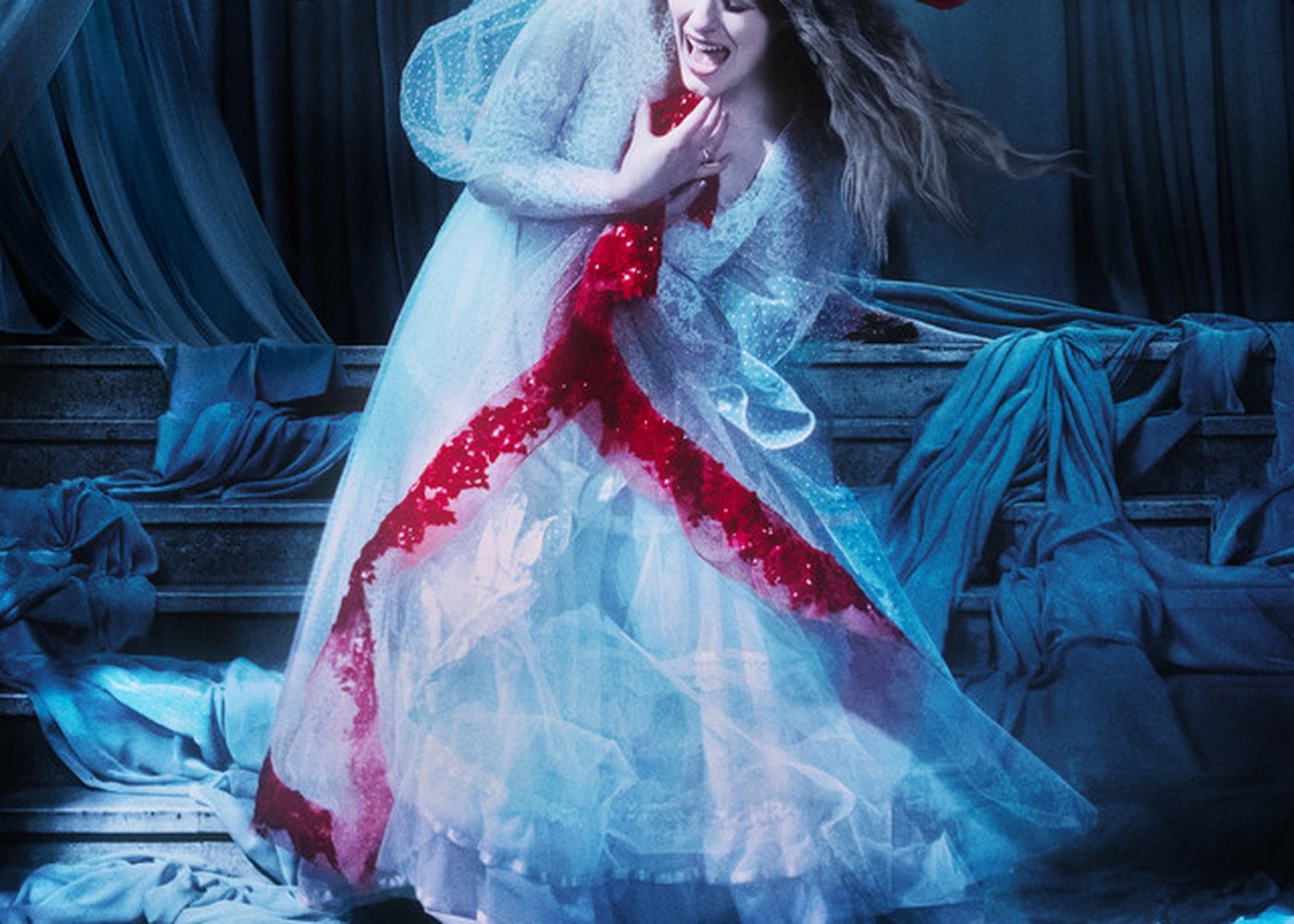
Auburn hair tucked into a fisherman's vest, borrowed from a father, and it is already too much. The woman at the center of "Pre-Raphaelite" has not even spoken yet and she has already become a painting. That is the tension the song refuses to let go of: the narrator sees this person clearly, sees the mythology accumulating around her in real time, and keeps looking anyway.
The argument the song makes is sharper than it first appears. This is not a song about being in love with someone unattainable. It is a song about someone who understands exactly how pedestals are built, recognises she is the one laying the bricks, and does it anyway. The knowing does not stop the feeling. That gap between knowledge and behaviour is where the whole song lives.
The Painting and the Person Outside It
The first verse works like a portrait sitting. Every detail is precise: the red hair, the sloping sad eyes, the blue cable-knit vest. The narrator frames her through Rossetti, through Pre-Raphaelite painting, through a tradition of men who looked at women and made them immortal and motionless. "Rossetti could have seen her, how he would have cried" is a compliment, but it is also a category. To be painted is to be fixed in place.
Then comes the detail that undoes the framing completely. The narrator tucks their own hair into their collar and thinks of her. Not as an act of imitation, exactly. More like an involuntary reflex, the body carrying a memory the mind did not ask for. The woman is not just a vision. She is inside the narrator's gestures now.
The pre-chorus drops the register into something more exposed:
"I'm everything that she isn't, and I would / Make myself in her image if I could"
The honesty there is almost brutal. No pretense that this is purely admiration. The narrator wants to become her, knows they cannot, and has been living in that gap long enough to call it home. The candlelight image that follows is perfect because it does not flatter anyone: she glows, and the glow shows up every inadequacy in the room. That is what it is to be near someone who seems effortlessly complete. You do not feel warmed. You feel seen in the wrong way.
The Magnolia Moment
The second verse is weirder. The woman plucks a pink magnolia from a tree and eats it. Nonchalantly. Mid-conversation.
You could write a thesis on that. You probably should not.
What it does is move the song from mythology into something stranger and more real. This woman does not perform her otherworldliness. She just exists inside it, eating flowers by a stream without breaking eye contact. The narrator watches and the narrator is, understandably, undone.
But the pre-chorus that follows is where the song earns its real complexity. The narrator admits she once believed this woman literally grew from the earth, pedestal and all. Then: "here in the dirt, I know her better, I know her more." She has flaws. She is a patchwork. And the narrator's response to this revelation is not relief or disillusionment. It is delight. "How I enjoy the fall." The pedestal does not collapse so much as become more interesting. Knowing someone's seams and still choosing the myth is its own kind of devotion, and the song treats that as a feature, not a failure.
What the Chorus Actually Does
The line I keep returning to is "I make things, and she's made out of it." It runs through every chorus and it holds the whole song's tension in one breath. The narrator is a creator. The woman being described is made of the same material as creation, as art, as the paintings the narrator references. There is something almost theological in that split: the one who makes versus the one who is. Neither position is comfortable.
The chorus also quietly corrects itself between the first and second appearance. The first time: "She dances naked, my body, I could never show." The second time that line is gone, replaced with "it's in her nature, not any kind of show." The shift is small but it matters. The narrator stops making it about their own body's inadequacy and starts accepting that this woman's radiance is not a performance staged to wound. It just is. Accepting that requires a different kind of surrender than envy does.
The Bridge and Helen
The bridge brings in Helen of Troy and then, crucially, steps back from her:
"Men swear blood oaths for their Helen / But she needs no such defender"
This is the song's most pointed moment. The narrator has spent two verses doing what men have done to beautiful women for centuries: mythologising, painting, elevating. The bridge names that tradition and refuses it in the same breath. She does not need defending. She does not need Rossetti or Agamemnon or the narrator's longing. She exists independently of all of it, spider-writing her letters, eating her magnolias.
What follows is the most grounded thing in the song: "I know her more, I know her better / I know her flaws, and I've known heaven." The flaws and the heaven are not opposites here. They are the same knowledge, arrived at through the same closeness. The song ends not with the pedestal intact or demolished but with something harder to name: genuine intimacy with someone who was first a fantasy, and the admission that the awe survived the introduction.
A fair counterreading holds that the song never fully escapes its own devotion, that "she's made out of it" still enshrines her even at the close, and the narrator's self-awareness changes nothing about the dynamic. That reading has weight. The song does not argue against it.
But what "Pre-Raphaelite" understands that most songs about idealisation miss is that the pedestal was never really about the woman on top of it. It was always about the one who built it, the one tucking their hair into their collar, reaching toward something they could not stop reaching for even after they knew exactly what they were doing. The knowing is the whole story. The reaching continues anyway.
Lyric analysis powered by Scalpel.



Comments
Loading comments…