

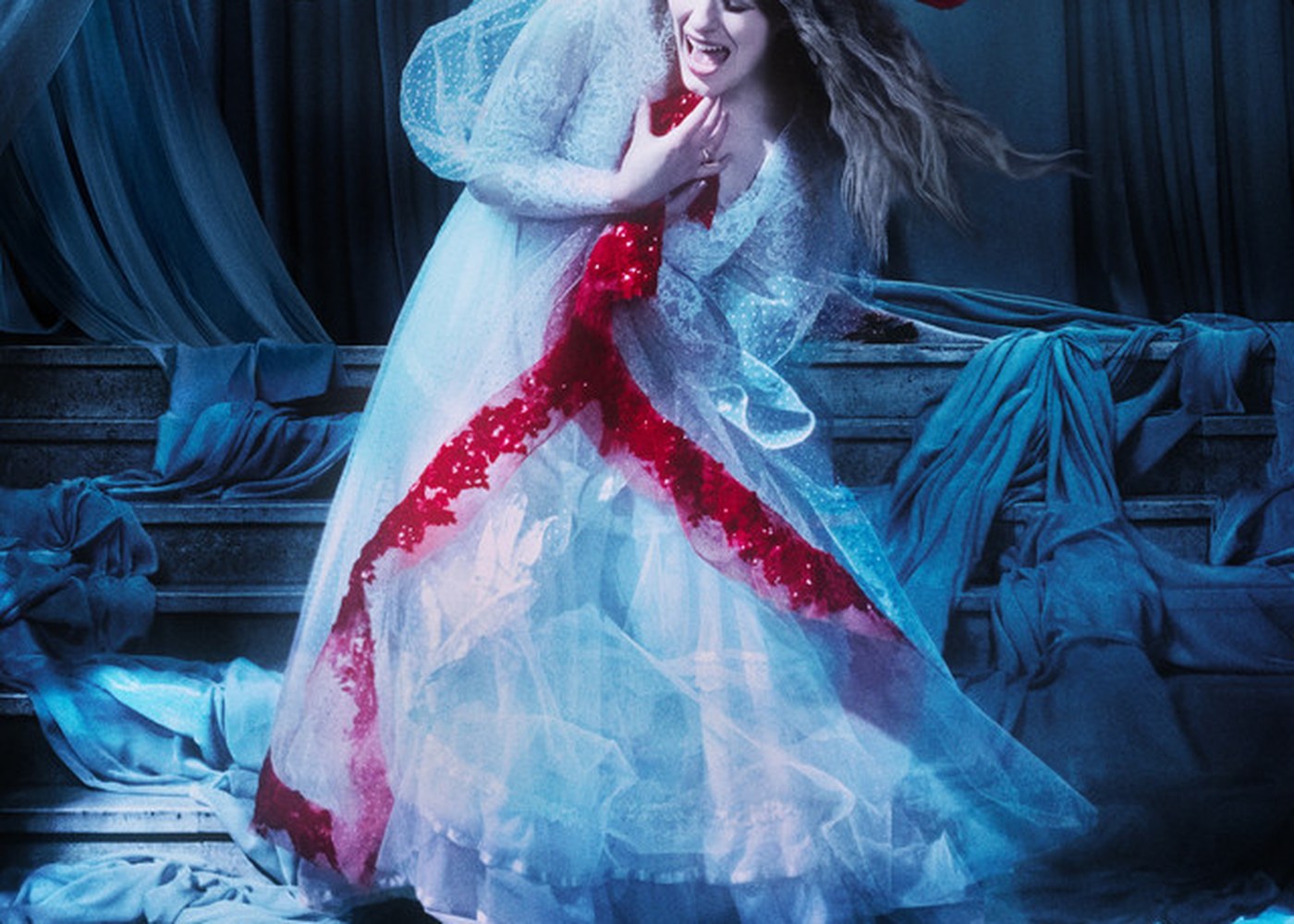
"labour" is about a woman hanging from a rope off an island while her husband grips the other end, refusing to let her drop into the sea and get free. She lists the chores, the cruelty at his table, the cracked skin on her hands. What finally makes her run is a daughter she hasn't had, and that shows how deep the training goes.
Introduction
The narrator of "labour" has already jumped, and she is still asking whether jumping would be so bad. She is halfway down a cliff with a carefully timed escape plan in motion, and the chorus keeps coming back to a question she should have answered before she left. The song catalogues years of unpaid work done for a man who called himself her rescuer, and then it reveals that the narrator still can't justify saving herself without a better reason. That reason turns out to be imaginary. It's the saddest move in the song.
The rope and the chore list
The opening image is brutal in its physics. She is dangling from a rope off an island, and he is "hangin' on so tight" to the same rope, which means the thing keeping her from the waves is also the thing keeping her from leaving. He isn't pulling her back up. He is just refusing to let go, and in this marriage, that's enough to hold her in place.
"So let me go / And dive into the waves below"
Then the pre-chorus turns into a list of questions with an obvious answer. Who tends the orchards, who fixes the gables, who climbs to the spring and carries water back down "to feel your words and their sharp sting"? The song dresses everything in old-world furniture, high tables and gables and mountain springs, so the labour feels ancient, like it has been happening in this house for centuries. The walk back down with a full bucket toward an insult is the detail that stays with me: the reward for the work is more cruelty, delivered on arrival. And she's tired.
A chorus that keeps polling
For a song about leaving, the chorus is strangely uncertain. Her body is breaking in close-up, capillaries bursting in her eyes and calloused skin cracking on her hands, and in between those images she floats a question instead of a verdict.
"If our love died, would that be the worst thing?"
She is asking, still, after everything. The physical damage is stated as fact while the end of the relationship is framed as a hypothetical she needs someone to sign off on, and that mismatch tells you who has been in charge of her permission slips. The line "for somebody I thought was my saviour" sharpens it further, because the man arrived as the rescue and became the job. Even the bed chamber offers nothing back, just silence where closeness should be.
Verse 2: the smart man who can't load a dishwasher
The second verse gets meaner, and specific. "Apologies from my tongue / Never yours" sets up who does the emotional cleanup, and then the dinner table scene arrives with him "lapping from flowing cup / And stabbing with your fork," drinking like an animal and eating like he's in a fight while she serves.
"And weaponise / The false incompetence / It's dominance under a guise"
This is the line people screenshot, and for good reason. Weaponised incompetence is the trick of doing a task so badly, or claiming you simply can't, that someone else gives up and does it forever. The narrator refuses to let him hide behind it, prefacing the accusation with "I know you're a smart man," so the compliment becomes the indictment: he is capable, which means the helplessness is a choice, which means it's control. (Honestly, half the internet has a story about a grown man who mysteriously can't figure out a washing machine.) The verse names the pattern cleanly. Then the song swerves.
"If we had a daughter": the reason she borrows
Everything before this pre-chorus is exhaustion. Everything after it is motion. The hinge is a child who does not exist.
"If we had a daughter / I'd watch and could not save her"
She pictures the girl learning at the same high table, absorbing the same treatment, doing "what you taught her" until she meets "the same cruel fate." And only then: "So now I've gotta run." Burst capillaries didn't do it. Cracked hands didn't do it. Years of apologising for his behaviour didn't do it. A hypothetical girl's future does it in four lines.
The line I keep coming back to is "I'd watch and could not save her," because it shows the narrator imagining herself as a failed caretaker even in a fantasy. Her escape gets framed as protection of someone else, which makes leaving into one more act of service, the last chore on the list. My read is that the song understands this and grieves it: she has been so thoroughly shaped into a caregiver that she can only rescue herself by pretending she's rescuing someone else. The closing "At least I've gotta try" is hope with the volume turned way down.
A fair fan could push back and say the daughter is pure clarity, the moment the narrator sees the pattern as generational and finally refuses to pass it on. That reading holds up, and the song's hard turn toward systems in the bridge supports it. I just hear more sorrow than triumph in a woman who needed an imaginary child to give herself permission.
The bridge: "you" becomes "him"
Then the pronouns change, and the song stops talking to one man. The bridge drops "you" for "him" and "her," and a personal complaint turns into a description of a type, a role, a whole arrangement.
"Just an appendage, live to attend him / So that he never lifts a finger"
The list of roles runs like a chant: therapist, mother, maid, nurse, servant, "24/7 baby machine," all so he can live out his picket-fence dreams that she builds and maintains. Watch the order in "nymph, then a virgin," which runs backwards, as if the demands contradict each other and she's expected to rewind on command. The modern words, therapist and 24/7, collide with the medieval set dressing and collapse the centuries into one long shift.
"It's not an act of love if you make her"
On the surface the line is about coercion: care extracted by pressure stops counting as love and becomes labour, which is the whole thesis of the title. But "make her" also carries the shadow of making a daughter, the baby machine line sitting right above it, so the bridge quietly loops back to the girl from the pre-chorus. She'd be made, and then she'd be made to work.
The final chorus stacks the bridge underneath it, two vocal lines fighting for the same space, the role list running beneath the burst capillaries and the cracked hands. There's no room to breathe in that last pass. It's what too much labour sounds like.
Conclusion
She still never fully answers her own question. Even in the overloaded last chorus she asks whether the end of their love would be "a bad thing," now with a "so" in front of it, as if the evidence has finally piled high enough to tip the scale. The song lets the anger be enormous and specific while showing how hard it is to spend any of it on yourself. As I hear it, the real tragedy in "labour" lives in the rope more than the chores: she's let go of her side, and she's still waiting for a reason good enough to fall.
Frequently Asked Questions
What is "labour" by Paris Paloma about?
"labour" follows a woman trying to escape a marriage where she does all the physical and emotional work while her husband offers cruelty and silence. She decides to run after imagining a daughter who would inherit the same life, and the bridge widens her story into a pattern of roles women are pushed into.
What does "weaponise the false incompetence" mean in "labour"?
It describes a partner pretending he can't do tasks, or doing them badly on purpose, so the work falls permanently to the narrator. By calling him "a smart man" first, she makes clear the helplessness is fake, and the next line names it as "dominance under a guise."
What does "It's not an act of love if you make her" mean?
The main meaning is that care forced out of someone stops being love and becomes labour. Because it follows the "24/7 baby machine" line, it also echoes the imagined daughter, suggesting a child made into the same life of servitude.
Lyric analysis powered by Scalpel.



Comments
Loading comments…