

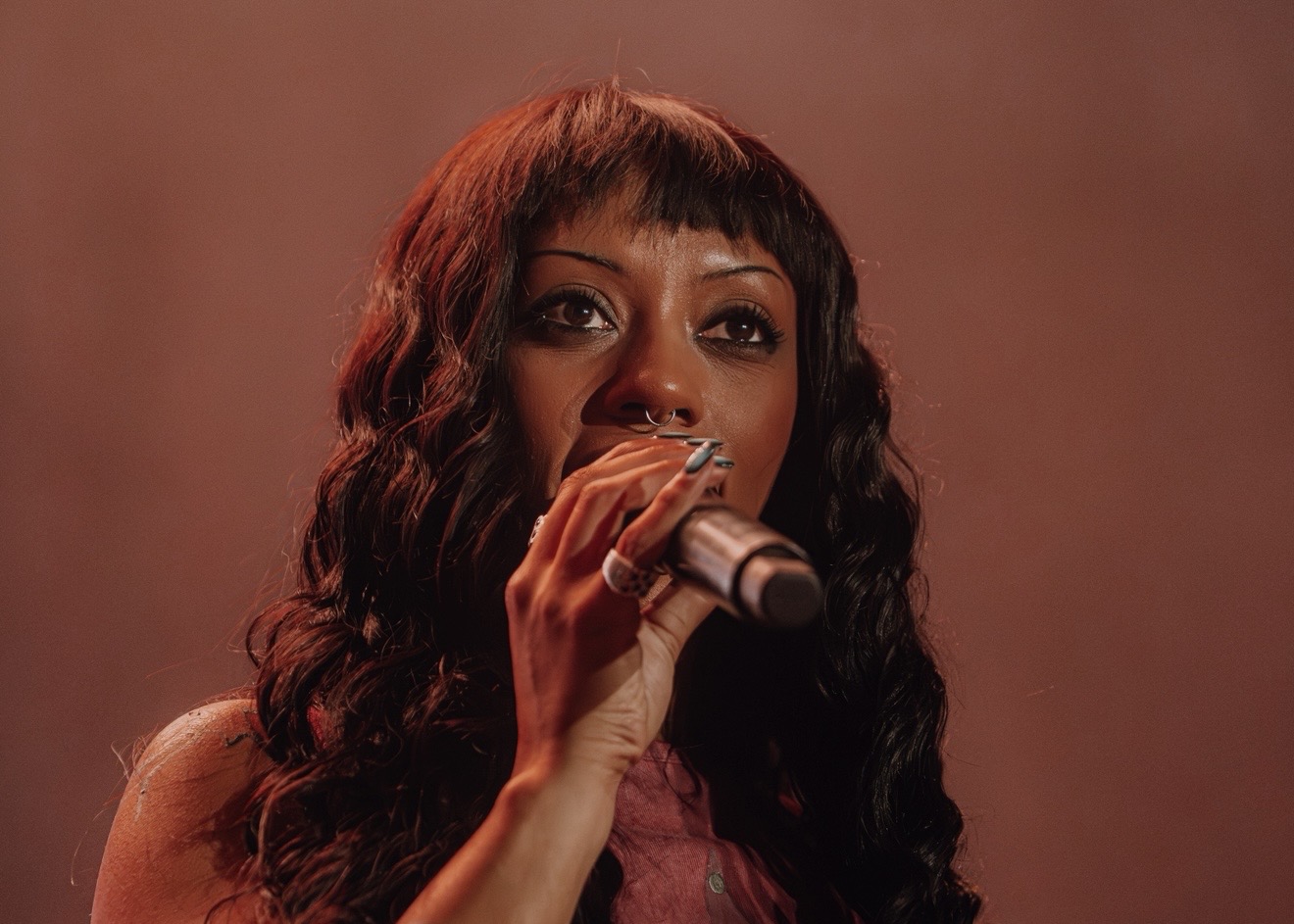
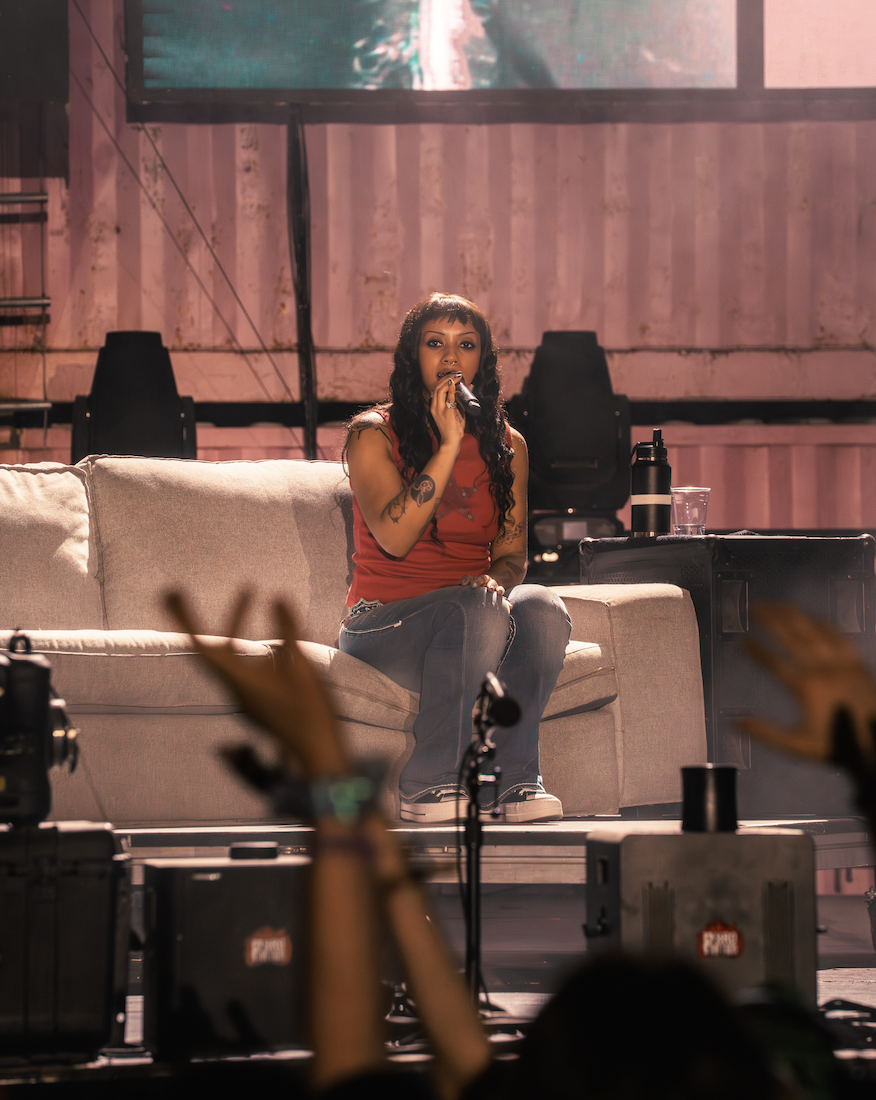
Nia Archives is standing backstage at Lightning in a Bottle looking extremely calm for someone about to bring her live band show to a festival stage for the first time.
She's in cool-girl festival uniform. Tank top, vintage low-rise jeans, Converse. The kind of outfit that feels effortless without looking accidental, and it matches the energy she carries in conversation: relaxed, direct, completely sure of her own taste.
She's played LIB before as a DJ, but tonight is different. Tonight is her first time bringing the live band here, a warm-up for the night and a new way of translating that same energy.
Usually, she says, she's a nervous wreck before shows. Tonight, not really.
"I'm weirdly feeling pretty chill," she says, almost suspicious of herself. "Not sure what's going on."
That looseness makes sense once she starts talking about the crowd. For Nia, the lock-in is physical. You know people are with you when they're moving. Once that happens, everyone's in it together. Jungle at its best isn't something you politely observe. It gets into your body before you've had time to decide what you think about it.
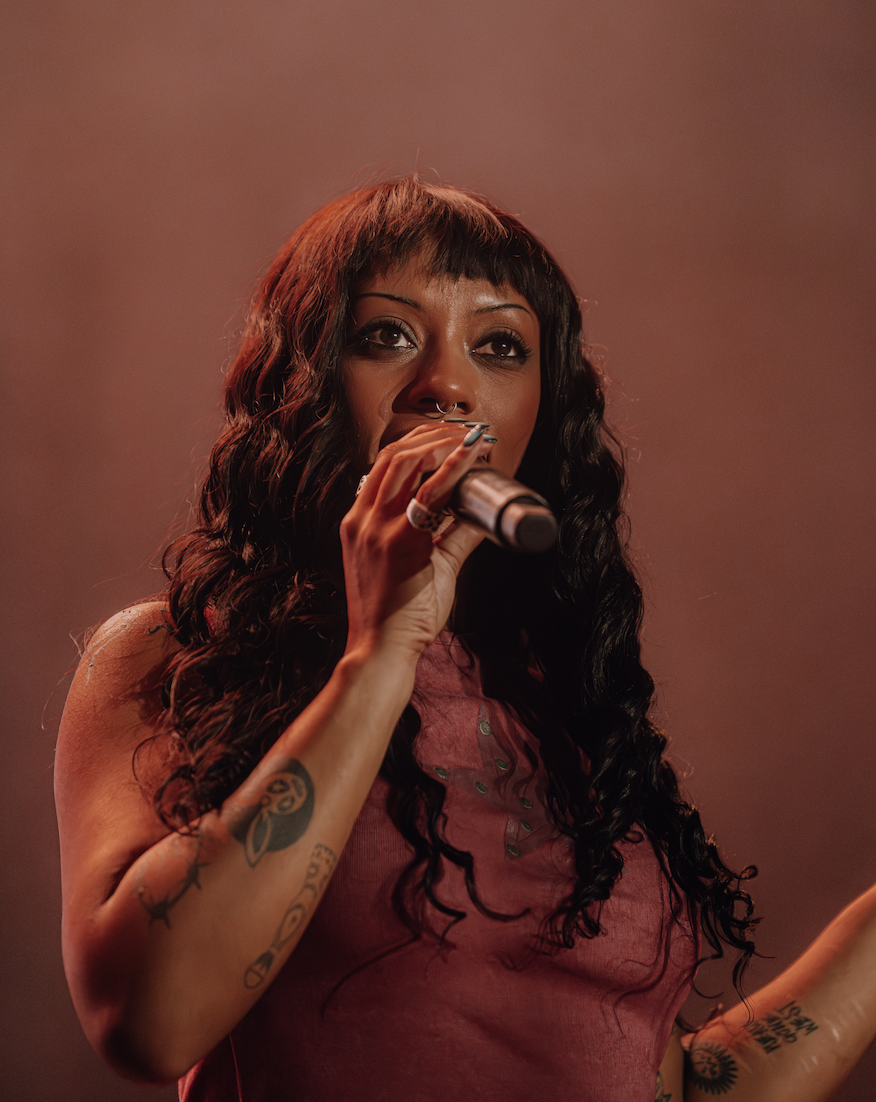
Her next album, out in July, is called Emotional Junglist, and she means it literally. Not as a genre tag or a clever title but as a whole way of being. She got it tattooed as a tramp stamp the other day, so whatever relationship she has to the phrase is, at this point, "pretty cemented for life."
The phrase came from identity. Obviously she's a junglist through the music. But she's also emotional, up and down and sideways, and to her being a junglist is closer to being punk than being a fan of one specific sound. You can be punk without listening to punk music. It's a spirit. A posture. A way of moving through the world.
That's how she talks about jungle the whole way through, like it's both a technical language and an emotional condition.
She loves the drums and the bass first. They stimulate her. The vocals can be anything as long as the foundation is right. The chaos is the point. Jungle is intricate, unstable, alive. She talks about the Amen break, the Think break, Reese bass, the sacred machinery of the genre, but also about Jamaican soundsystem culture, reggae, and the parts of her own heritage that make the music feel less like a reference point and more like a return.
Still, what makes her music feel current isn't just the history. It's the emotion, even the sadness.
"Sometimes people don't want music for the rave all the time," she says.
Her music, she explains, is for the come up, but definitely for the come down too. She makes sad songs. Sad dance songs. She loves partying, loves going out, loves the release of it, but at some point you have to go home. At some point you need a song for when you're not feeling good.
That might be the cleanest explanation of why she's connected so widely. She makes music that understands the rave isn't separate from the rest of your life. The rave is where the feeling peaks, but the feeling doesn't end there. It follows you home and becomes the song you put on when the stimulation drops and the real mood comes back.
Jungle has been around for more than 30 years, but she sees a new generation reshaping it in real time. She points to new-gen junglists like Cheetah and Fez the Kid as part of a wave pushing the sound forward, bringing in different grooves and more four-on-the-floor energy. And in America especially, she can feel something changing.
She's been coming over for the last four or five years, and every time, she says, it feels like America is catching on more. Getting the vibe. Understanding the language.
Lightning in a Bottle feels like the right place for that realization. It isn't exactly a club, isn't exactly a festival, isn't exactly a spiritual retreat, but some overstimulated combination of all three. A place where everyone is trying to dance themselves into a better version of the truth.
Nia's version of that truth is unusually self-possessed.
She says she's always been a bit of a black sheep in music. She started out releasing her own songs and distributing them herself. She only signed a record deal a couple years ago, which she considers late in the process. Coming up that way meant learning to live inside a familiar tension: wanting the work to be understood without reshaping it just to be accepted.
But she's made peace with it.
She makes "quite niche weird music," and that's what she's going to keep doing. If people get it, they get it. If they don't, they don't. She doesn't want to change it.
That's also why the worst advice she's ever gotten is comparison. The industry loves to turn someone else's path into a map. This artist did that, so you should do that. This rollout worked, so copy it. This person made it this way, so why not you?
Nia rejects the premise completely.
You can't copy someone's end result, because you don't have the whole journey that made them who they are. You have to start from your own source. Anyone telling you to piggyback off someone else's blueprint is missing the point.
She isn't trying to become the next version of someone else. She's trying to become more specifically herself.
When asked what her 16-year-old self wouldn't believe about her life now, her answer is sweetly simple: the travel. She'd barely left Europe before, only Spain and France, and now she gets to move through the world doing this. Japan, Australia, New York, Miami, Lightning in a Bottle, to name a few. Her home crowd still means the most, obviously, but she loves being out here. She loves touring. She keeps returning to gratitude, not in the canned interview way, but like someone still genuinely surprised this became the job.
Maybe that's why Emotional Junglist works as more than a title. It holds the contradictions without trying to smooth them out. The chaos and the softness. The rave and the come down. The heritage and the future. The black sheep and the crowd moving as one.
Before she goes, she offers a life mantra.
"When it's all said and done, at least we had fun."


Comments
Loading comments…