

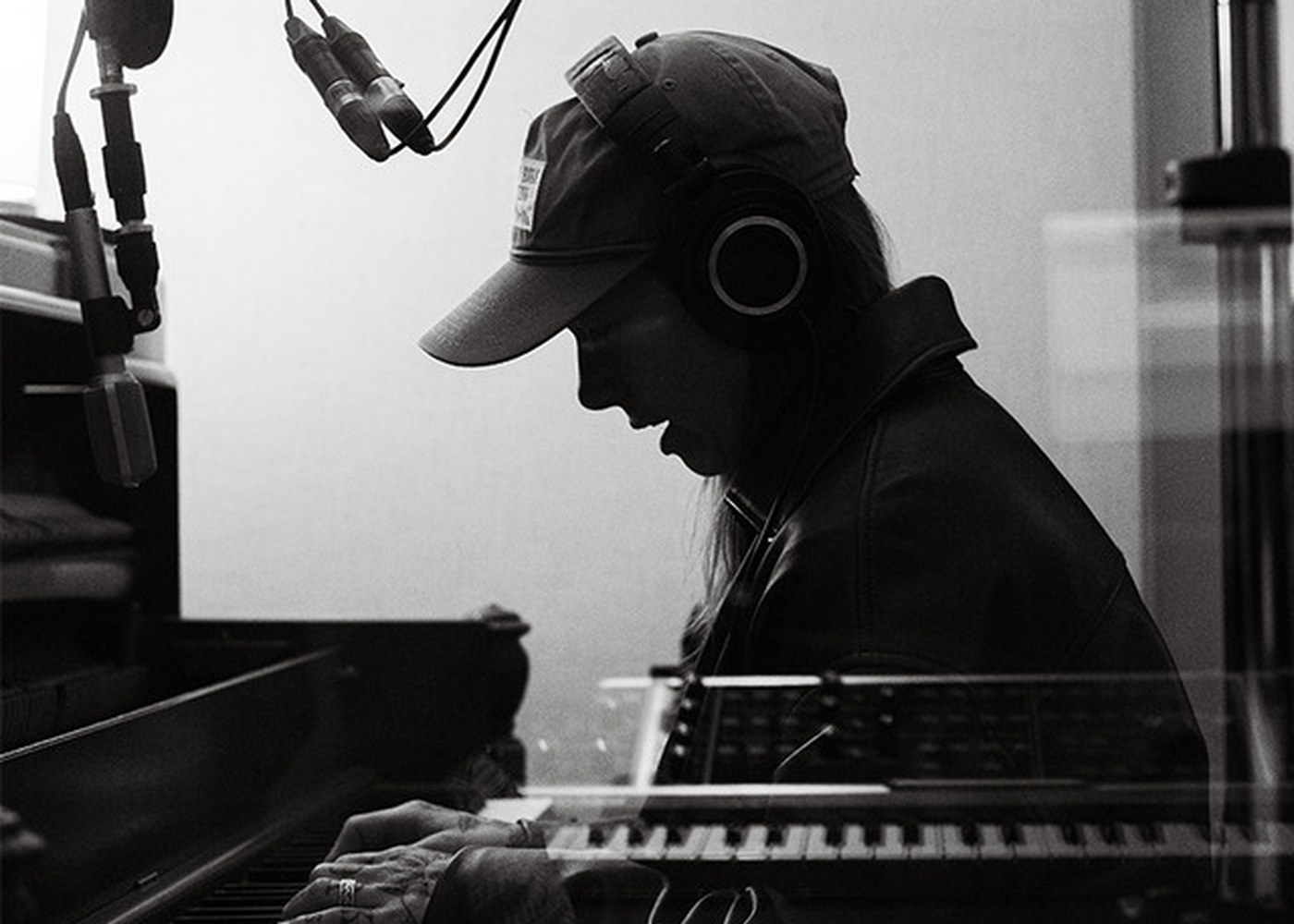
"Ringside" opens as one person's confession of self-punishment and ends as a portrait of two people who cannot let go of each other. The proof sits in the last lines: the nails digging into skin switch owners, and the narrator who kept getting second chances becomes the one handing them out. Both people are in the ring.
Introduction
If you have ever cried in front of someone and then apologized for making them watch, you already know the trap this song sets: you are sorry they saw, and some part of you made sure they would. "Ringside" pulls you into that chair, close enough to see the blood, and keeps you there through three verses of a narrator taking the blame for everything. Then, in the final lines, it changes one pronoun and one verb, and the confession turns out to have had two people in it all along. The song's real subject is mutual dependence, a love where both people grip hard enough to hurt and both keep forgiving, and self-punishment is the costume it wears until the last line.
The ringside seat comes with an apology attached
The opening is blunt on purpose.
"Beat myself until I'm bloody / And I'll give you a ringside seat"
A ringside seat is the expensive one, the place you pay for so you can hear every hit and maybe catch some of the spray, and the narrator hands it over for free. The violence points inward, but the audience is chosen. The narrator does the beating alone and still wants a witness close enough to flinch.
Then, two lines later, comes the apology.
"Say that it's embarrassing / I'm sorry that you had to see me like that"
Read those back to back and they cancel each other out, because you cannot offer someone the best seat in the house and then apologize that they saw the show. The song lets the invitation and the regret sit side by side without comment, and that refusal to tidy them up is the most honest thing about it, since shame and the need to be seen tend to arrive holding hands. Both are true.
Drown or drag: the only two options on the table
Verse two narrows the partner's choices to exactly two, and neither one ends well: "So you could either watch me drown / Or try to save me while I drag you down." A panicking swimmer pulls the rescuer under, everyone knows this, and the narrator names it plainly instead of pretending to be easy to save.
The guilt then gets oddly specific.
"It isn't fair to make you wait around / While all your friends are going out"
After the blood and the drowning, the stated cost of loving this person is a missed night out. Somewhere a group chat is asking where you are. Underneath the near-joke, the narrator measures the damage in the ordinary life the partner keeps giving up, which is how guilt actually talks at two in the morning. It still counts.
Verse 3: a prayer that answers itself
"So Jesus, can you help me now?" reaches upward, and the next line makes a strange bargain: "Trade me in for a briar crown." The narrator wants to swap themself out like a used car and take the thorns instead, choosing the martyr's wound over whatever this current life is. Then the narrator asks whether anybody is coming back and closes the door before anyone can knock: "If they ever were, they are not now."
A fair listener could hear that "Jesus" as an exhausted exclamation, the name people say when they are out of patience with themselves, and the line would hold up. I hear a real prayer, because it asks for something specific. Nobody answers, so the narrator does.
The scratch-off ticket and the nails
The chorus carries the whole song, and the line I keep coming back to is its central image.
"I'm holding on just like a scratch-off ticket / How I dig my nails into your skin"
Think about how you play a scratch-off: you rub the silver coating with your fingernail, hard, hoping a number shows up that almost never does. The narrator folds that motion into holding a person, so clinging to the partner and scraping at them for a prize become one gesture performed on someone's skin. The grip is love and the grip is damage, and the song refuses to separate them.
Then comes the self-awareness, which somehow makes it worse.
"Honey, I'm not stupid / I know no one wins this kind of thing"
Nobody buys a lottery ticket expecting to lose, and the whole point of the game is the slim chance it might pay. So the narrator says the odds out loud while keeping the ticket clutched tight. "It's just another way to kill an hour" shrinks the whole relationship to a pastime, a way of getting through time while "wishing I was different," and that shrug carries more despair than any of the blood in verse one.
The last two lines bring in grace: "Nobody deserves a second chance / But, honey, I keep getting them." In theological terms, that is the definition of grace, a gift nobody earns, and the narrator receives it from the partner over and over while insisting it is undeserved. The tickets keep coming.
The outro swaps the hands
The outro repeats the chorus almost word for word, which is exactly why the changes jolt you. Now it reads "How you dig your nails into my skin," and the closing line becomes "But I keep giving them." The partner, the one handed a ringside seat at the start, turns out to have been gripping just as hard, and the narrator, who spent the song receiving forgiveness, turns out to be dealing it out too.
One more shift hides in the grammar. "Wishing I was different" becomes "Wishing I were different," and the move into the subjunctive pushes the wish further from reality, from something that might happen to something that only exists as a hypothetical. The ringside seat was inside the ropes the whole time. Nobody is just watching.
Conclusion
So go back to the seat you were offered at the start, the one that came with an apology for what you would see. The song spends most of its length convincing you the narrator is the only one bleeding, and then quietly hands you a mirror in the last four lines. Two people are hurting each other and calling it holding on. As far as I can tell, the song neither condemns them nor rescues them; it just admits that the forgiveness runs both ways and the scratching does too. No one wins this kind of thing, the narrator says twice, and both times, someone stays.
Frequently Asked Questions
What is "Ringside" by Julien Baker about?
"Ringside" begins as a narrator confessing to beating themself up in front of a partner and apologizing for it. By the final lines, the roles flip, and the song reveals a relationship where both people cling hard enough to hurt and both keep forgiving each other.
What does "Beat myself until I'm bloody and I'll give you a ringside seat" mean?
The narrator describes harsh self-punishment and offers the partner the closest possible view of it, like the best seat at a boxing match. The next lines apologize for making them watch, so the song holds the wish to be witnessed and the shame of being seen at the same time.
What changes at the end of "Ringside"?
In the outro, "my nails into your skin" becomes "your nails into my skin," and "I keep getting them" becomes "I keep giving them." The partner is now the one clinging and the narrator is the one offering second chances, which shows the dependence was mutual all along.
Lyric analysis powered by Scalpel.



Comments
Loading comments…