

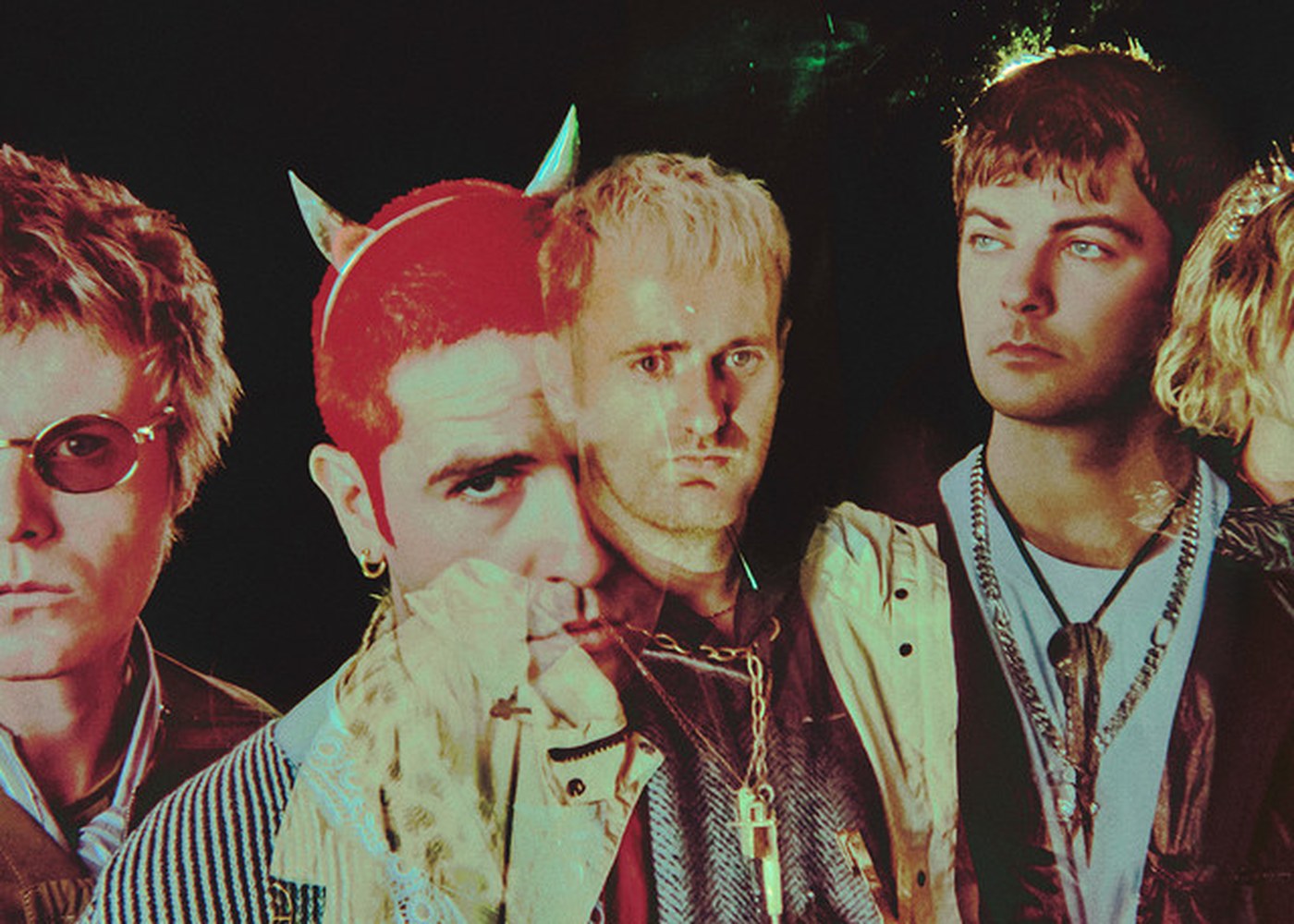
"I wanna bite the phone, I wanna bleed the tone" is the line that cracks the song open. Not because it's the most violent image in the lyric, but because it's the most honest one about what desire actually feels like when it overloads the circuits. You don't want to talk to someone. You want to consume the medium of talking to them. You want the signal itself to hurt you back.
That's what "Starburster" is about. A narrator drowning in want so total and so self-aware that it folds back on itself into something close to comedy, then, without warning, tips over into something genuinely raw. The song doesn't resolve that swing. It just lets both states be true at once.
The Wanting Machine
The first half of the song is a list of wants, and the list is the point. Each "I wanna" stacks on the last with a momentum that starts to feel compulsive rather than expressive. Sharpen a stone, lay the de Ville, talk to a clown, pay him 300 quid to teach apologies. The narrator wants to go to mass and get cast in it, then immediately brackets their own piety with "that shit's funnier than any A-class, innit?"
The self-deflation is doing real work. The narrator is not unaware of how the wanting looks. They are, in fact, performing the awareness. And the "innit" matters specifically because it's a British vernacular tick dropped into an Irish context, the kind of casual linguistic slippage that marks a person who's absorbed more cultures than they know what to do with. That small word carries a lot of displacement quietly inside it.
What the list never does is explain what the narrator actually wants. The woman addressed in the chorus appears and disappears. The wanting sprawls out in every other direction. The stone, the bone, the mass, the clown, the shark. The desire is real but its object keeps sliding around, and that's the condition being described: a person whose appetite has grown too large for any single target to hold.
The Pig and the Gun
The song's weirdest and most deliberate image arrives mid-track.
"I'm the pig on the Chinese calendar, I got a shadow like a .58 Calibre"
The pig in the Chinese zodiac carries a whole set of associations: loyal, honest, stubborn, prone to excess. It's not a glamorous self-identification. The narrator is not calling themselves cunning or strong. They're calling themselves someone built for appetite and not much else, genial and greedy in equal measure.
Then the shadow. A .58 calibre round is not a standard weapon measurement. It's outsized. The shadow the narrator casts is proportional not to their body but to their capacity for damage. The image doesn't map cleanly onto a coherent self-portrait, and that's the point. This is someone assembling an identity out of whatever's at hand: zodiac signs, ballistic units, Salinger comparisons, carrion birds. The "real Scavenger" line confirms it. The narrator is picking through the available symbols looking for one that fits.
I find the Salinger question the most loaded one in this section. "Do you inspire like the same did Salinger?" asks whether the person being addressed has that same quality of wrecking someone's interior life through sheer specificity. It's simultaneously a compliment and an accusation. Salinger made readers feel seen and then spent decades refusing to see anyone back.
Moral Tyranny
Brief. Devastating.
"It's moral tyranny keeping me from thee"
Everything up to this point has been movement, noise, accumulation. This line stops. The archaic "thee" punctures the whole register of the song, and the word "tyranny" turns whatever external force is keeping the narrator from this person into an act of oppression. The narrator is not saying they can't get what they want. They're saying the fact that they can't is an injustice.
That framing tells you exactly how far gone this person is. They've moralized their own desire to the point where their frustration becomes a political condition. And yet the line doesn't quite read as delusional. The older diction, "thee" instead of "you," pulls in a tradition of courtly and religious longing where want really was held up against codes and prohibitions. The narrator is working in that register on purpose. The grandiosity is sincere.
The Outro and What Breaks Through
The song's final movement is a different song entirely in terms of register. The list drops away. The humor drops away.
"For the light that you suffered / To come by, take to my sky / Never wanting, only wonder"
And then the image of a family slope, short to tall, one to three, swallowing a key, the narrator following in their footprints. The wanting has been replaced by something older and quieter: inheritance, continuity, the feeling of walking paths already worn down by people you came from. "Never wanting, only wonder" is the inversion of everything the first half of the song screamed. The narrator isn't claiming to have resolved anything. They're describing a state they want access to, something before appetite.
But notice: it's still a want. "I wanna" has just changed its object. Now the want is to stop wanting. That's the trap the song builds across its full length, and it's too neat to fully trust. A reasonable reading holds that the outro is wishful thinking, the same narrator deploying a different kind of performance: soulful instead of frantic, but still performing.
The Song Behind the Noise
"Starburster" earns its chaos by knowing exactly what the chaos is for. The "I wanna" cascade is not energy for its own sake; it's the sound of a person who cannot organize their desire into anything coherent and has decided to just let it run. The list of wants is funny because it's honest, because most of us have been somewhere close to that state without having the nerve to inventory it out loud.
What the song ultimately argues is that desire without an object is its own kind of religion. You need something to push against, some prohibition or distance, to keep the wanting alive. The "moral tyranny" line makes that explicit. The narrator doesn't actually want the obstacle removed. They want to feel the weight of it. The wanting, the shadow like a large calibre round, the shadow cast by appetite itself, is the whole condition being lived.
Frequently Asked Questions
What is "Starburster" by Fontaines D.C. about?
"Starburster" tracks a narrator overwhelmed by desire that has no clear or stable object. The repeated "I wanna" structure builds a portrait of compulsive wanting that is simultaneously comic and desperate, before the song shifts in its final movement toward something more like inherited longing and wonder. The central tension is between appetite as a consuming force and the wish to transcend it entirely.
What does "I'm the pig on the Chinese calendar, I got a shadow like a .58 Calibre" mean?
The pig in Chinese astrology is associated with loyalty, honesty, and a tendency toward excess, not a heroic self-image but an honest one. The .58 calibre shadow suggests the narrator's capacity for damage or impact is outsized relative to who they actually are. Together the lines paint someone assembling a self-portrait from mismatched symbols, aware that their appetite casts a shadow bigger than they can control.
What does "It's moral tyranny keeping me from thee" mean in "Starburster"?
The narrator frames whatever distance exists between them and the person they want as an act of oppression rather than circumstance or choice. The archaic word "thee" pulls the line into a tradition of courtly and religious longing, where desire was genuinely held against codes and prohibitions. The grandiosity is deliberate: the narrator has moralized their own want to the point where being kept from someone becomes a matter of justice.
Lyric analysis powered by Scalpel.

Comments
Loading comments…