

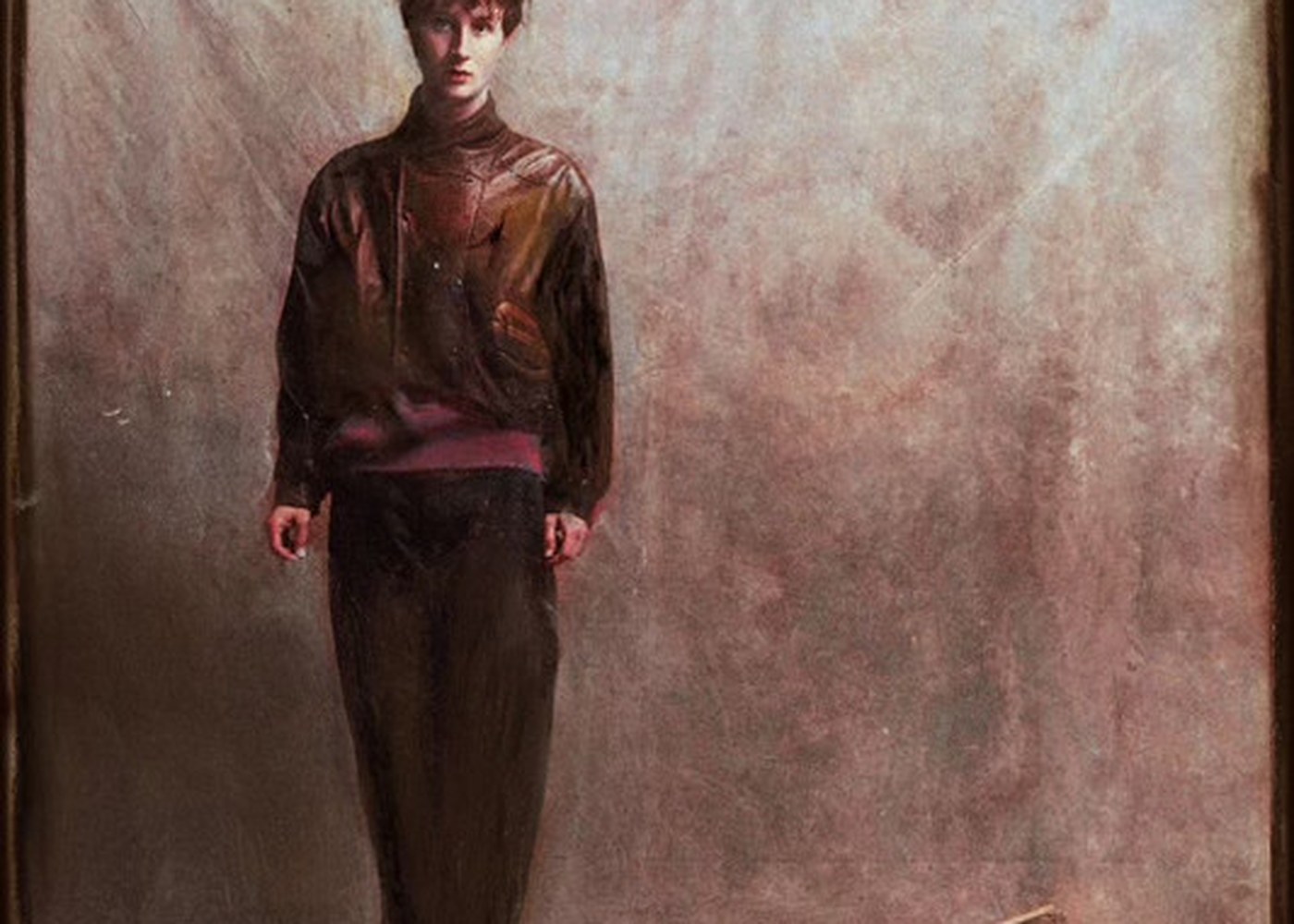
"Little Left Hope" is about people who get named by others and then have to live inside the label. The "you" is named like pastures, then like bankers, and finally gets called "Forsakers." The narrator answers with a tiny plan: a brother, some hands, a band with a strangler on drums. The joke covers the loss, but only halfway.
Introduction
Nobody in this song picks their own name. The "you" arrives already labeled, compared to farmland in the first line and to bankers in the second verse, and every label settles on them like frost on a field. The chorus swears that "the real is the word," which sounds like comfort until you watch what words do to people here. They pin them in place, and by the last line the narrator reaches for a name of their own and comes up with an accusation.
Named like pastures: a childhood seen from above
The first name is gentle on the surface. Fields, stone walls, green. But stone walls exist to keep things in, and two lines later they grow eyes.
"Little stone eyes / Eyes that watch the angles"
The landscape watches back. "Squares and green, and squares and green" is land seen from a plane window, a map of plots. The person named after this place is both the field and the thing being surveyed. Then the scale swings wildly: a neck "grappling Boston Bay," a body wrestling an entire coastline.
The diving board image is the strangest one. Under it, a "she" tosses the "you" between her thumbs, like a coin or a toy. "You're a tumbler" could mean an acrobat, a glass, or a pigeon that flips in flight. The song won't pick, and it shouldn't. Each option is something handled, turned over, used. Then the lights go out, and the verse moves into the blackout.
Stepping out of your bones
In the dark, creeks appear. "Creeks, were they from you?" might be tears, might be something leaking out of a body that's coming apart. I don't think the song wants you to solve them. It wants you to notice the narrator asking where they hide and getting no answer.
"You're stepping out of your bones / So teach me to atone"
Bones are the most fixed part of a person, the frame everything else hangs on. Stepping out of them is shedding the structure that all those names built, the way you step out of clothes on the floor. It could be dying. It could be escaping. The repetition makes it sound like the narrator is watching it happen and can't look away.
Then the narrator asks this departing person to teach them how to atone. No wrong gets named. The apology is ready before anyone admits the crime, which tells you how this family, or this pair, works: guilt comes first and the reasons never arrive. "We were fattened among the calves" fits right in. These are people raised like livestock, then "flailing among the mites," and somewhere in the mess the "you" weaves a tangle that nobody can unpick.
The chorus calls everyone into one room: "Now everybody be here in the room." It has the tone of a family summons. Its last two lines rank the world: "Now is the fake / The real is the word." The present moment is counterfeit. Only what gets said, and said about you, counts.
Named like bankers: the ledger
The second name is colder. Pastures become bankers, and the language turns to sorting.
"Love set in one pile, sex in two piles"
It's funny, and it's bleak. A life gets filed like receipts, and sex takes up twice the space love does. Add "music, sport, and dancing" to the stacks and you have a whole person reduced to inventory. "Like mirrors, we duel / Infinities of faults" shows two people reflecting each other's flaws back and forth forever, neither able to win because each one is only fighting their own face.
So the narrator asks to be carried "to the end / Where the air and the wing are one," to "a nameless stroke of sun." Nameless. The only peaceful image in the whole song is the one place where nobody has been labeled yet.
Little left hope, and a band
The sky collapses into a box. "Now you'll build the Rat Den / Wood with little dead flies." After bays and hills and wings, the song shrinks to a hutch full of insect corpses. Then the title drops, bare, with its grammar slightly off.
"Little left hope"
Read it as "little hope left" and it's a shrug. Read it as hope that got left behind, or the scrap of hope that's left over, and it gets sadder. The odd word order keeps all three readings alive, and the next lines show what that scrap looks like in practice.
"Me and my brother, we've got / Space and got hands." Said twice, the way you count what's in your pockets when there isn't much. The plan that follows is tiny and ridiculous: maybe start a band. If you're hearing this at 2am after a fight with someone who shares your last name, that plan will sound familiar, because sometimes the only repair on offer is a dumb project two people might do together.
"With the strangler you have to like / 'Cause he knows how to play the drums"
The line I keep coming back to is the strangler. Nobody flinches. Violence gets waved through because it's useful, the same way this family seems to have waved through every harm that came with a skill attached. The joke is real and so is the rot inside it.
Then the last word. "You're called / 'Forsakers.'" The line break hangs the name on "you." My reading is that the narrator finally gets a turn to name somebody, and the name is a verdict: you're the one who left. A fair listener could hear it more lightly, with "you're called" pointing at the band, so Forsakers is just a sour, funny band name for two brothers and a strangler. Both readings stand, and the song lets the label belong to the band and the person at the same time.
Conclusion
Everyone in "Little Left Hope" gets defined from outside, by fields, by banks, by a woman with a tumbler between her thumbs. The narrator spends the song longing for a nameless patch of sun. When the chance to name comes, though, they grab the same tool everyone else used and point it at the person who stepped out of their bones. The chorus warned us that the real is the word. What hope survives here is a drummer, a brother, and a label that cuts the moment it's spoken.
Frequently Asked Questions
What is "Little Left Hope" by Dove Ellis about?
The song follows a "you" who keeps getting defined by names other people give them, first like pastures, then like bankers, and finally "Forsakers." The narrator watches this person come apart and ends with a scrappy plan to start a band with a brother, a joke that carries real loss inside it.
What does "Love set in one pile, sex in two piles" mean?
It follows the line "You were named like bankers," so it describes a life sorted like a ledger. Love and sex get filed into separate stacks, and sex takes up twice the space, which is both funny and bleak about how this person's inner life has been reduced to accounting.
Who are the "Forsakers" at the end of "Little Left Hope"?
The lyric "you're called / 'Forsakers'" can point two ways. It may be the name of the band the narrator and their brother want to start, or it may be a label pinned on the "you" as the one who left. The phrasing lets it be both at once.
Lyric analysis powered by Scalpel.

Comments
Loading comments…