

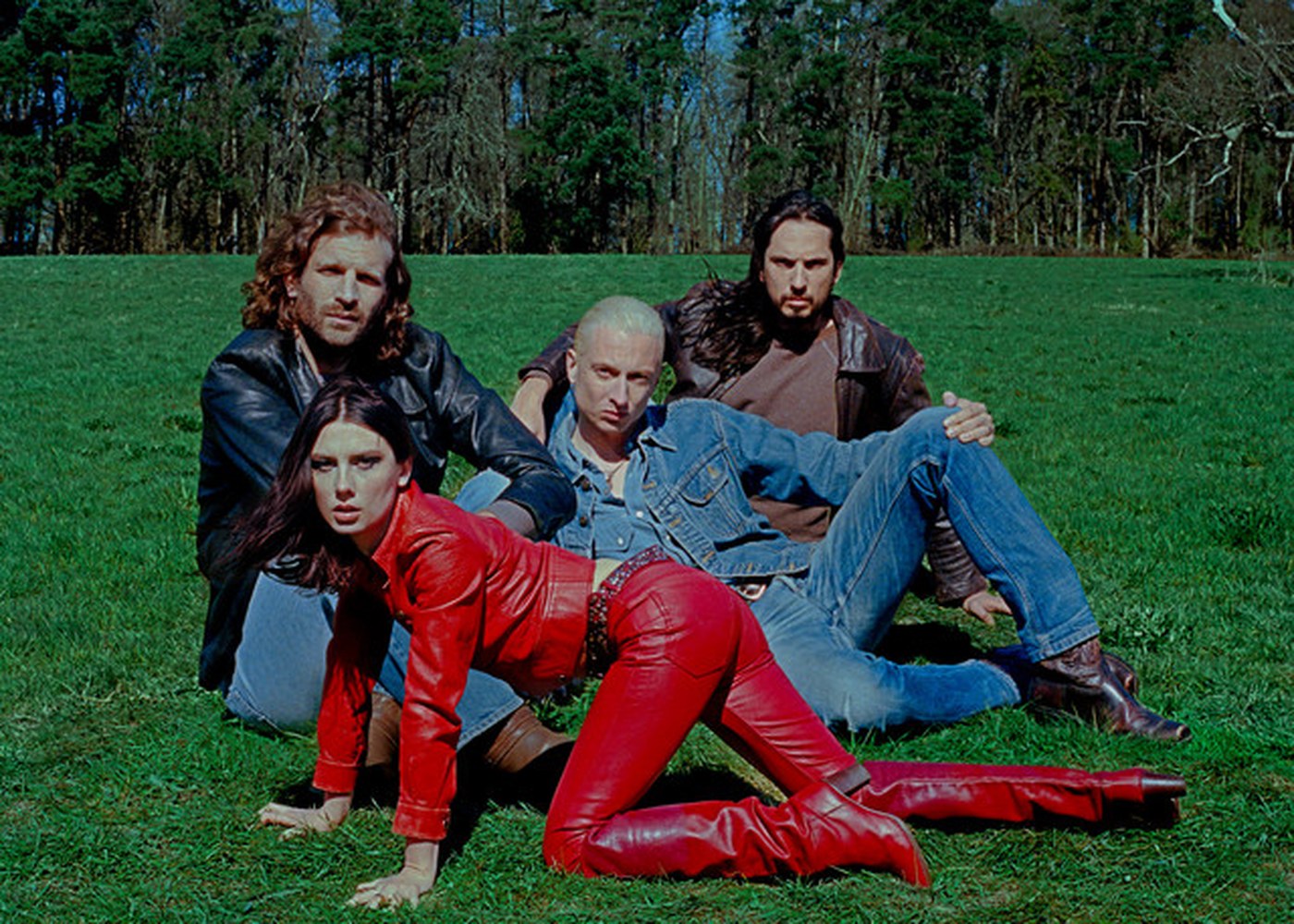
Every verse of "White Horses" insists on choice. Every chorus floats. The narrator claims full control over who counts as family and who they need to be, then spends the hook drifting like a leaf and riding the waves toward a coastline they never decided to reach. The song is about someone who talks like a free agent and secretly longs to be held, and by the final line the longing wins.
The question nobody lets us hear
Joel Amey's first verse opens with a quote. A scholar wrote that music and love are magnetic. Fine. The kicker is where the scholar comes from.
"Wrote a scholar from the island that they kept from me"
An island withheld, by a "they" who never get named. The narrator has a place they should belong to and no access to it. That missing piece explains the next line, which is the one everybody asks about.
"And I don't need to solve my unknown identity / Just need an answer to the question in the taxi"
We never hear the question. That's deliberate. A taxi is a sealed little room with a stranger in the front seat, the classic setting for the casual interrogation about origins and belonging. My guess is the question is some version of that, asked lightly by someone who'd never think twice about it, and it has stuck with the narrator ever since. They insist they don't need the big answer about identity, only the small one for the cab. That's a neat dodge, because the small question and the big one are the same question.
Then the sister arrives. She "paints apathy like blasphemy," which means she treats not caring as a sin. The narrator shrugs back: names don't deserve that much energy. Family, they say, is a choice. It's the confident close of an argument that has clearly been had before, probably more than once, probably at a kitchen table.
A second voice that won't let it go
Ellie Rowsell's pre-chorus pushes straight back. "Know who I am, that's important to me." Where the verse shrugged, this voice cares. It wants to see the wood from the trees, to get some perspective on a tangle.
The last line gives the game away.
"Let the branches wrap their arms around me"
Branches belong to trees, and trees have roots. The song asks to be hugged by the most rooted thing in nature, right before the chorus announces it needs no rooting at all.
The drift, and what white horses mean
The chorus is the song's heart, and it's full of swagger. "I do not need no rooting, I carry home with me." The double negative struts a bit. This is the nomad pose: home is portable, belonging is something you pack.
Look at the verbs, though. A leaf goes wherever the wind sends it. A nomad here is "floating." Even the wind is picked with care, a southeast breeze, which over the Channel pushes northwest, toward England. For a speaker so committed to choosing, they spend the whole chorus being moved by forces they don't control, and they seem perfectly happy about it, maybe happier than in any line where they're steering.
Small aside on that sea. The narrator calls it the "Channel Sea," which isn't quite anybody's name for it. This from the person who says names don't deserve energy. They bothered with one, and got it slightly wrong. The map will survive.
"I can see England waving, white horses carry me"
White horses are whitecaps, the foam that crests on choppy water, the sailor's name for breaking waves. So the literal picture is a body in the sea, held up and pushed shoreward by the waves. But the phrase also carries the old image of a white horse as rescue, the thing that comes to bear you home. And England "waving" works twice: the shimmer of a coastline seen from the water, and a hand raised in greeting. The narrator who said family was a choice ends up being welcomed by a country and carried by the sea, with no effort required.
That's the contradiction the song never names. The freedom it celebrates is mostly surrender. You can hear it as the narrator kidding themselves, or as them finally relaxing. I hear relief.
"I choose you"
The second verse repeats almost everything, which makes the two changes jump out. "I never thought names deserve such energy" becomes "I've seen God's green earth with the people closest to me." The dismissive shrug turns into ground walked alongside someone.
Then "my choice to choose" becomes "I choose you." A principle turns into a person. The warmth arrives suddenly, the way it does when the person you're arguing about walks into the room. Who "you" is stays open: a partner, a friend, the chosen family the first verse defended in theory. It hardly matters. The abstract case for choosing has been replaced by an actual choice, and the argument goes quiet.
There's another way to hear the whole song. The two voices could be two people disagreeing, or one person split down the middle, half insisting identity doesn't matter and half admitting it does. Both readings hold, and the ending supports either.
Conclusion
By the last pass, the voices merge. Rowsell and Amey sing the pre-chorus together, the branches line stutters and repeats like someone reaching twice for the same hug, and the final chorus belongs to both of them. The argument between caring and not caring dissolves into one shared ask: hold me.
That's why the song closes on "white horses carry me" and not on "I choose you." Choosing is the brave part, the part you say out loud in taxis and at family dinners. Being carried is what the narrator actually wanted all along, and the song lets them have it.
Frequently Asked Questions
What is "White Horses" by Wolf Alice about?
"White Horses" follows a narrator cut off from a place they should belong to, who insists that identity and family are matters of choice. A second voice argues that knowing who you are matters. The song ends with the narrator drifting on the sea toward England, suggesting their real longing is to be held and carried home.
What is the question in the taxi in "White Horses"?
The song never reveals it. The context points to a casual question about origins, the kind a stranger asks in a cab, which hits harder for someone kept from their own island. The narrator claims to need only that small answer, though it is really the same as the big question about identity.
What do the white horses symbolize in the song?
White horses is a common name for whitecaps, the foaming crests of waves at sea. In the final line, they carry the narrator across the Channel toward an England that seems to wave back. The image also echoes the white horse as a figure of rescue, turning the waves into something that brings the narrator home.
Lyric analysis powered by Scalpel.


Comments
Loading comments…