

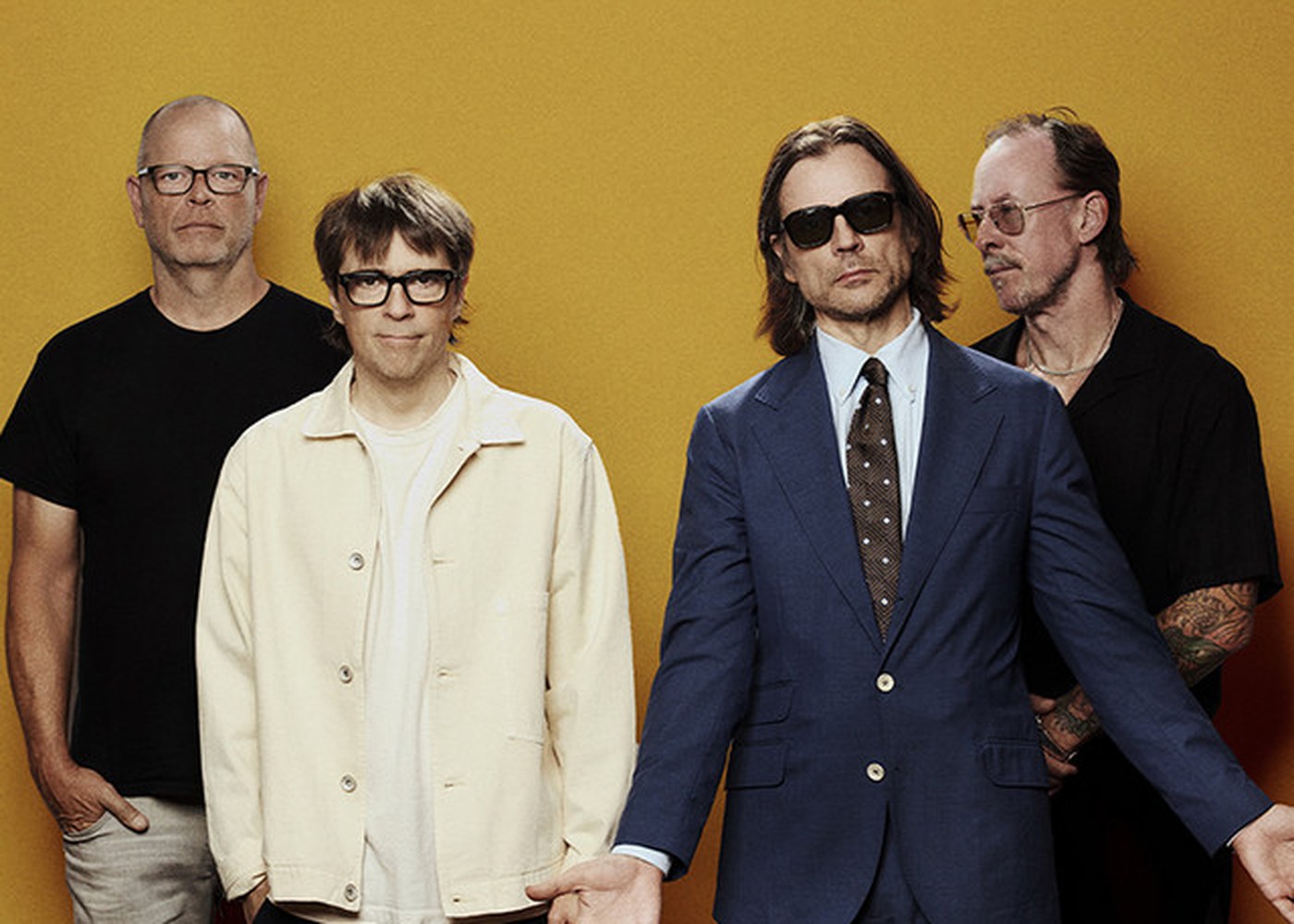
The song knows hope is gone. It says so directly, right there in the chorus. And then it keeps going. That's the whole trick Weezer pulls on "The Show Must Go On": the admission of total defeat and the decision to perform anyway occupy the exact same line, delivered with the same cheerful shrug, and somehow neither one cancels the other out.
Verse 1: Fog, Sprinter Vans, and One Listener
The opening verse does not ease you in. The narrator wakes up in a touring van, describes themselves as "beat down to the ground," and reports that exactly one person is out there listening to their music. One. The "creedler" line is the kind of detail that lands somewhere between self-deprecating comedy and genuine bleakness, and the song doesn't telegraph which one you're supposed to take it as. Both readings are correct.
What the verse is building, though, is a portrait of creative labor as survival, the kind where the conditions are objectively bad and the math doesn't work and you do it anyway because stopping feels worse. Playing to one person isn't a punchline here. It's a data point.
The Pre-Chorus Doing the Real Philosophical Work
The pre-chorus is only two lines long, and it might be the most honest thing in the song.
"Call it faith, call it denial / Hey, who cares? We'll play a while"
Most songs about perseverance want you to believe it's faith. The courage reading, the noble artist grinding through hardship. This one refuses that comfort by putting faith and denial in the same breath and then waving off the distinction entirely. The "hey, who cares" is not a dismissal. It's a full philosophical position: the motivation doesn't matter, the outcome doesn't matter, the show goes on because the show goes on. Camus wrote books working up to that conclusion. Weezer got there in a couplet.
Chorus: The Game Face As Technology
And then the chorus shifts the register completely. Mom told you to comb your hair. Dad said say your prayers. These are the maintenance rituals of people who had to show up to lives they didn't fully choose, passing down the only tool that actually works: perform normalcy until normalcy catches up with you.
"When hope is gone, I'm turning it on"
That line promises something stranger than improvement: the self as machine you can just switch to performance mode regardless of what's running underneath. The game face is a professional skill, not optimism. And the song treats that as genuinely useful, not as tragedy, which is either very healthy or deeply unnerving depending on how much coffee you've had.
The chorus shifts from "I" to "you" to "we" across its three appearances, which sounds like a small thing until you notice it. The narrator's private coping mechanism gets handed off first to a listener, then claimed as collective band identity, the we of people who are all, more or less, running on fumes and muscle memory.
Verse 2: The Injury Report
The second verse reads like an actual tour bus damage log. Karl drank ipecac. Scott stubbed his toe. Brian got his heart broken. Nobody is dying, exactly, but nobody is thriving either. The comic specificity of it matters because it refuses to glamorize what touring or making art actually costs. These are small, real, embarrassing things that slow people down and the show still goes on around them.
"The world's out to get us, and we're out to get the world / This is big time football, in case you hadn't heard"
But then the verse pivots to bravado so casually that you almost miss the gear change. The "big time football" line is ridiculous and self-aware and also completely earnest, which is the exact frequency Weezer has always broadcast on. The underdog claims to be the main character. The van is cramped and they're calling it the big leagues. Both true at once, again.
The Outro and What It Refuses to Say
The song ends on "on, and on, and on" repeating long past the point of meaning, which is the point. The phrase stops being a statement about the show and becomes the show itself: forward motion as its own justification, continuation as the only available argument. There's no resolution because the song doesn't believe in resolution. There's just more.
A reasonable fan could read all of this as straight-up celebratory, a band anthem about the joy of playing even when everything's rough. That reading isn't wrong. The song accommodates it. But I think the joy and the exhaustion are genuinely inseparable here, not one underneath the other but fused, which makes the whole thing more durable than a straight pump-up track would be.
What "The Show Must Go On" ultimately argues is that survival doesn't require hope, only momentum. You comb your hair, you put your game face on, you play to one person, and then you play to no one, and then you keep going because the alternative is stopping and stopping feels like a kind of death the song isn't interested in. The writing's on the wall. Woo.
Lyric analysis powered by Scalpel.


Comments
Loading comments…