

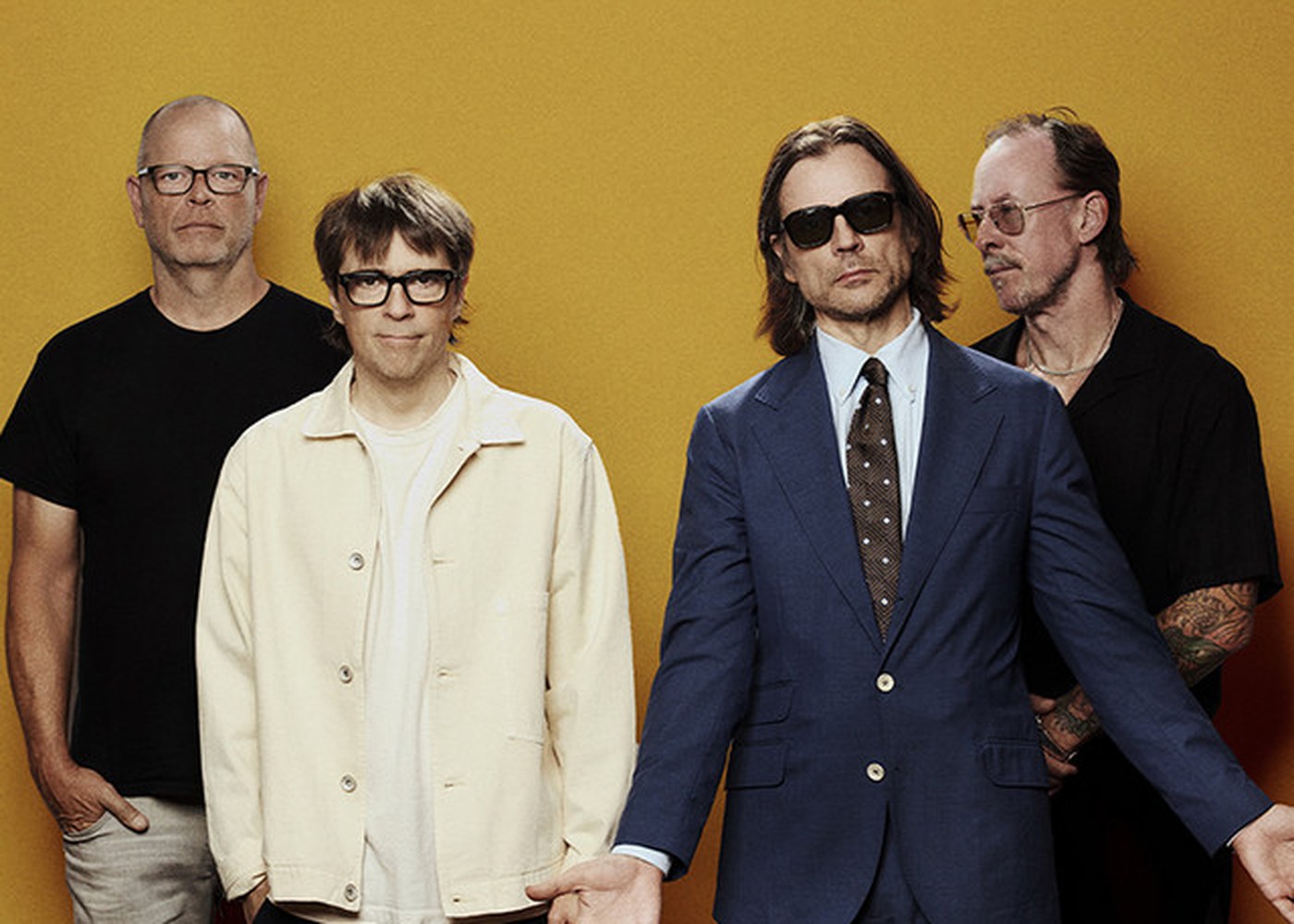
You know the feeling: you're exhausted, you're underpaid, the venue smells wrong, and somehow that's the point. "The LA Sound" drops you into the specific mythology of the young band on the grind, the one where discomfort proves dedication, where every miserable detail gets filed under character-building rather than a reason to quit. The song's central argument is that authenticity lives in the hummus plate you stole and the all-night drive with no heat. That's a bold thing to insist on, and Weezer commits to it without a single wink.
Verse 1: The romance of a bad room
The opening is almost insultingly honest. "The club smells like piss / and there's three flights of stairs" is not the setup for a punchline. No ironic pivot follows. The song just calls it "the folly of youth" and moves on, which is a more sophisticated move than it sounds. By refusing to mock the narrator for romanticizing these conditions, the song asks you to take the romance seriously too.
"Wake up the guys / tell them all that we're on" has the energy of a general rousing troops before something genuinely consequential. The gap between that grandiosity and a three-flight walk-up with a bad drain is the whole joke the song refuses to make. It lets you feel both things at once: the absurdity and the sincerity.
The chorus and what it's actually claiming
"We came to melt your face / we're gonna torch this place" is classic rock-announcement language, the kind of line that lives on tour T-shirts and sounds better after two beers. But in this context, after verse one's honest inventory of bad conditions, the chorus earns a weird kind of weight. The band actually believes this. They drove all night through a broken heater for the right to say it.
"We're gonna take you down / this is the L.A. sound"
Naming the thing "the L.A. sound" is where the song gets interesting. It doesn't describe what that sound actually is. No sonic definition gets offered, no checklist of influences. The implication is that the sound is inseparable from the conditions that produced it: the theft, the drive, the stairs, the smell. You can't explain it. You can only accumulate it.
Verse 2: The Thomas Guide is doing a lot
The second verse is weirder and better than the first. Stealing the headliner's hummus plate is funny, but the Thomas Guide reference is the line I keep coming back to. For anyone who navigated LA before smartphones, the Thomas Guide was a massive spiral-bound book of street maps that lived in your car and got consulted at red lights. Dropping it here is a precise timestamp: this is a story from before GPS, before streaming, before the version of the music industry that exists now.
"We got an all-night drive / and the heater is broken"
The parenthetical "and the heater is broken" lands like a detail someone adds when they're already laughing about it in retrospect. It doesn't break the song's conviction. It deepens it. Anyone can claim they'd sacrifice for their art. Fewer people can tell you exactly how cold the van was.
The outro: when repetition becomes a dare
"You can't fake the real thing" repeated over and over at the end stops being a statement and becomes a challenge. The song knows it sounds like a slogan. It keeps going anyway. By the fourth or fifth pass, the repetition starts to feel less like emphasis and more like defiance, the narrator staring down anyone who'd dismiss the whole mythology as kitsch.
A reasonable counterread exists here: the outro could be taken as self-parody, Weezer playing the earnest-young-band archetype with enough distance to keep their hands clean. I don't buy it, but the song leaves enough room that the argument has teeth.
What the song ultimately insists is that legitimacy accrues from endurance, not from outcome. Nobody in this song makes it big. Nobody sells out a real venue or gets the headliner's dressing room. The van is cold, the club is gross, and the Thomas Guide is already obsolete. The L.A. sound, whatever it is, belongs to that specific combination of belief and discomfort. Weezer means it. That's the whole point.
Lyric analysis powered by Scalpel.



Comments
Loading comments…