

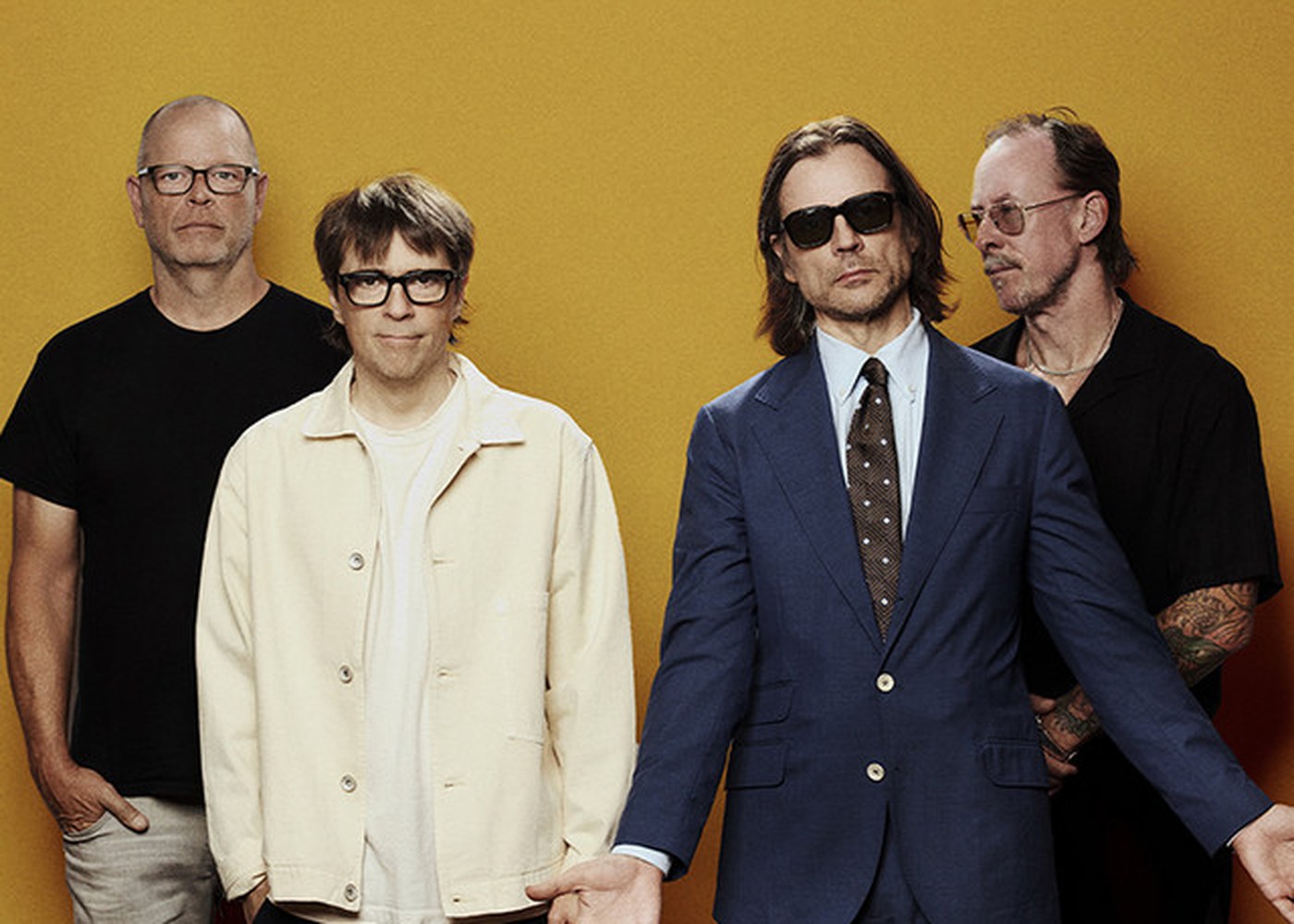
Most songs about selling out treat the decision as a betrayal. The narrator knows better, caves anyway, and the guilt is the whole point. "Say Yes" skips the guilt entirely, which is what makes it stranger and more honest than most songs in that lane. The narrator here agrees to everything not because they've been convinced but because agreement is the fastest exit. Compliance as escape hatch. That's the move.
The Town That Eats You
The first verse sets up the pressure without naming it too precisely, and that vagueness is doing real work. "Everybody here's gonna try and drag me down" could be a small town, a record label, a social circle, a comment section. It doesn't matter which one specifically. What matters is the mechanism: fear gets weaponized until the narrator stops wanting to leave, stops wanting anything at all except a paycheck and a low profile.
"So I only think about how my ass is getting paid / And play the game"
That last phrase lands flat on purpose. "Play the game" is the most defeated three words in the song, stated without drama, almost shrugged. The narrator isn't raging against the machine. The machine won before the first chorus hit.
The pre-chorus punctuates this perfectly. Silicone earplugs. Riff-raff swept under the rug. These aren't metaphors that need unpacking; they're the literal kit for getting through the day. Tune out the noise, clean up the mess, keep moving. The song understands that surviving hostile environments often looks indistinguishable from giving up.
Yoko to John
The chorus is where the song's argument gets sharp. "Say yes / Like Yoko to John" is a weird reference to drop in a pop-rock hook, and it's not throwaway. Yoko Ono spent decades being blamed for the Beatles' breakup, her "yes" reframed as manipulation, as corrosion, as the answer that ended everything. The cultural baggage on that comparison is enormous.
So why reach for it here? Because the narrator is talking about a "yes" that the world will read as weakness or capitulation, but that they're choosing as an act of loyalty to something, even if that something is just their own survival. The Yoko parallel isn't flattering on its surface, and the song knows that. It's saying: I'll say yes anyway, even if everyone decides I shouldn't have.
"What else can I do? / Say yes / Even if I don't believe that it's true"
That last line is the confession the whole song is built around. This isn't enthusiasm. The narrator doesn't buy what they're agreeing to. They're performing agreement because the alternative is worse, or at least more exhausting. Whether that's tragic or rational is the question the song refuses to answer for you.
One Weird Life
The second verse makes a pivot that could easily get lost. After the first verse's portrait of pure defensive survival, the narrator briefly steps outside it.
"I only get one weird life I get to live / And I only get one chance to show you who I am"
This is the line I keep coming back to, because it's the one moment where the narrator sounds like they actually have something at stake beyond damage control. "Weird life" is doing a lot of affectionate work. Not "one life" or "one shot." One weird life, owned and specific. The narrator knows who they are. The problem is the environment that punishes them for it.
The updated pre-chorus swaps out the earplugs for ambition: "Climb that ladder right up to the sky / And when I get there, I will not be shy." Same tune, completely different posture. For a few lines the song imagines getting out the other side with some dignity intact, reaching the top and refusing to disappear. It's the most optimistic moment in the track, and it sits right before another round of the chorus where the narrator admits they don't believe a word they're saying. That whiplash is intentional.
The Bridge Names the Mechanism, Then Leaves
The bridge is blunt in a way the rest of the song avoids. "They'll frighten you / Gaslightin' you / Till you don't know how to act." It names the manipulation directly, strips the ambiguity, and then offers the only advice the song has: hit the road and don't go back. No nuance. No qualifications.
That directness is interesting precisely because it arrives after several rounds of the narrator explaining why they can't do exactly that. The bridge is the song talking to itself, or to the listener, or to both. It knows the answer. It also knows the answer is easier to say than to do.
What's less clear is whether the narrator takes their own advice. The song rolls back into the chorus after the bridge with the same compliance it's always offered, the same "what else can I do." Does hitting the road mean anything if the pattern continues? Does the chorus after the bridge sound defeated, or defiant, or both at once?
What Agreement Actually Means
"Say Yes" operates as a survival guide for people who've figured out that the world rewards agreement and punishes specificity. The narrator knows they're being gaslit, knows they're playing a game they didn't design, knows their "yes" is hollow. They say it anyway.
One reading is that this is pure resignation, the sound of someone who's been ground down into compliance. That reading is available and not wrong. But the song holds something else alongside it: the narrator never stops being aware. They know the game. They know the pill. They know the drill. Awareness preserved even when behavior is compromised is the only thing the song claims as a win, and it claims it quietly, between the lines, under the chorus hook. The earplugs go in. The mask goes on. The weird life continues underneath both.
Lyric analysis powered by Scalpel.



Comments
Loading comments…