

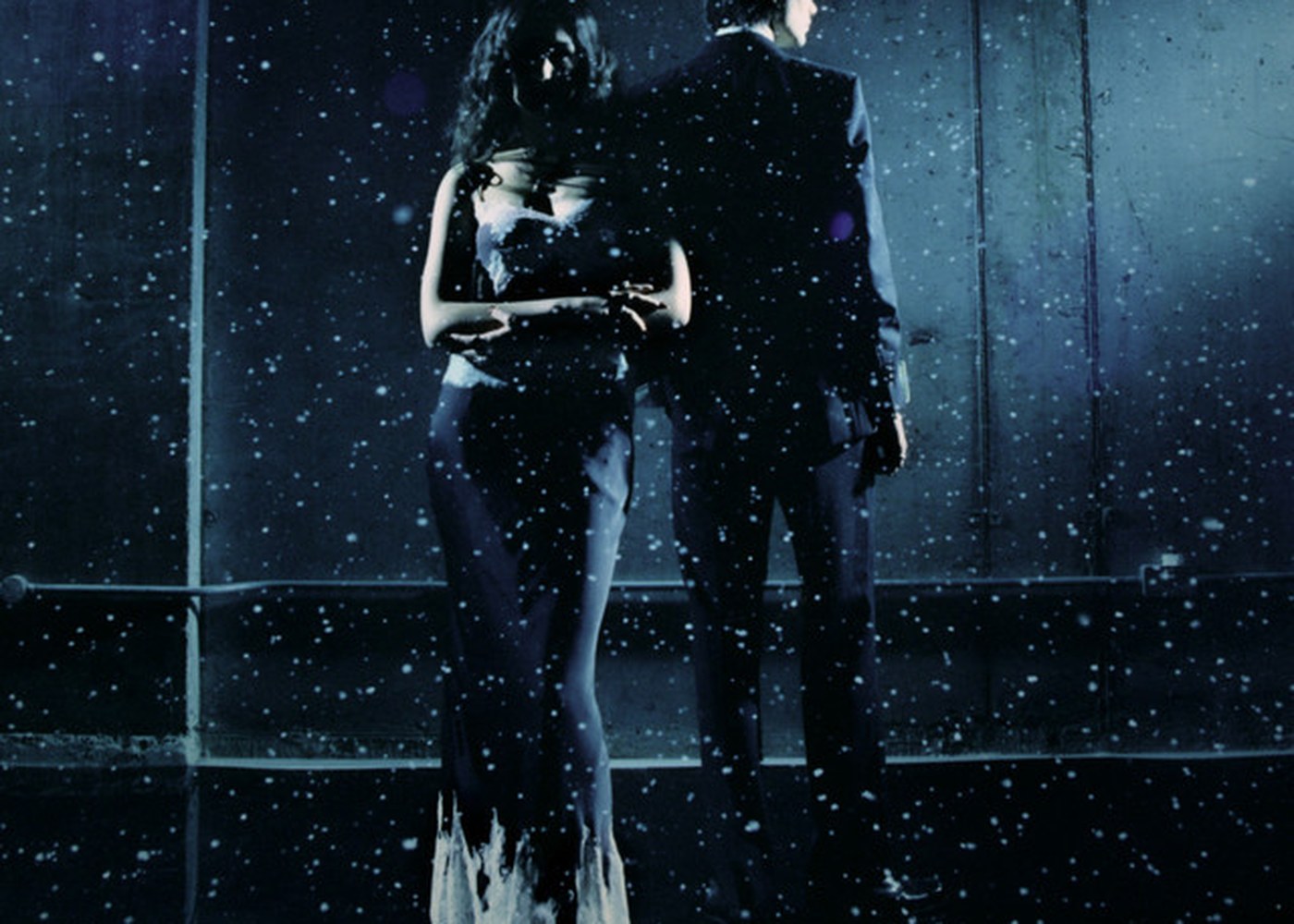
Most songs about desire spend their whole runtime building a case for why the narrator had no choice. Wasia Project's "Vogue" does something stranger: it lets the narrator make the case, then plants enough doubt in the lyric that you start to wonder if they're arguing with themselves instead of explaining themselves to you. The song's central tension is about what it costs to keep pretending you don't know exactly what you're doing.
The opening confession that gives too much away
The first verse arrives like someone sitting across from you and clearing their throat. "I stay up till Sunday morning / Whenever you're on my mind" carries the weight of a habit that has been running long enough to have a schedule. Then comes the pivot: "Think it's time that I am honest."
That word "think" is doing real work. Not "Think it's time that I am honest" said with certainty, but a tentative, half-committed verb that already walks back the bravery of the admission before it finishes the sentence. Whatever honesty is coming, the narrator is still negotiating with it.
And then the chorus lands not with the confession you were set up for, but with a coolness that reframes everything before it: "I can take it when I want." Control. Deliberate, chosen, almost defiant. The honesty being offered here is a demonstration of agency dressed as intimacy.
Verse 2: where the rationalization starts to fray
The second verse shifts the ground. "Feeling like our conversations / Never are a waste of time" sounds like warmth, but the word "feeling" hedges it, and "never are a waste of time" is a low bar. It's the kind of thing you say when the real thing you feel is too much to say straight.
"Think I would've learnt my lesson"
Past tense conditional. The narrator is aware this is a pattern, aware there should have been a reckoning, and is flagging that the reckoning did not come. Then the chorus shifts from "I can take it when I want" to "I couldn't help it if I tried." The story has already changed.
That reversal is the song's sharpest move. Two choruses, same melody, completely opposite claim about the self. The narrator who demonstrated control in the first chorus quietly abandons the position in the second, and the beauty of the lyric is that it never draws attention to the contradiction. It just lets both versions stand.
Verse 3 and the real admission
The third verse is short. Almost blunt.
"And if you'd like to take it further / You can go ahead and try"
After two verses of the narrator explaining their own inner weather, this line turns outward and offers an invitation that sounds casual enough to be a dare. "You can go ahead and try" is not "please try" and it's not "don't try." It holds the other person at arm's length while technically opening a door. The narrator is still managing the terms, still deciding how much access gets granted and when.
But the chorus that follows this verse drops even the pretense of casual control: "I couldn't help it if I / I couldn't help it, no, I." The repetition trips over itself, the line breaking apart mid-thought as though the sentence can't quite hold the weight of being said. It's the closest the song gets to genuine overwhelm, and it comes right after the moment where the narrator was most composed.
The bridge and what it finds in the dark
The bridge is where the emotional landscape shifts register entirely. The conversational specificity of the verses gives way to something more bodily, more ambient.
"And I can feel it close / See it in the shadows / Reaching in your eyes"
Whatever "it" is, the song refuses to name it. This is the one section that resists a clean reading; you could make a case for longing, for dread, for something between the two that doesn't have a stable word. "Reaching deeper than the night" extends the image past the point where imagery is precise, and that vagueness feels intentional, like the narrator has run out of the controlled language they were using earlier and something rawer has taken over.
But I'd push back on the idea that the bridge is purely about losing control. Even here, the narrator is the one describing what they feel, naming the shadows, tracing the sensation. Observation is still a form of distance. They're reporting from the overwhelm, not drowning in it.
What the helplessness is actually covering
The final chorus returns to "I couldn't help it if I tried" and lets it spiral, repeating the phrase until it stops being an excuse and starts sounding like a mantra someone is using to talk themselves into something. When a line gets said that many times, it stops being evidence and starts being effort.
And that's the argument the song makes without ever stating it: the narrator who claims they cannot help themselves is, at every turn, making choices. Staying up till Sunday. Choosing honesty. Issuing invitations on their own schedule. Deciding how far to let the other person in. The helplessness is the story they're telling, not the reality the lyric shows you.
"Vogue" is a song about desire that ultimately has less to do with the other person than it pretends. The narrator is fully awake to what's happening, fully capable of walking away, and fully aware that they're not going to. The surrender is real. The lack of choice is the fiction that makes it bearable to admit the surrender at all.
Lyric analysis powered by Scalpel.

Comments
Loading comments…