

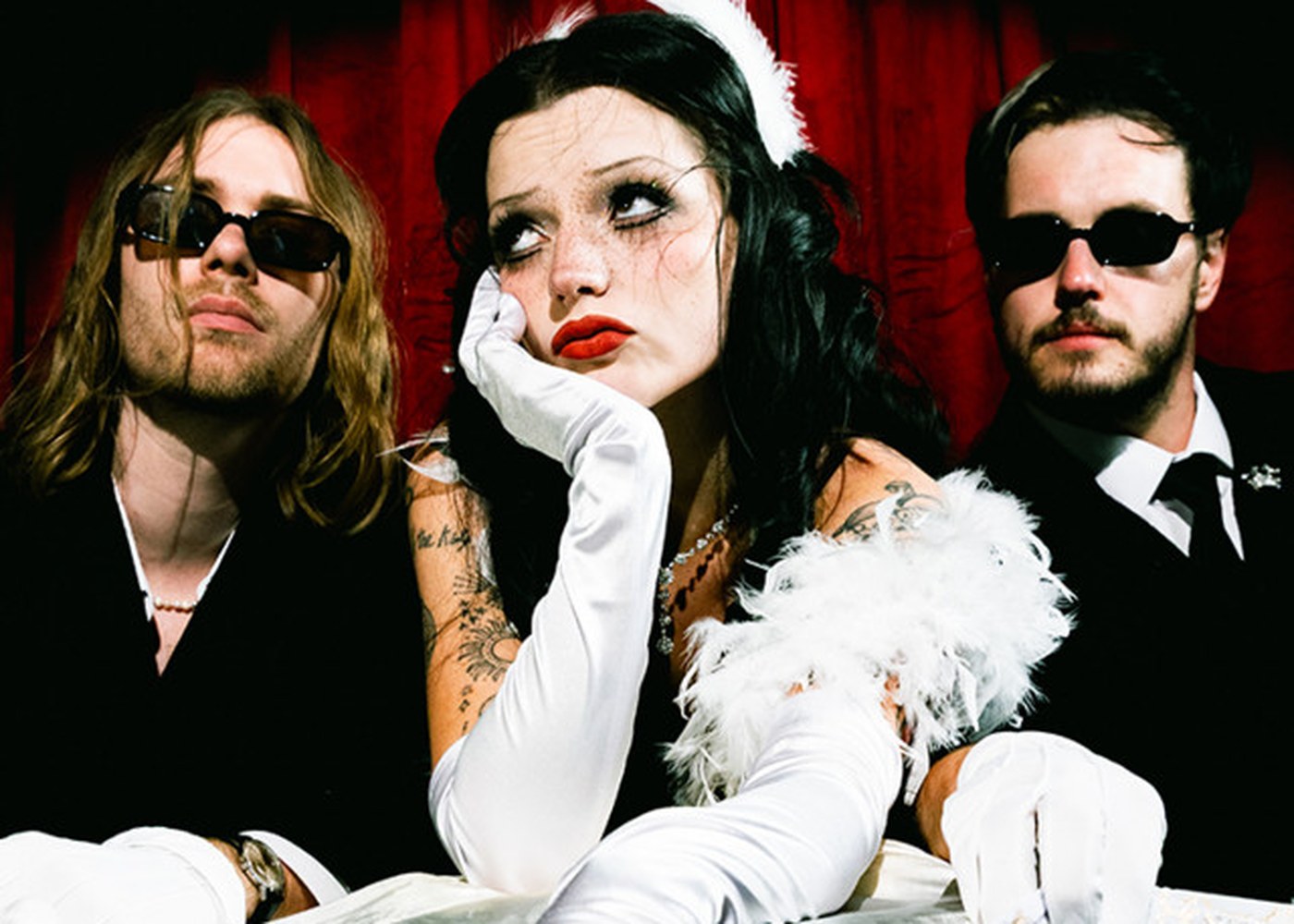
"I wrote this show." Four words, buried in the third verse, and the corpse sits up and grabs the clipboard. Everything before that line is someone waking inside a coffin while the wake carries on without them. Everything after is a playwright reviewing their own funeral from the wings. "IN LOVING MEMORY" is about staging your death as a premiere, choosing to be frozen at your most gorgeous instead of sticking around long enough to fade.
The opening plays claustrophobia for a smirk. Eyes open, nothing but dark, and the set is tiny.
"Four wooden walls / No breath to catch"
A coffin with four walls is a box set. The narrator has no air and still finds the energy for attitude: "One wilted rose, save your bouquet / I never liked flowers anyway." Keep the single dying rose, refuse the arrangement. That's taste. Hating flowers at your own funeral is the most expensive shade there is.
Verse two turns the burial into a press junket. Mourners march in the rain in black, and the narrator gushes, "That's my favorite color, I'm so happy that you asked." Nobody asked. Nobody in the lyric says a word to them. The narrator is doing a red-carpet interview at the graveside, answering questions from a reporter who only exists in their head. Then a freight train shows up "to crash my party," a gatecrasher with a few hundred tons behind it, and whether it's the cause of death stays politely off the record.
Meanwhile, the narrator is "dozing in the dirt while everybody eats desert." (Yes, it's spelled desert. I choose to believe the mourners are eating sand, and I'm not taking questions.) Mama dries her tears and the hearse gets packed up like a moving van. Funerals are logistics. The narrator lies there and watches the crew strike the set.
Then comes the line that gives the whole fantasy away:
"Mama, it's not over / Not dead but I'm not getting older now"
Every vintage pinup knows this trick. Stop the clock and you stay on the poster forever. The narrator has found the one anti-aging routine with a perfect success rate, and it requires a casket. Death works as a costume change here, the black dress for the closing number, and the line refuses to let anyone call it an ending.
Verse three spells out the motive. "Let's imagine / That we never grow up / And go dancing all the time." Eternal youth, permanent party, "so nice, so nice." And then the smug little sigh: "it's so tragic / That nobody knows / That I wrote this show."
"And I'm the one who gets to decide / Who lives or dies, dies, dies"
The triple "dies" echoes like a director calling cut until the cast obeys. Being the corpse made the narrator a victim. Being the author makes them the only person in the room with real power. The mourners think they're grieving; actually they're extras, hired for the rain scene, crying on cue.
Which is why the chorus has a raised eyebrow. "Let me go / You can kiss me up in Heaven / If you let me go." To my ear, that's a star shooing fans away from the stage door, sweetly. You'll get your kiss, darling, just not here, and not now. A reasonable fan could hear it the opposite way, as a genuine plea from someone stuck inside their own script, an author who wrote the death scene and can't get out of the coffin. That reading has teeth. But the voice is too pleased with itself to be begging.
Verse four is a blink of a scene change. "Oh, what just happened / There's tissues and caskets / And angels dressed in white." Black has become white, mourners have become angels, and one casket has somehow become plural, the wardrobe and props departments working overtime. The narrator reacts the way you'd react to a set transition you designed: "so nice, so nice."
And then the outro locks the doors.
"Mascara masquerade / Take a bow and die in vain"
Mascara is the most honest makeup on earth because it snitches the second you cry. A mascara masquerade is a ball of running faces, mourners whose grief literally slides off them, and a narrator whose death is its own kind of mask. "Take a bow and die in vain" doubles up nicely. Dying in vain means dying for nothing. Dying in vanity means dying for the mirror, for the image, for the frame on the easel at the wake. The narrator does both at once and calls it a curtain call.
Four repetitions and no final chord of release. The bow keeps happening, over and over, like a performer who won't leave the stage until the applause runs out.
So go back to those four words: "I wrote this show." The song's real flex is that a funeral can be authored, lit, and costumed, and that the person in the box can still steal every scene. The narrator traded a long life for a perfect last look and never once pretends it was a sacrifice. Some people fear the final bow. This one rehearsed it.
Frequently Asked Questions
What is "IN LOVING MEMORY" by VANITY about?
The song follows a narrator who wakes up inside a coffin during their own funeral, then reveals they wrote the whole event like a stage show. It treats death as a glamorous costume change and a way to stay young forever, with the narrator in total control of the drama.
What does "Mascara masquerade, take a bow and die in vain" mean?
Mascara runs when people cry, so the "masquerade" is a funeral full of melting faces and performed grief. "Take a bow" turns the death into a curtain call, and "die in vain" plays on both dying for nothing and dying out of vanity, for the sake of the image.
What does "Not dead but I'm not getting older now" mean in IN LOVING MEMORY?
The narrator insists the funeral isn't the end of them, only the end of aging. By staging their death, they freeze themselves at their peak, the way a star who dies young stays forever young in photographs.
Lyric analysis powered by Scalpel.


Comments
Loading comments…