

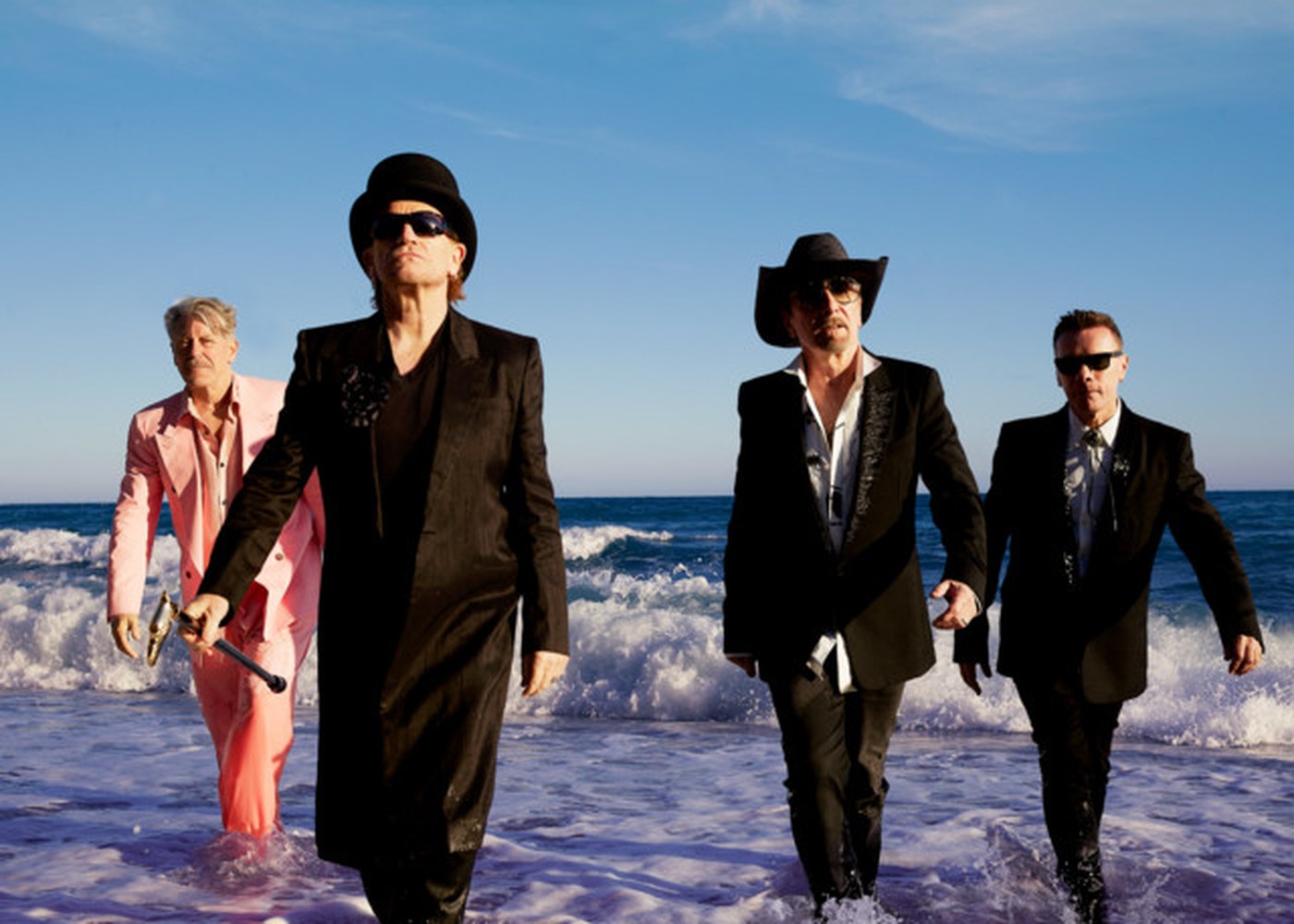
In "The Greatest Show On Earth," love and performance are the same act, and the narrator cannot pull them apart even while putting their own conscience on trial. The song moves from a wedding mass to a backroom confession, and at every stop the narrator asks whether what happened was real or staged. The answer, delivered with a showman's pride, is that it was both. The song is about a love that has ended, told by someone still proud of the spectacle it made.
Start with the joke the song plays on itself. The narrator opens by imagining the loss of their voice, and spends the whole verse singing about it.
"And if I couldn't sing you my life
Hiding here in the spotlight"
A spotlight is the least private place on a stage, and the narrator calls it a hiding place. That tells you how this person has always operated. The light protects them. Being watched is how they stay unknown, and singing a life to someone is easier than living it in front of them.
The pre-chorus pushes the hypothetical further, past the voice and into the body. "When nerve ends fray / And there's nothing to say / Not even a prayer." The wiring goes first, then language, then faith. And then, oddly, a shrug toward the horizon: "It's a beautiful night somewhere." Somewhere, not here. The narrator can still picture beauty, just at a safe distance from the room they're in.
The chorus offers a deal that sounds generous and is actually a confession of limits. "You can show me what it is / I can show you what it's not." The narrator's expertise lives entirely in the negative. They know love by its failures, by every way they got it wrong, and they're offering that knowledge as their half of the bargain. The warning that follows, "don't act surprised when you get hurt," carries the hard voice of someone who has done the hurting.
The second verse moves us into a church, and the questions get sharper.
"Is that a smile or a tear?
Is it all show business here?"
Weddings are the one ritual where crying and smiling arrive on the same face, and the narrator can't read which is which. That uncertainty spreads to the whole ceremony. The stained glass becomes "cinema," coloured light projected for an audience. Even God turns into a guest who doesn't know anyone: "Have we made God feel like a stranger here?" The narrator suspects that the vows, the altar, the holy light were all production design, and they suspect it about their own wedding.
A reasonable fan could hear the "you" at that altar as God, or as an audience, rather than a spouse. "Breathe on me" later keeps the door open to prayer, and the song never closes it. I'd argue that's the design: the lover, the crowd, and the divine all occupy the same seat in the front row.
Then the second chorus quietly rebuilds everything the first one buried. "Dreams lay in the dirt" becomes "People digging their dreams out of the dirt." The flat warning about getting hurt becomes "we make cathedrals of our hurt." Injury turns into architecture. After that shift, the narrator stops saying "if" and starts saying "I."
"Love is a business that works at night
I sold myself for less than was right"
Night work, a business, selling yourself: the language belongs to the oldest transaction there is. The narrator admits to underpricing their own heart, then credits the other person with the lesson: "You taught me what I was worth." The confession carries real self-disgust, and it also turns love into a ledger. Even the shame comes with numbers attached.
The line I keep coming back to arrives a few beats later.
"Made a profession out of breaking your heart
You call it lies, I call it art"
Here the song stops pretending the two things can be separated. The narrator broke someone's heart for a living, and when that person names it lying, the narrator reaches for the artist's defense. The defense doesn't erase the lie. It reframes the damage as craft. Whether that's an apology or a boast depends entirely on who's listening, and the song is happy to let you argue about it.
Then comes the funniest line in the song. "I was some of your best work." Mid-apotheosis, the narrator files a modesty clause. Some. Not all. Even at the height of the confession, they leave the other person a credit, and keep a little room for their rivals.
The final stretch swings between intimacy and cosmos. "Breathe on me, and I'm love, and I'm lust" folds prayer and seduction into one breath, and "Forever or a flirt?" asks the question every performer asks of every crowd. The scale then explodes outward: light scatters, and "dark matters of the universe / Could not compete with us." The invisible mass holding galaxies together loses to two people putting on a show.
That brings us back to the spotlight. The narrator hid in it at the start, and by the end they're defending everything that happened under it. The boast is enormous, but it's spoken in the past tense. "We were once the greatest show on earth" is the sound of someone who knows the tent has come down and still won't call the performance fake. The song's final verdict is that a love can be staged and true at the same time, and that losing it hurts precisely because the act was real.
Frequently Asked Questions
What is "The Greatest Show On Earth" by U2 about?
The song is about a love that has ended, told by a narrator who can't separate real feeling from performance. It moves through a wedding, a confession of selling oneself short, and a proud insistence that the relationship was once the greatest show on earth.
What does "You call it lies, I call it art" mean in the song?
The narrator admits to making "a profession out of breaking your heart," and when the other person calls that lying, the narrator defends it as art. The line shows the narrator treating emotional damage as a kind of craft, half apology and half boast.
What does "we make cathedrals of our hurt" mean?
It replaces the first chorus's warning about getting hurt with an image of building something sacred out of pain. Paired with people "digging their dreams out of the dirt," it turns injury into architecture and marks the moment the song shifts from hypotheticals to direct confession.
Lyric analysis powered by Scalpel.



Comments
Loading comments…