

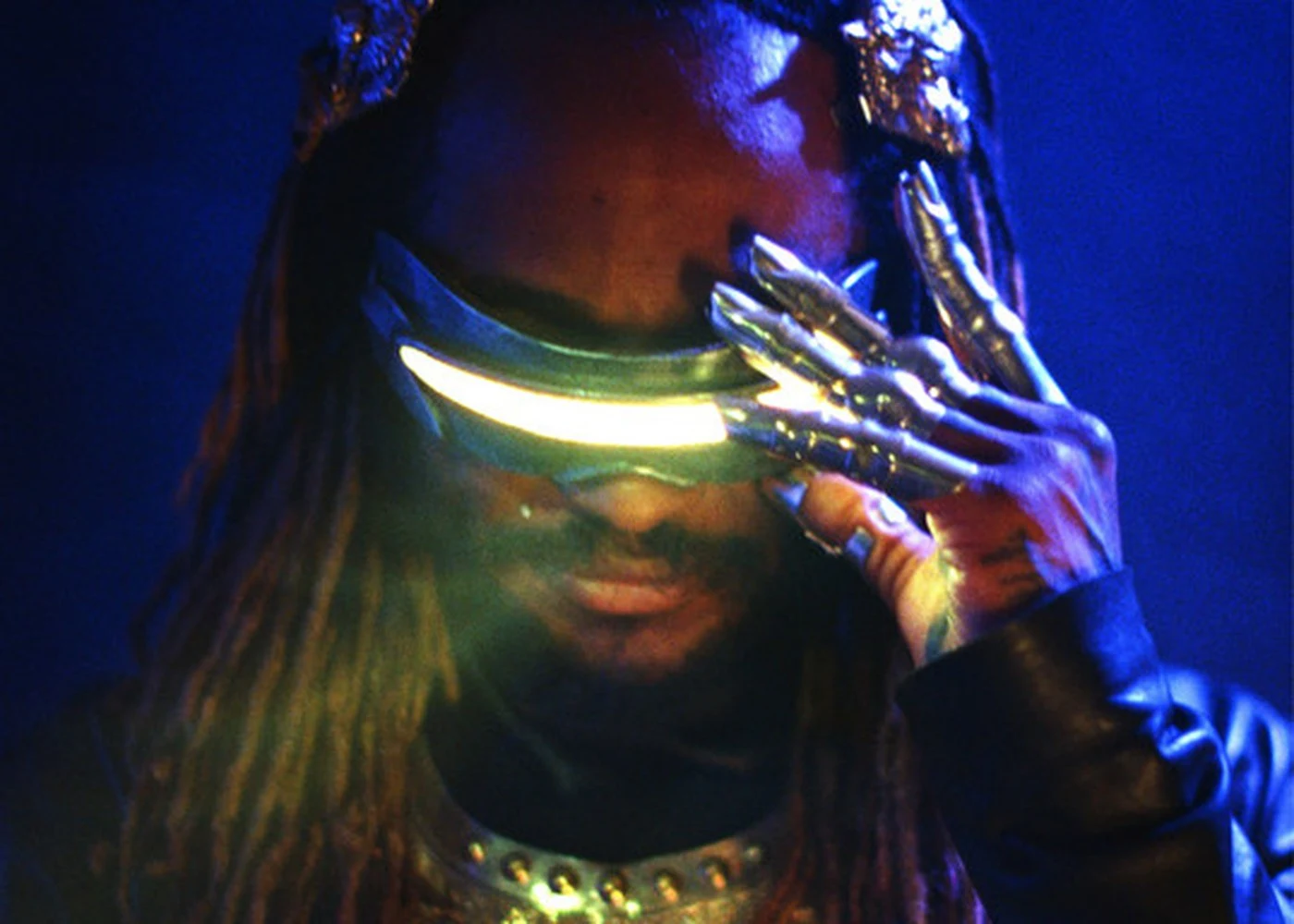
The narrator of "Funny Thing" pulls off something drunk people almost never manage. They see the mistake coming, a few drinks out, and hand their phone to a stranger before they can make it. On paper the song is a goofy invitation to party all night with someone cute and equally high. Underneath it, the narrator is apologizing in advance for whoever they're about to become, and the whole come-on doubles as a disclaimer.
"A little": the permission that might be a no
The song opens with a polite question that no polite person asks: may I wild out? Then comes the strangest line in the lyric, two words alone on their own line.
"Do you mind if I wild out?
A little"
You can hear that "a little" two ways. Maybe the narrator is shrinking the request, promising to wild out only a little. Or maybe the other person answers. Do you mind? A little. If that's the case, the song gets turned down in its second line and keeps going anyway, which is extremely drunk behavior and also very funny.
Everything in this stretch comes with a hedge. They're "just a little drunk." They want to party "a little." When they clock that the other person is high too, they shrug it off as fine, which works out conveniently for everyone. The tone is sheepish and sweet, a person trying to seem low-maintenance while already being a little bit of a lot.
The phone handoff: self-control, outsourced
Then the song pivots on two lines, and they're the best two in it.
"Someone hold my phone
'Cause I can't hold my tongue"
The joke is built like a proper joke, with the same verb doing two jobs. You can hold a phone. You can't hand your tongue to someone at the bar. So the narrator gives away the one object that can be confiscated, because the actual risk lives in their mouth and can't be passed to anyone. The phone stands in for the whole problem.
And notice who gets asked. "Someone." The narrator doesn't ask the person they're flirting with. They ask a bystander, anybody in range, to become the designated adult for the night. Whoever ends up holding it was presumably just standing near the bar.
After this, the song changes jobs. The first half was an invitation. The second half is self-surveillance: a forecast, a warning label, a list of the narrator's own failure modes. They even do the math out loud, predicting that if they get "too drunk" they'll "ruin the fun." The count has moved from "a little" to "too," and the narrator can see exactly where the line is.
Read backward from here, the opening question looks different. Asking permission to wild out was never really about permission. It was a heads-up, the same heads-up you give before you say the true thing at 2 a.m. The comedy carries the entire weight of that admission. A narrator this self-aware about their own mess can only say it as a bit, and the bit is the honest part.
"I've seen too much" and the apology nobody asked for
The narrator tells the other person the coming trouble isn't on them, then gives the reason: they've seen too much. It's a vague line, and the vagueness is the point. We never find out what was seen. We just learn that it's heavy enough to leak out of a party.
Then comes the apology line: a confession of heavy baggage, delivered in the language of a drunk, half-joking aside, slotted right before another round of "I just wanna party with you." It's the moment the song nearly says the heavy thing straight and then swerves right back to the dance floor. The absurdity keeps it sayable at all.
The "baby" survives the turn, but it sounds different now. Early on it was flirting. Here it's reassurance, a hand on the arm.
"You make everything alright": the job description
The ending looks like pure warmth. The narrator wants to party all night "because you make me happy," and the last line goes further: this person makes "everything / Alright." Sweet. Also a contradiction. A minute earlier the narrator insisted their trouble wasn't this person's problem, and now they've quietly handed them the job of fixing all of it.
A reasonable fan could hear the whole song as a cute drunk crush and nothing more, and the music of the lyric, all those loose "a little"s, gives that reading room. But you don't ask a stranger to hold your phone unless you already know what your mouth does.
Conclusion
Nobody in the song ever says "funny thing." They don't have to. The funny thing is the whole setup: someone sharp enough to diagnose their own night in advance, and still unable to stop it, so they recruit help and make it a joke. I'll take the happiness at the end at face value. It's real. It's just carrying more than a party should, and the narrator knows it, which is why they asked someone to hold the phone in the first place.
Frequently Asked Questions
What is "Funny Thing" by Thundercat about?
"Funny Thing" follows a slightly drunk narrator asking to join someone's party, then warning that more drinking will ruin the night. It starts as a playful come-on and turns into an apology in advance, with the narrator admitting they've "seen too much" and can't trust what they'll say.
What does "Someone hold my phone 'cause I can't hold my tongue" mean?
The narrator knows they're about to say too much, so they hand off the one thing a person can physically take away: the phone. It's a pun on "hold," and it shows them outsourcing self-control to a random bystander because the real risk, their mouth, can't be handed over.
What does the PTSD line in "Funny Thing" mean?
The line is a half-joking apology for heavy baggage surfacing during a party. It follows the narrator saying they've "seen too much," and the joke format lets them admit something serious without breaking the mood.
Lyric analysis powered by Scalpel.


Comments
Loading comments…