

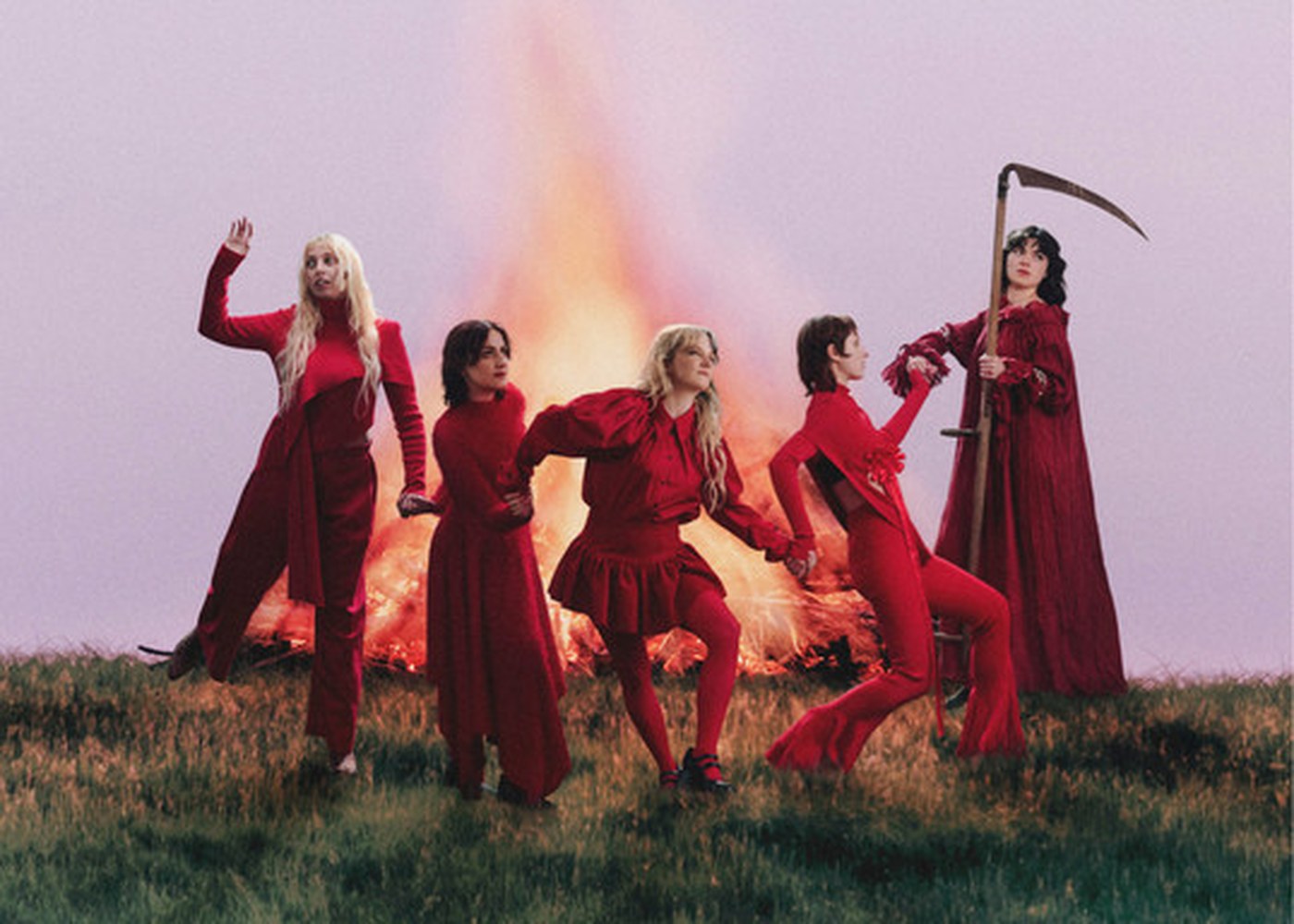
"The Scythe" is a grief song sung beside someone who is dying, by a narrator who spins their record under LED lights until she feels sick. Its one brave moment comes late, when she promises to be the one who calls next time. Then the very next chorus takes it back, and she returns to waiting for the phone.
Introduction
The tap is running, left on deliberately so the sound fills the house, and the narrator sits in the other room insisting nothing happened. Somewhere close by, someone she loves is being taken slowly, and the song circles a single question that every mourner eventually faces: when this is over, who reaches across first? For one chorus, she volunteers. Then she takes it back.
Verse 1: Looking away on purpose
The first word of the song is a small cruelty. "It'll take you too" carries that "too" like a stone in a pocket, a quiet admission that this has happened before, that the narrator already knows the shape of the room after someone leaves it. Death arrives here as something familiar and patient.
"Limbs'll disconnect, mm / Like the phone lines"
That image folds two kinds of failure into one. The body comes apart, and so does the connection, the line going dead between two people. Hold onto the phone, because the whole song will keep reaching for it.
Then come the evasions, laid out with the calm of ritual. Keep the water running. Stay in the other room. Say nothing happened. Every instruction is a way to put sound or walls between herself and the bed, a ceremony of absence performed by someone who loves too much to watch.
"Make it quick, make it quick / Make it quick so I can't see the scythe in its sheath"
A breath earlier she said it would "take a long time," and now she begs for speed. The sheathed scythe is death at rest, the blade visible but not yet drawn, and what she cannot bear is the waiting, the long look at a weapon that has not moved. She would rather the end ambush her than approach in full view. Mercy, here, means not having to see.
The chorus: a comfort that asks nothing of her
"Don't cry, we're bound together" is addressed to the dying, though the narrator is plainly the one coming undone. She offers the oldest consolation there is, a reunion past the veil.
"I'll see you in the next one / Next time, I know you'll call"
"I'll see you in the next one" promises another life, another meeting, the bond surviving the body. But look at who carries the weight. The dying person is the one who will call. The narrator only has to wait by the phone, those dead lines from verse one somehow ringing again on the other side.
Verse 2: Seasick under the LEDs
The second verse is stranger. She puts the record on and keeps it spinning, keeping a voice alive in the room after its owner has gone silent, and she does it under LEDs, of all things. A song draped in scythes and sheaths stops to mention cheap, flat, modern light, the kind that hums over a bedroom ceiling at two in the morning. That detail drags the gothic down into an actual flat with an actual turntable.
The line I keep coming back to is "'Til I'm seasick." She plays the music until the spinning turns her stomach, which is both darkly funny and exactly right. The body revolts against the grief before the mind will admit it.
"Nothing lasts, nothing lasts / Nothing lasts, I know I've seen the scythe in its sheath"
Here the first pre-chorus falls apart. She asked not to see the blade; now she confesses she has seen it all along. The running water and the other room were never ignorance. They were a performance of it.
The bridge and the call she almost makes
The bridge throws open the doors on a fantasy evening, all costume and appetite. "Next time you call, I'll be your girl," she says, and dresses the two of them for it: "You'll be in silk, and I'll wear my furs." Whoever "you" is, lover or friend or someone older, the song keeps it unnamed, and the next life arrives looking like a night out in borrowed glamour.
"Open me up, butcher my heart"
Desire turns surgical, and it mirrors the opening on purpose. The limbs that disconnected in verse one return as a heart split open, except now she is asking for it. The violence that was happening to "you" she now invites onto herself.
"Please let me die on the street where you live"
The roles swap without her seeming to notice. The comforter becomes the one asking to die, and she asks for a specific place: your street, outside your door, as near as she can get. Devotion collapses into geography. If she cannot keep you, she wants at least to end within reach of where you were, and the scythe she begged not to see is suddenly something she would walk toward.
That nerve carries straight into the chorus that follows, and the words change.
"I'll be here in the next one / Next time, you know I'll call"
"We're bound together" becomes "lie here forever." "I'll see you" becomes "I'll be here." And the burden finally moves: she will be the one who stays, the one who calls. After a whole song of running taps and closed doors, she offers to pick up the phone first. It is the bravest thing she says.
But she says it once. The very next lines snap back to "Next time, I know you'll call," and the outro repeats the old promise as if the turn never happened. A fair-minded fan could hear that return as peace, the narrator letting the dead keep their role and accepting the ritual as it was. I don't hear calm in it. Sung over and over after the guitar has torn through the room, it sounds like a handrail she grips in the dark.
Conclusion
Go back to the question of who reaches across. The song answers it twice, and the answers disagree. For a single line, the narrator takes on the frightening job of being the one who stays and the one who calls. Four times, she hands that job back to someone who can no longer do it. That ratio is the song's real confession: courage comes to her once, in a flush, at the height of the fantasy, and comfort is what she can actually live inside. The phone line went dead in the first verse, and she is still waiting for it to ring.
Frequently Asked Questions
What is "The Scythe" by The Last Dinner Party about?
"The Scythe" follows a narrator keeping vigil as someone she loves dies slowly, hiding in another room and promising they will meet again in the next life. For one chorus she vows to be the one who calls next time, then reverts to waiting for the other person to call.
What does "Make it quick so I can't see the scythe in its sheath" mean?
The sheathed scythe is death waiting, visible but not yet striking. The narrator begs for the end to come fast so she will not have to watch it approach. Later she admits "I know I've seen the scythe," revealing she was aware of it the whole time.
What does "Please let me die on the street where you live" mean in "The Scythe"?
In the bridge, the narrator flips from comforting the dying person to asking for death herself, as long as it happens close to them. The street stands for nearness: if she cannot keep this person, she wants to end within reach of where they lived.
Lyric analysis powered by Scalpel.




Comments
Loading comments…