

Sweet on the outside, feral underneath
The song opens with cherry lips and a tender image, and then immediately complicates it. Someone is being adored, but the narrator is the big dog here, not the one doing the licking. That flip sets up everything that follows: a power dynamic that keeps shifting, where sweetness and dominance are tangled together in a way that refuses to come apart cleanly.
"Big Dog" is fundamentally a song about what it costs to become someone who cannot be controlled. The narrator has paid that price in blood, literally, and they want credit for every drop.
Intro: affection that is already a hierarchy
Tenderness with teeth in it
The opening lines feel almost romantic until you sit with them.
"Burst your lips 'tween mine like cherries / You are so sweet, I'm a big dog"
The affection is real, but it is already hierarchical. The narrator is not the sweet one. They are the one being served. And the image of bleeding feet being licked clean is both vulnerable and commanding at once, someone who has danced hard enough to bleed, tended by someone positioned beneath them.
Verse 1: seeing through the game and ending it
The hunt is personal
Here the softness drops entirely. Someone is watching from outside a chain link fence, peeling their own skin in frustration, while the narrator wins. The imagery is precise and a little cruel.
"Be afraid, I'm that hound / I am hunting you down"
The mechanical rabbit line is the sharpest thing in the verse. A mechanical rabbit is what greyhounds chase at a track, always just ahead, always out of reach. The narrator is saying they see through the game, and now they are going to end it. Whoever has been dangling something just out of reach is about to be caught.
Pre-Chorus 1
Dancing on the grave
The pre-chorus reintroduces the bleeding feet, but now with a different destination. They are not just bleeding from effort. They are bleeding from dancing on a grave.
"My feet bleed from dancing / On the grave of my, my big dog"
That stammer on "my, my big dog" is the first crack in the armor. Whatever or whoever the big dog was before, something has been buried. The narrator has claimed the title, but it came at a cost. There is grief folded into the triumph.
Chorus: leaving as an act of violence
Absence as a weapon
The chorus lands like a threat delivered very quietly.
"I'll make my absence feel like violence / I am howling, I'm a big dog"
This is the thesis of the whole song in two lines. The narrator does not need to act. They just need to leave, and the other person will feel it like a wound. That is a specific kind of power, the power someone earns after being underestimated for long enough. The howling is not rage. It is announcement.
Verse 2: Catherine the Great and the weight of taking up space
History and the body as proof
The second verse goes bigger and stranger. The narrator becomes the flood, the rain, the force that washes everything clean. Then it pivots to something more specific and more interesting.
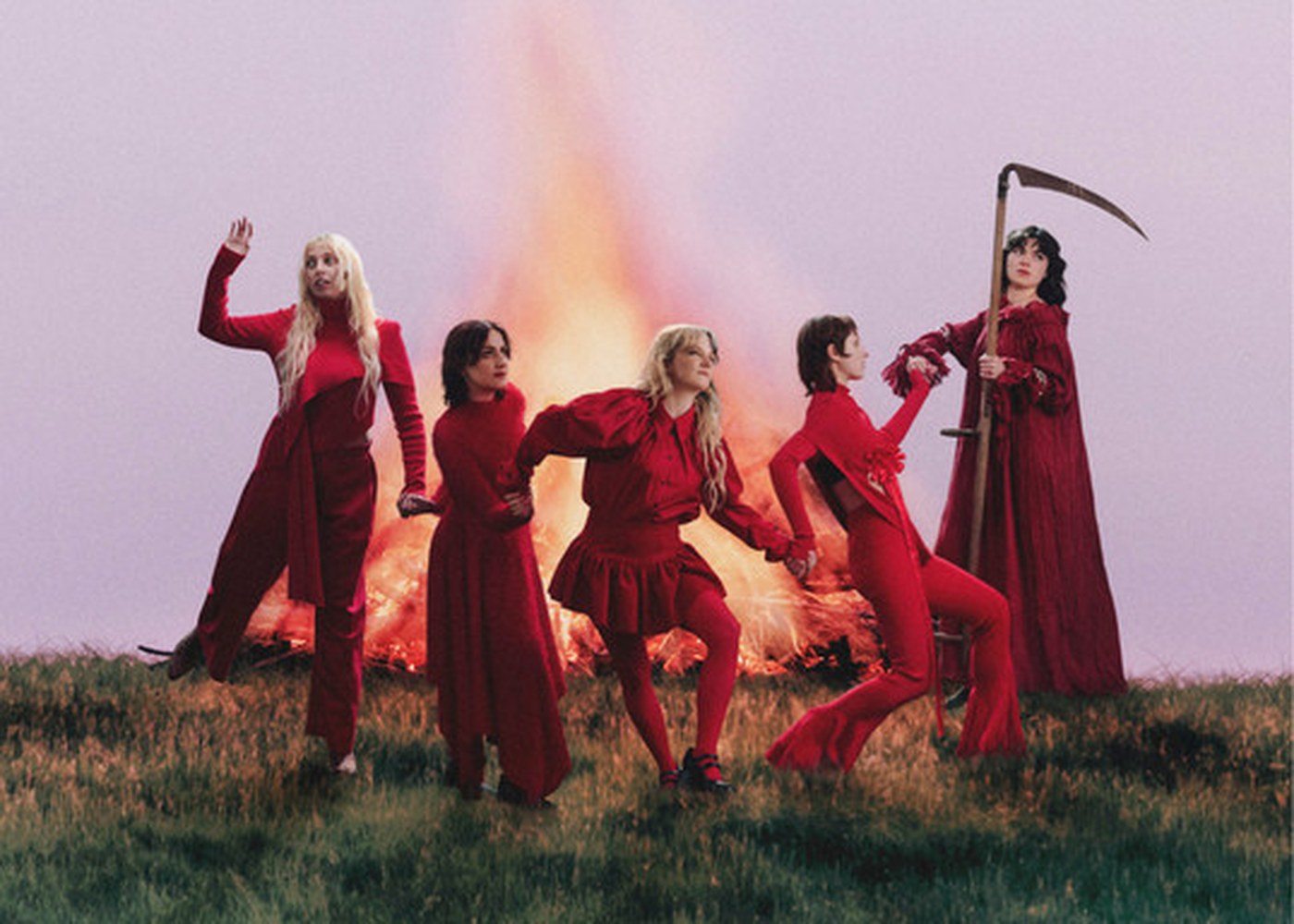
"With the red, pointed shoes / Worn by Catherine the Great / Said I petrify you / 'Cause I'm putting on weight"
Catherine the Great is not just a historical flex. She is an emblem of a woman who took power in a system designed to deny it to her, completely and without apology. And the line about putting on weight reframes the whole verse. Someone is afraid of the narrator not because of any threat they made, but because the narrator is growing, taking up more space, becoming more. That terrifies the person watching from outside the fence.
Pre-Chorus 2
The question already has an answer
The second pre-chorus asks who the real gunslinger is, but it is not actually a question.
"Who's the real gunslinger? / Who's beneath my little finger?"
The move from "I'm behind you" in the first pre-chorus to "I'm above you" here tracks the narrator's rise through the song. They started as a threat closing in from behind. Now they are looking down. Rabid and raving, but fully in control of it.
Chorus 2
Reclaiming the narrative on violence
The second chorus changes one crucial word.
"I'll make this violence feel like my choice"
In the first chorus, the absence feels like violence to someone else. Here, the violence is claimed by the narrator, reframed as agency rather than damage. Something has shifted from reaction to decision. The howl becomes a scream, and that escalation is not chaos. It is clarity.
Bridge: what a child should never have been told
The wound underneath everything
The bridge is where the song shows you what it has been protecting the whole time.
"Don't take your clothes off / When you're famous / What sort of a thing is that to say to a child?"
This lands like cold water. Suddenly the power struggle has a history. The narrator was once a child who was told their body was a bargaining chip, or a liability, or a danger. Someone with authority said something to them that they should never have had to hear. The ferocity of the song is not abstract dominance. It is the specific fury of someone who was made small early and has spent years growing back.
"Choke wide open / You can take it / Till it's over" pushes through the revelation without letting you sit still in it. The song does not wallow. It keeps moving.
Simile becomes fact by the final lines
Back to the beginning, but changed
The outro mirrors the intro almost exactly, with one small but telling difference. "Lick them clean like you're my big dog" becomes "Lick them clean, you are my big dog." The simile is gone. It is now a statement of fact. What was a tender provocation at the start is a settled truth by the end.
Feral by necessity, feral by choice
"Big Dog" is a reclamation song, but it earns that label the hard way. It does not just assert power. It shows you the bleeding feet, the grief, the child who was told the wrong things by the wrong people. The howling at the center of this song is not the sound of someone who was always dominant. It is the sound of someone who had to become feral in order to survive, and decided to stay that way.




Comments
Loading comments…