

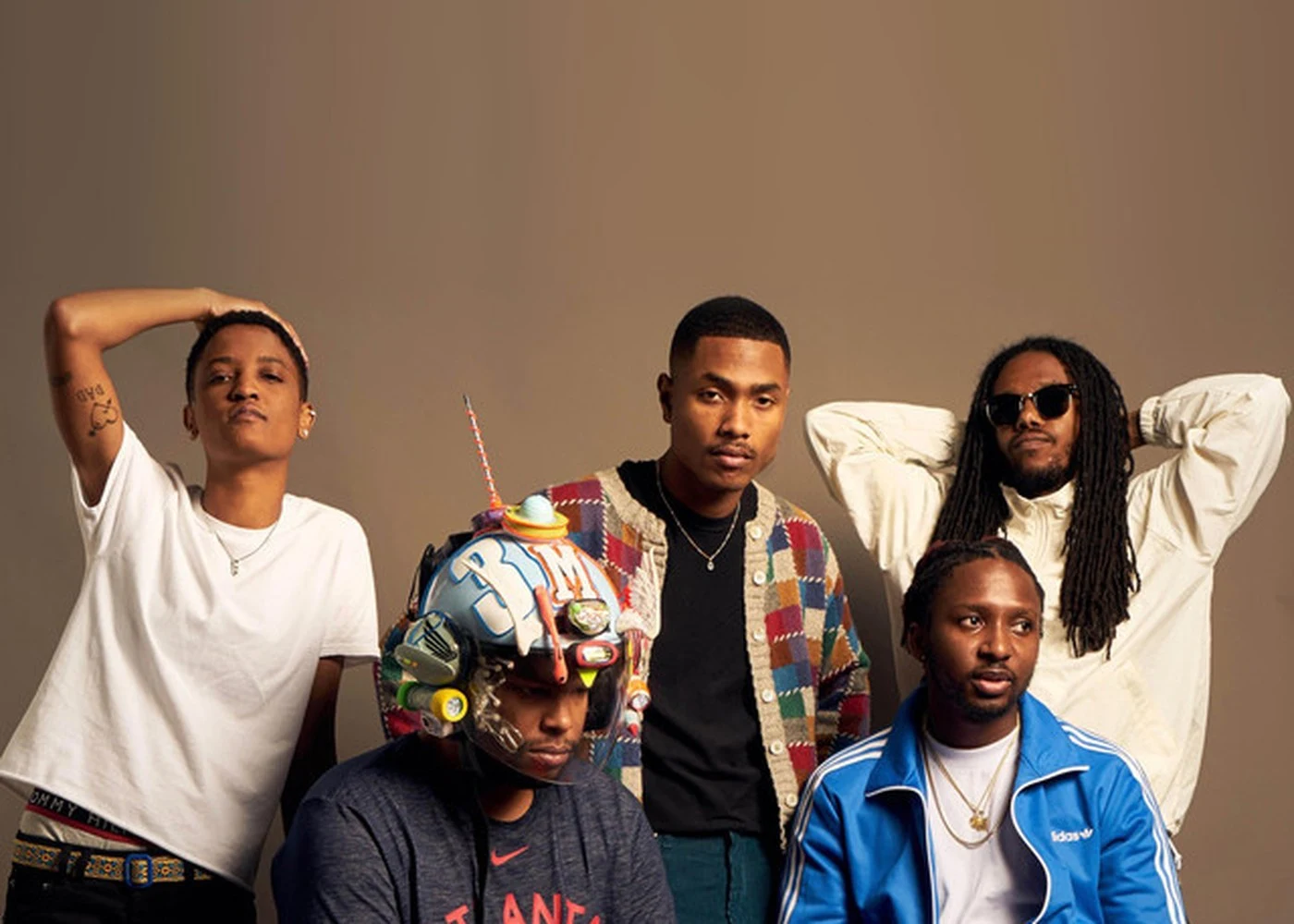
Jacket half on. Keys out. Somebody is halfway to the door, and the first line of "Hold On" gets there first: "Thinking ahead of time, why don't you spend the night?" The song never leaves that room, even while it daydreams about flights and sunshine. On the surface it's a seduction song, but the real story is tempo, and the singer wins the night by being the one who slows everything down.
The pitch: paradise on a promise
The opening verse is a sales job. A flight gets floated, a sunrise gets booked, and nobody packs a bag.
"We can book a flight, wake up in paradise"
Then there's the refrain-within-the-verse: "I know you love me." Three times. You don't repeat that line to someone who's already staying. The certainty is part of the persuasion, a confident hand on the small of the back while the other hand still points at the bed.
Watch the sky, too. "Sun up above us" is just weather, and two lines later "No one above you" turns that same overhead space into a ranking. The singer slides from postcard to pedestal without changing tone, which is a smooth move and also a slightly calculated one.
The promise that follows has a hinge in it. "And as long as you're with me, I'm definitely" yours, the singer says, offering loyalty with a condition stapled to the front and presenting the whole thing like a gift. Even the hook plays both sides: "Said hold on, can't stop" asks for patience and insists on momentum in the same breath.
Verse two: the modest expert
Now the singer gets humble. Sort of.
"I'll show you what I know"
"Not saying I'm a pro'," they add, which is exactly what a pro says. And the verse already knows where the night ends: "We go another round / Before we fall asleep." Paradise was the pitch, but sleep is the destination, and that detail, tucked in casually between the cloud nine and the compliments about a body, tells you who has mapped out the evening.
The turn: not ready to go
Everything tightens on one line.
"I think you better hold on, I'm not ready to go"
Before it, the song is hypothetical. Trips, promises, lessons. After it, we're close up, in the moment, and the question stops being whether this happens and becomes how fast.
The line I keep coming back to is the answer to that question:
"I hear you sayin', "Don't stop" / I'd rather take it slow"
The partner wants speed. The singer brakes. Meanwhile the hook keeps chanting "can't stop" in the background, so the song is literally arguing with its own chorus, and the person doing the braking is the one in charge.
"Hold on" changes meaning here too. Early on it sounded like "wait." Now it's grip: "I see you tryna hold on / But we aren't letting go." The partner is clinging, and the singer decides when the release comes.
But the cleanest proof is a permission slip. "You let me take control now / You're ready to explode." Control gets named out loud, granted, and used, and the one who's about to burst is the one who asked to go faster.
A fan could fairly hear all this as pure heat with no power game attached, just a lover who knows that slow is better. That reading holds up line by line. Still, the song keeps telling you who sets the clock, and it never once hands that job over.
Bedtime, baby
The last stretch exhales. "And when you're done, just say 'enough'," the singer offers, giving the partner the stop word, then names the actual signal: "When your breath just can't keep up." Breath is the clock now. The final call is almost comic in its softness.
"'Cause it's bedtime, baby"
After all that heat, the closing word is one you'd use on a kid. It's funny and tender at once. They've been in bed the whole time, and the singer still gets to announce it.
Conclusion
Back to that door, that half-on jacket. The singer never wins the argument by pushing harder. They win it by making a guest feel rushed, then making the night feel unhurried, then tucking everyone in. To me, that's the whole seduction: whoever controls the pace controls the night, and the coolest person in the room is the one saying wait.
Frequently Asked Questions
What is "Hold On" by The Internet about?
"Hold On" follows one night from an invitation to stay over through a slow, intimate encounter that ends with sleep. The singer daydreams about a getaway, makes a conditional promise of loyalty, and then sets the pace in bed, slowing things down while the partner wants to speed up.
What does "I'd rather take it slow" mean in "Hold On"?
The line answers the partner's "Don't stop" and shows the singer controlling the tempo of the encounter. It contrasts with the hook's repeated "can't stop," so the singer is the one braking even as the chorus pushes forward.
Why does "Hold On" end with "it's bedtime, baby"?
"Bedtime" is a gentle, almost childlike word that closes the night with humor and tenderness after all the heat. It also lets the singer make the final call on when things end, once the partner's breath can't keep up.
Lyric analysis powered by Scalpel.

Comments
Loading comments…