

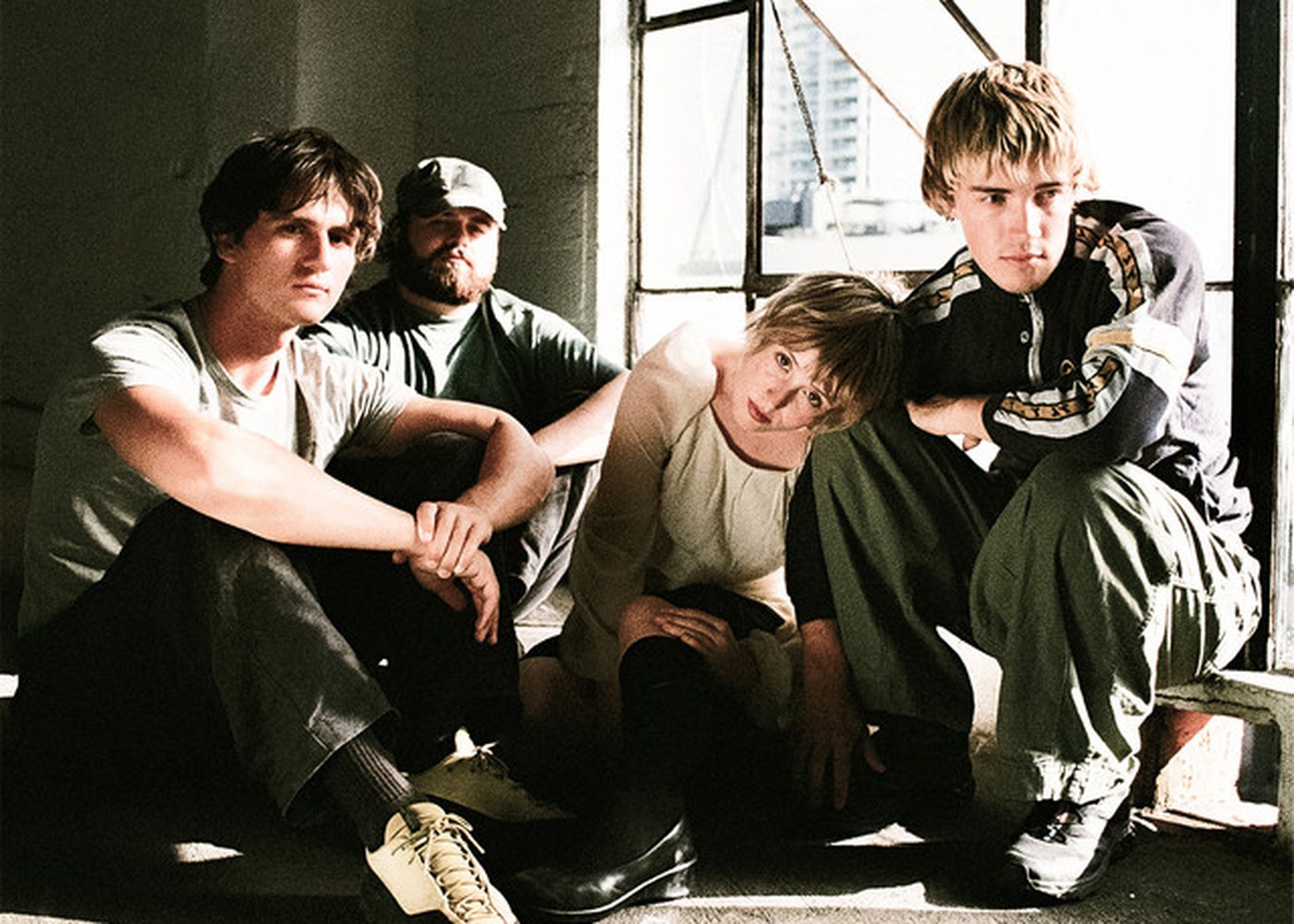
The song buries you before it explains anything. Head in the sand, arms up, nose full of it. You're already under when "Sand" starts, and Swapmeet keeps you there for the full three minutes, pressing the feeling down with each verse until the grains go red.
The central argument of this song is simple and brutal: some marks don't wash out. The body holds what the mind wants to let go of, and no amount of distance, locked doors, or skipping ahead changes what has already been written into it. This is a song about permanence as a specific kind of violence.
The intro: entering your own life wrong
"Head in the sand, sand in my nose / Arms up above the grains" sets the physical posture immediately. Buried. Surrendered. But the line that follows is the one that quietly reorganizes the whole song: "I go to work, it's not a job / It's breaking and entering." The narrator is moving through their own existence as an intruder. Whatever body, life, or world they inhabit, they don't belong there by right. They are getting in through a window.
That framing sticks. Every detail that follows, the mum's odd jobs, the winter trash, the knife, the locked house, carries that same charge: proximity without ownership.
Verse 2: the ink that doesn't lift
The second verse is where the song opens its wound. It moves fast and jagged, winter turning to snow in one breath, then a knife, then a plea. The jump from sweating palm to "Why don't you want me, baby? / Why don't you care?" is almost violent in how little it prepares you. The question arrives raw, with none of the usual scaffolding of metaphor around it. It's the only place in the song where the narrator drops the image-making entirely and just asks. The plainness of it is the point.
But the answer the song gives back is physical, not romantic rejection. "I held it once, try to get it back / But there's ink on the page / A stain that's turned to black." Whatever was held, whatever was once within reach, the ink is already dry. A stain that has turned to black is not a fresh mark. It's something that has finished its process of becoming permanent. The body as page is an old idea, but Swapmeet earns it because the song doesn't pause to explain it. The image arrives and the narrator hides their face and then the roses get ink on them too, and you're left understanding that the contamination isn't contained. It spreads.
"You're never coming back" ends the verse without melodrama, and the flatness of that delivery is more devastating than any crescendo would be.
Verse 3: locked down to sand
The third verse is the song's most elliptical stretch, and I find it the hardest to fully pin down. "Stay as you are / Say that you're more" sounds like instruction or reassurance, but directed at whom is genuinely unclear. The minefield imagery that follows gives it a wartime register, locking, guarding, holding ground. The narrator has secured the house. The other person is locked down to the ground. There is standoff energy here, a mutual immobility.
Then the song collapses its own foundation: "Underneath where you stand / But it's sand, it's sand." All that locking, all that fortifying, and the ground itself gives. The security was always conditional. A reasonable read here is that this is about external relationships, someone the narrator wants to stay but cannot hold. But the song's own logic pulls it inward: the ground underneath is the narrator's own body, and it has always been sand.
The outro: red grains and what comes after
"Hiding in my room / I can fuckin' taste doom" is the first profanity in the song, and it lands right because it's the first moment the narrator stops managing the feeling and just reports it. Doom isn't a figure of speech here. It has a taste. Then: "I do my best with this / And soon I'll skip / Ahead."
That line break on "Ahead" does a lot. The skipping forward is what you do in a playlist, in a movie, in a memory when the current moment is too much. And the song almost lets it be hopeful.
Almost. "The grains of sand are red." That's the last line, and there's no interpreting it gently. Red sand is bloody sand. Whatever was buried in it, whatever the narrator has been drowning in since the first second, has left a mark. The skipping forward doesn't erase what the sand holds.
This is the song's final argument: you can skip ahead, yes. You can do your best. But the body keeps its record, and the record is red.
That's what "Sand" is ultimately about: not the failure to move on, but the discovery that moving on and carrying the mark are not mutually exclusive. The narrator skips ahead and the grains are red. Both things, at once, with no resolution between them.
Frequently Asked Questions
What is "Sand" by Swapmeet about?
"Sand" is about the body holding marks that cannot be undone. The narrator moves through domestic life, loss, and emotional disconnection while reckoning with the feeling that something permanent has been written into them, and that no amount of distance or forward motion fully erases it. The red sand in the final line makes clear that whatever was buried has left a lasting stain.
What does "the grains of sand are red" mean in "Sand"?
Red sand carries the implication of blood. After the narrator spends the song buried, hiding, and trying to skip ahead, the final image reveals that the sand they've been submerged in holds a physical record of what has happened to them. It reframes the entire burying metaphor: the narrator was never in neutral ground. The sand was always marked.
What does "there's ink on the page / a stain that's turned to black" mean in "Sand"?
The image of ink turning black describes a mark that has finished becoming permanent. A stain that is still wet might be lifted; one that has fully set cannot. In context, the narrator is acknowledging that something about the body or a relationship has passed the point of reversal. The ink spreads to the roses in the same verse, suggesting the permanence isn't isolated to one moment but has changed the surrounding world too.
Lyric analysis powered by Scalpel.

Comments
Loading comments…