

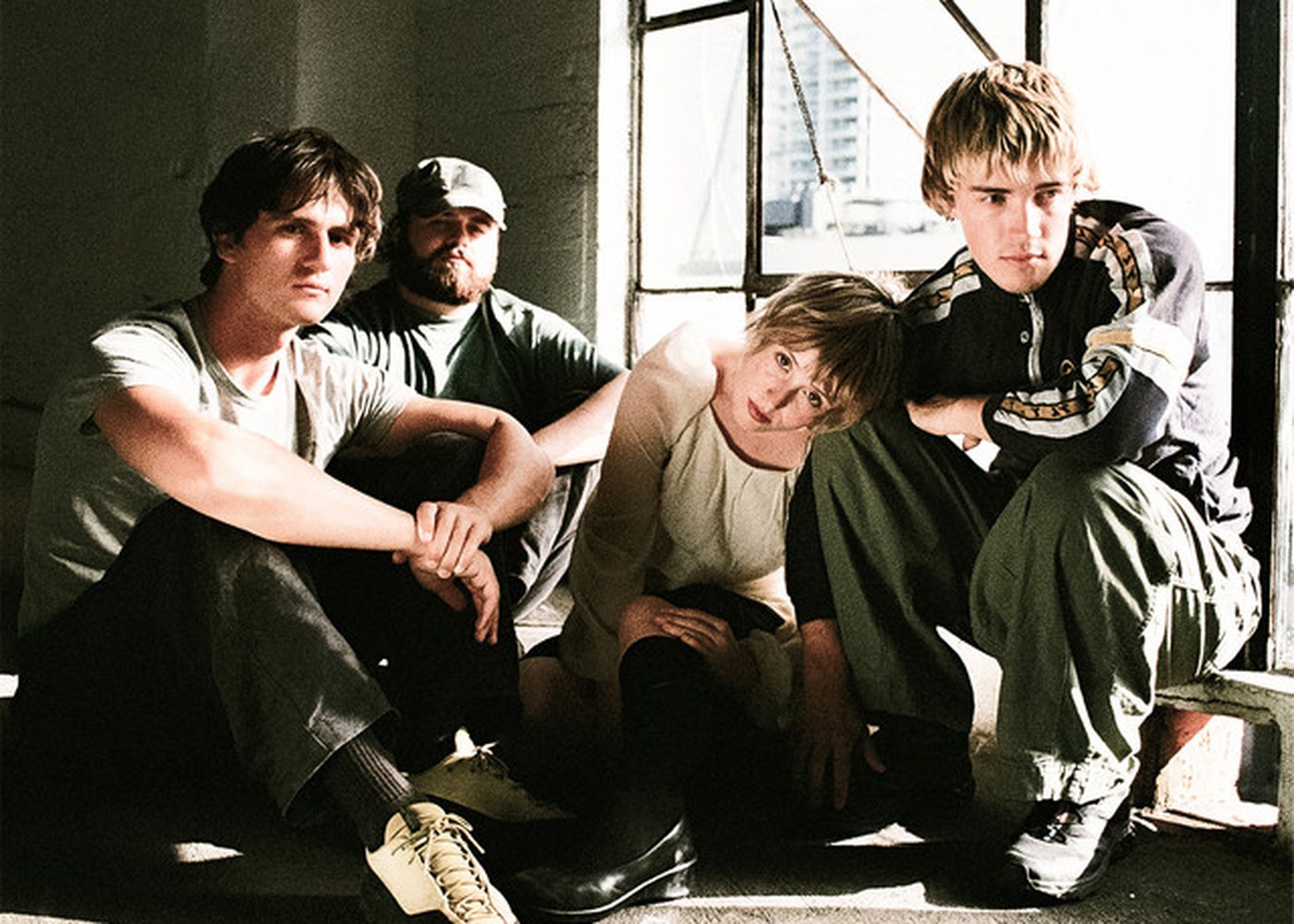
Most songs about dysphoria want resolution. A before, an after, a self finally named. "My Heart Breaks II" refuses the whole structure. It puts you inside the ongoing sensation of a self that won't cohere, and it stays there, past the point where most songs would flinch and offer comfort.
The central argument of the song is this: the narrator is the pain. Not a person in pain - the pain itself. That's not a lyrical flourish saved for the final verse. It's what every image in the song has been building toward, and by the time it lands, the ground has already given way beneath it.
The opening: a threshold the body won't cross
"Stand at the door / Key in your hand / Is it that simple? / Is it that sad?" The song opens mid-hesitation, someone stopped at a threshold, holding the means to enter or exit but unable to move. The question isn't rhetorical. It's genuinely asking whether the thing that feels enormous is actually enormous, or whether it's just ordinary sadness performing scale it hasn't earned.
That doubt is the key to the whole song. The narrator can't tell if what they're feeling is appropriate to what's happening. And that uncertainty, more than the pain itself, is what makes the opening so destabilizing.
Verse one: the inventory of a body under siege
The second verse doesn't build a scene so much as drop evidence into your hands without context.
"Forks in my palm, bombs on the TV / Sling wrapped in gum / Cried through December / First week alone"
"Forks in my palm, bombs on the TV" is the image I keep returning to, and it earns the attention. It collapses two scales of damage into one breath: something small and bodily pressed into the skin alongside something catastrophic happening at a distance, through a screen. The narrator isn't choosing between them. Both are happening at once. The body is the site of crisis. The world is also the site of crisis. Neither cancels the other out.
"Blacked out at Christmas / They asked where you'd gone" is plain in a way that cuts. Someone was absent. No one addressed the absence correctly. The gap between what was asked and what was actually happening is where the song lives.
The chorus and pre-chorus: unraveling the self through someone else's hands
The "I don't want" section is the closest the song comes to stammer, to the voice short-circuiting before it can form a complete thought. It's not sung to anyone. It's what happens when the sentence can't find its object. The narrator wants to refuse something but can't name the thing being refused. That interruption matters: by the time the chorus arrives, the listener has already felt the shape of what can't be said.
Then the chorus opens into something that sounds almost like a plea between two people, and it is, but it's doing double work.
"You've got the thread I'm unravelling / Please just don't say goodnight"
The image of thread and unraveling is the song's most compressed statement about identity and dependency. The narrator isn't just emotionally attached to someone. The other person is holding the literal structure of the self together. Let go of the thread and there's no narrator left to speak. This is dysphoria rendered as physics. Not metaphor for the sake of beauty. A description of how it actually operates, where selfhood depends on something external, something that could leave.
"I heard the door to heaven is free" lands with more weight than it should for a single line. It's casual in delivery, almost offhand, and that's exactly what makes it unsettling. It isn't a direct statement of intent. But it sits right next to "you wanna go, but baby, don't leave" in a way that puts two kinds of leaving in the same breath, and the song doesn't flinch from the proximity.
The second arc: the body gives evidence
The second half of the song is where the imagery gets material in a way the first half only gestured toward.
"Glass on the ground, blood in the sink / Booze on your breath and all of it is aching"
No explanation is offered. The song trusts the accumulation. Each image is specific and physical: not grief as abstraction but grief as the texture of a particular room at a particular hour. The body is everywhere in this section. It bleeds, it wakes, it has a heart that feels like it's been removed from the chest. "Wake in the night, heart in my lap" is, honestly, one of those lines that just gets it right without trying to be poetic about it.
"I look for you whenever I sing / It's all that I know, and I can't / Let go of everything" pulls the song back toward the interpersonal. The narrator is still searching for someone in the act of making music. Singing as looking. Art as a form of unfinished grief.
The ending: what dissolution actually sounds like
The final movement strips the language down to almost nothing, and then arrives at the line that retroactively reframes everything before it.
"I'm not the girl, I am the ache / I take my jacket off / And become"
"I'm not the girl, I am the ache" is the song's thesis delivered at the last possible moment, and it carries the full weight of everything that came before it. The narrator isn't rejecting a label. They're refusing the idea that a label is even the right unit of measurement. They aren't someone who hurts. They are the hurt. The self and the pain have become the same substance.
"I take my jacket off / And become" ends on an unfinished verb. Becomes what? The sentence doesn't close. That incompleteness is the point. The song refuses to name what the narrator is becoming, because the act of becoming is still in process, maybe always will be. Dysphoria as a state without an endpoint, not because recovery is impossible, but because identity itself is ongoing, unstable, still being written.
You could read the ending as surrender. A body finally putting something down, no longer performing coherence. That reading is available, and a careful listener could hold it without being wrong.
But what the song is ultimately doing is more specific than either triumph or collapse. It's insisting that the narrator exists in the dissolution itself, not despite it. "I am the ache" is a claim to selfhood made from the wreckage of the self. The song breaks its own heart, and in doing so, locates something true about what remains when the girl-shape is removed. Not nothing. Something still there, still becoming, sentence still open.
Frequently Asked Questions
What is "My Heart Breaks II" by Swapmeet about?
"My Heart Breaks II" is a song about gender dysphoria and emotional dissolution, told through a narrator who feels that their sense of self is inseparable from pain. Rather than framing dysphoria as a crisis with a resolution, the song stays inside the ongoing experience of a self that won't cohere, culminating in the line "I'm not the girl, I am the ache." It also carries a thread of interpersonal dependency, where another person is imagined as holding the narrator's identity together.
What does "I'm not the girl, I am the ache" mean in "My Heart Breaks II"?
The line refuses to define the narrator by a gender label and instead identifies them with the feeling of dysphoria itself. It's not a rejection of womanhood so much as a rejection of the idea that any stable identity category applies. The narrator and the pain have become the same thing, which is the song's most direct statement about what living inside dysphoria can feel like. The sentence that follows, "I take my jacket off / And become," leaves the transformation deliberately unfinished.
What does "You've got the thread I'm unravelling" mean?
The image describes the narrator's sense of self as something held together by another person. If that person leaves, the narrator doesn't just lose a relationship; they lose the structural support that makes coherent identity possible. It frames emotional dependency not as weakness but as a physical fact about how the narrator's sense of self is currently built, making the plea "please just don't say goodnight" feel genuinely urgent rather than dramatic.
Lyric analysis powered by Scalpel.

Comments
Loading comments…