

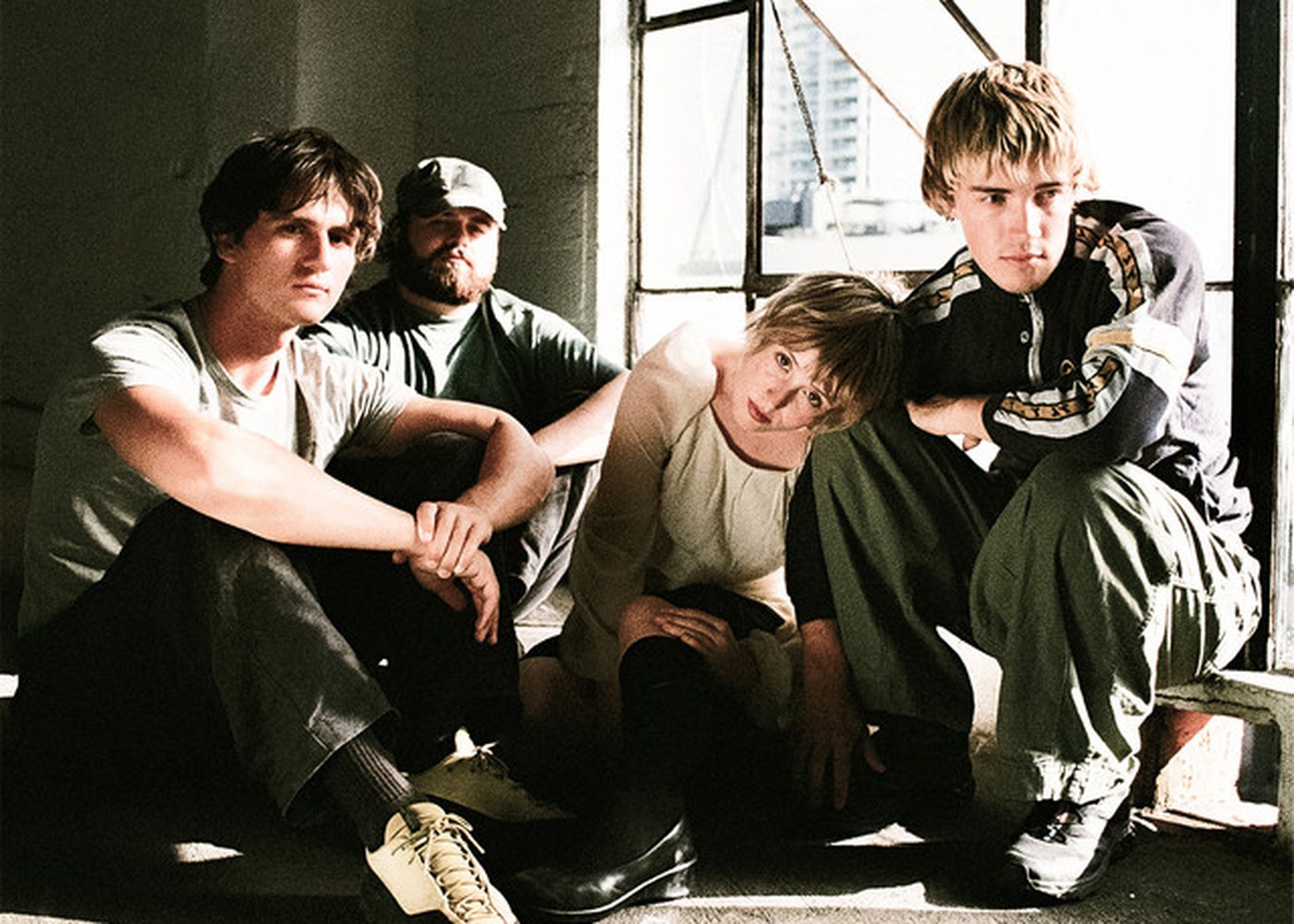
"I wanna go back to the start, to the park where we almost touched hands." That line is the song's entire emotional architecture compressed into one image. Not a kiss, not a declaration. Almost touched hands. The whole song lives in that almost, in the gap between what was possible and what was risked, and the particular grief of knowing you felt it alone.
Verses 1 and 2: The Economy of Coping
The song opens with instructions that feel like they've been given too many times. "Take the compliment / Save them all." There's an exhaustion already baked into the advice, like the speaker has memorized a script for getting through days when nothing quite lands right. Then the bottom drops out of it.
"Take it to the ground to break your fall, blame the holes"
The logic here is deliberately broken. You're told to take something to the ground, to use the fall as a controlled crash, and then the accountability gets offloaded entirely onto "the holes." Blame the terrain, not yourself. The line gives permission for a kind of dissociation that looks like self-preservation from the outside, which is exactly the kind of coping mechanism that works just well enough to keep you functional and not well enough to actually heal anything.
Verse 2 sharpens the bluntness. "It will help but not assist" is the kind of sentence that sounds almost logical until you sit with it, a thing that offers partial relief without actually moving you forward. And then, almost under its breath: "I wanna leave." The speaker isn't being dramatic. They're being precise.
Verse 3: Watching Someone Become Who They Need to Be
The third verse is where the song opens up into something more complicated than a breakup or a crisis. The speaker isn't watching someone they've lost. They're watching someone who is in the process of becoming, and being left behind by that becoming.
"I think I know who you wanna be / Fingers crossed, and we all see / Longing for you while you're laughing at me"
There's love here, real love, and there's also the particular sting of being someone's before. The speaker sees the person the other is becoming and wants them, not despite that transformation but because of it, while feeling like they belong to a version of the story that's already ended. "Pleading to god, I pull your sleeve" is physical in a way that cracks open what the rest of the verse keeps composed. The sleeve, not the hand. Just enough contact to ask, not enough to hold.
Pre-Chorus and the Permission to Go
The pre-chorus is short and sits heavy. "Now there's nothing to resist / I can die peacefully." It's a strange peace, the kind that comes when you've stopped fighting something you couldn't have won anyway. The repetition of "It's not like me to suggest / I wanna leave" does something different the second time around. Earlier it felt like confession. Here it feels like someone finally listening to themselves.
The Chorus: Memory as a Place You Can't Reach
If you're listening to this at 2am with your headphones in, the chorus is the part that finds you.
"Well, I'm where I want to be" arrives with so little relief that you almost miss how complicated it is. The speaker has landed somewhere they chose, or that chose them, and it doesn't feel like freedom so much as arrival at a point they can no longer move past. What follows is a cascade of images: the park, the almost-touch, the dancing, the not going back. These aren't memories the speaker is savoring. They're things the speaker keeps returning to involuntarily, the loop of a mind trying to locate the exact moment a door closed.
"You're in bed, in my room, where the shadows won't move, I can hear you say"
The sentence never finishes. What the other person says is never given to us. The speaker can hear it, but we can't, and that withholding is the point. The presence of the other person in this room, in this body's space, is almost unbearable because it is also ending. "The shadows won't move" is a room at a particular hour of night when time has gone strange and both people know something is about to break. The speaker is clinging to the sound of a voice before it becomes a memory.
"Tell me what makes you cling" follows, and I keep coming back to whether this is the speaker asking the other person or the other person asking the speaker, because the grammar makes it genuinely ambiguous. Either reading works. Both are devastating in the same direction.
Then, the admission the whole song has been circling: "You're probably gonna leave soon, it's the word on my tongue, oh, I never meant to." Never meant to what? Cling? Love? Say it out loud? The sentence cuts off, and the chorus doesn't answer. It just recites the coordinates again: "The park, the dark, and me."
What the Song Leaves Open
A fair reading exists where the person in the room and the person from the park are not the same, and the whole song is about carrying a past connection into a present one that is also slipping away. That reading doesn't change the emotional weight, but it gives the speaker's grief a more layered history.
Conclusion
"Mount Zero" is about being fully present for someone who has already started to leave, and surviving in a body that registers every inch of the distance. The park, the almost-touch, the shadows that refuse to move: these are not decorative images. They are evidence. The song argues that grief can begin before the loss is confirmed, that you can mourn a hand you never quite held, and that getting to where you want to be is sometimes the same thing as being left there.
Frequently Asked Questions
What is "Mount Zero" by Swapmeet about?
"Mount Zero" is about the grief of being present for someone who is already emotionally leaving, and the way memory, specifically a moment of almost-touching hands in a park, becomes the fixed point the narrator keeps returning to. The song maps the distance between longing and loss before the loss is even confirmed.
What does "Take it to the ground to break your fall, blame the holes" mean in "Mount Zero"?
The line describes a coping strategy that offers control without real accountability. The speaker is told to use a fall deliberately, to soften it by leaning in, and then to redirect blame onto external circumstances rather than sitting with what actually happened. It captures a kind of survival logic that keeps you moving without actually resolving anything.
What does "where the shadows won't move, I can hear you say" mean?
The image places both people in a room at a late, suspended hour when the night has gone still and something unspoken is about to break. The shadows not moving suggests time has stalled, that the narrator is holding onto the moment. Crucially, the sentence never tells us what the other person says, leaving the voice present but the words withheld, which is exactly how the narrator experiences the whole relationship.
Lyric analysis powered by Scalpel.

Comments
Loading comments…