

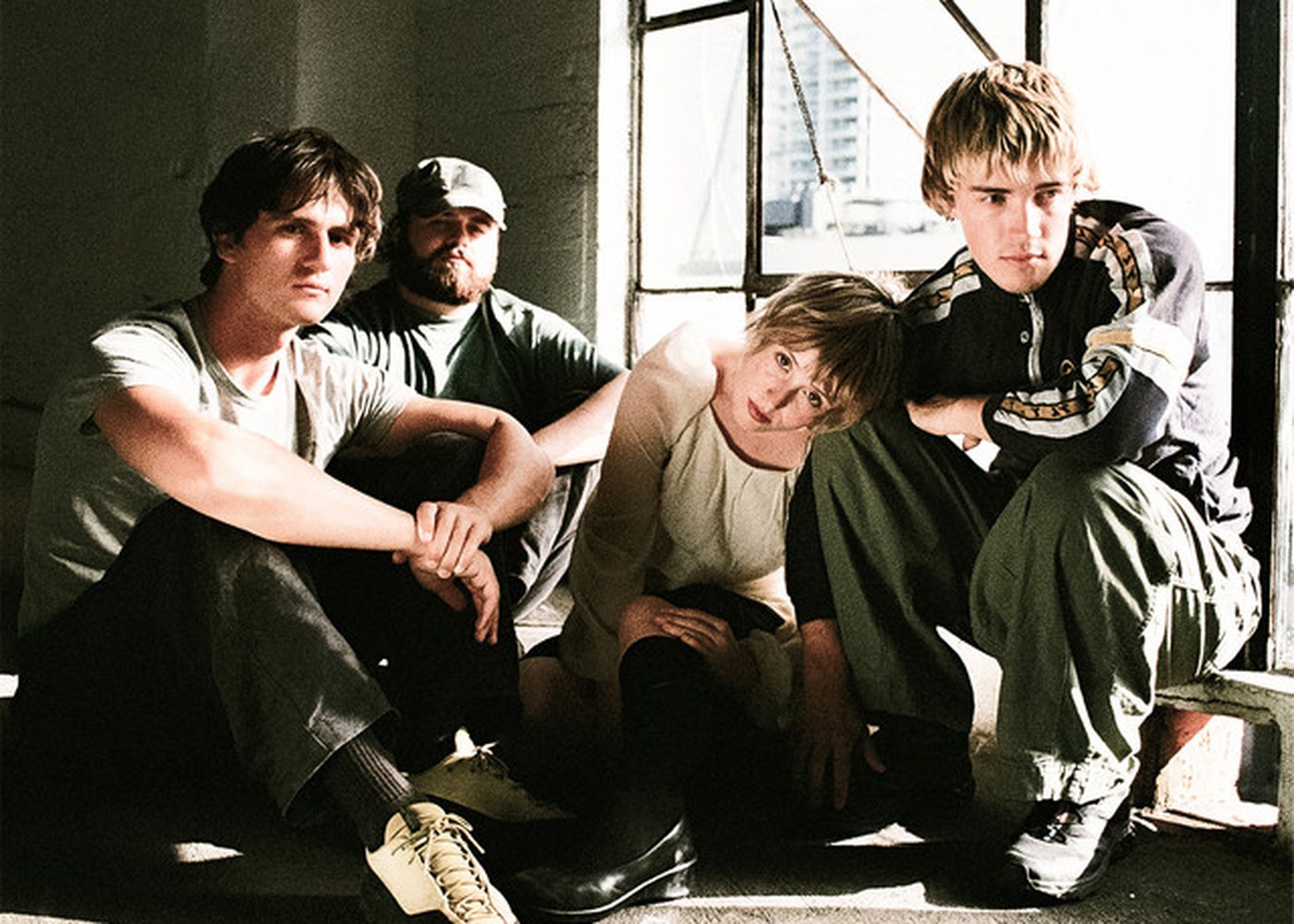
You know that pull toward invisibility. Not disappearing to escape, but disappearing to finally be chosen. "Ceiling Fan" traps you in exactly that. Swapmeet builds a song around the wish to become so still, so present, so without demand, that the person who keeps almost-choosing you will finally close the distance. The song's argument is devastating in its simplicity: the narrator doesn't want less love. They want to want less themselves, because wanting has cost them too much already.
The Ceiling as a Mirror
The song opens mid-exhaustion. Not at the beginning of the waiting, but somewhere deep in it, where the narrator has already run through every reason to stay closed off and found those reasons running thin.
"I've been looking at the ceiling, it appeals to me now / How it can witness almost anything / Without making a sound"
The ceiling is the song's central image, and it roots itself early. The ceiling isn't a metaphor for numbness. It's an aspiration. The narrator looks up and sees a life they want: present for everything, responsible for nothing, needing nothing back. To witness without being witnessed. The ceiling doesn't flinch. It doesn't ask. It just holds the room together without anyone thanking it for doing so.
There's something bodily in that longing that the song doesn't name outright but leaves sitting in the room. To want to exist without being perceived, to be helpful and invisible at once, lands differently depending on who's hearing it. If you're on the train at midnight with headphones in, you might already know what kind of wanting this is.
The Year That Went Nowhere
The chorus doesn't escalate. It collapses.
"I've been waiting all this time for you to make up / Make up your mind / But there's nothing more here / Feels like I've wasted my year"
The repetition of "but there's nothing more" functions less like emphasis and more like the narrator trying to accept something they haven't accepted. Saying it three times is the sound of a person who has reached a conclusion and keeps reaching it again. And the phrase "sick hope, sick dream" doesn't soften the self-indictment. The narrator knows this waiting has tipped into something they're ashamed of. They're not calling the hope romantic. They're calling it a symptom.
What makes the chorus sting is the word "delusional." The narrator isn't casting blame outward at the person who won't decide. The cruelty is all directed inward, at the self that kept believing anyway.
Chorus Two: The Fan
The second pass at the chorus shifts the ceiling image into something more specific and far stranger.
"I hoped for a second / I could be your ceiling fan / I could give you what you wanted most / Without having to stand"
Wanted most. That phrase does real work. The narrator isn't offering warmth or presence or love in the way those words usually mean. They're offering function stripped of personhood. A ceiling fan gives relief without needing anything acknowledged. It moves air. It hums. It doesn't stand because it was never meant to stand. The narrator is fantasizing about becoming useful in a way that requires no reciprocity, no vulnerability, no risk of another year wasted on a sick dream.
The line I keep coming back to is "without having to stand." Standing implies presence, upright selfhood, the kind that can be seen and judged and turned away from. The narrator doesn't want to stop loving this person. They want to stop being a person who could be rejected for it. Becoming a ceiling fan is the only version of closeness that feels safe.
A reasonable reading here is that this is straightforwardly about romantic limbo, one person stuck while another drags out a decision. That reading holds. But the specific quality of the wish, to be present and useful and without a body that could be refused, carries a weight that feels like it comes from somewhere older than this particular relationship.
Where the Song Leaves You
The song ends without resolution. No decision arrives. No one makes up their mind. The narrator just stops mid-reach, the final chorus fading on "there's nothing more here" with no follow-through. The emptiness is the point.
"Ceiling Fan" is a song about what it costs to keep yourself small for someone else's comfort. The waiting is real, but the deeper ache is the wish to dissolve into usefulness, to sidestep the terror of being a full person with needs. Swapmeet doesn't offer a way out. The song just sits with you in the dark and lets you recognize what you've been doing to yourself.
Frequently Asked Questions
What is "Ceiling Fan" by Swapmeet about?
"Ceiling Fan" is about the longing to make yourself invisible enough that someone will finally choose you. The narrator is trapped in a waiting period while another person refuses to commit, and their response is a wish to shed personhood entirely and become something functional and undemanding, like a ceiling fan. The song frames that wish not as peace but as a form of self-erasure driven by fear of rejection.
What does "I could be your ceiling fan / Without having to stand" mean in "Ceiling Fan"?
The ceiling fan image is the song's central metaphor for self-erasure as a survival strategy. A ceiling fan provides comfort without needing acknowledgment, presence without a body that can be turned away. "Without having to stand" means without having to be upright and visible as a full person who could be rejected. The narrator is fantasizing about loving someone from a position that carries no risk.
Why does Swapmeet repeat "but there's nothing more" three times in the chorus?
The repetition captures a narrator who has reached a painful conclusion but cannot fully accept it. Saying "there's nothing more here" once would be a realization; saying it three times is the sound of someone trying to convince themselves. It also mirrors the exhausting loop of waiting for someone who won't decide, where the same thought circles back without ever landing anywhere new.
Lyric analysis powered by Scalpel.

Comments
Loading comments…