

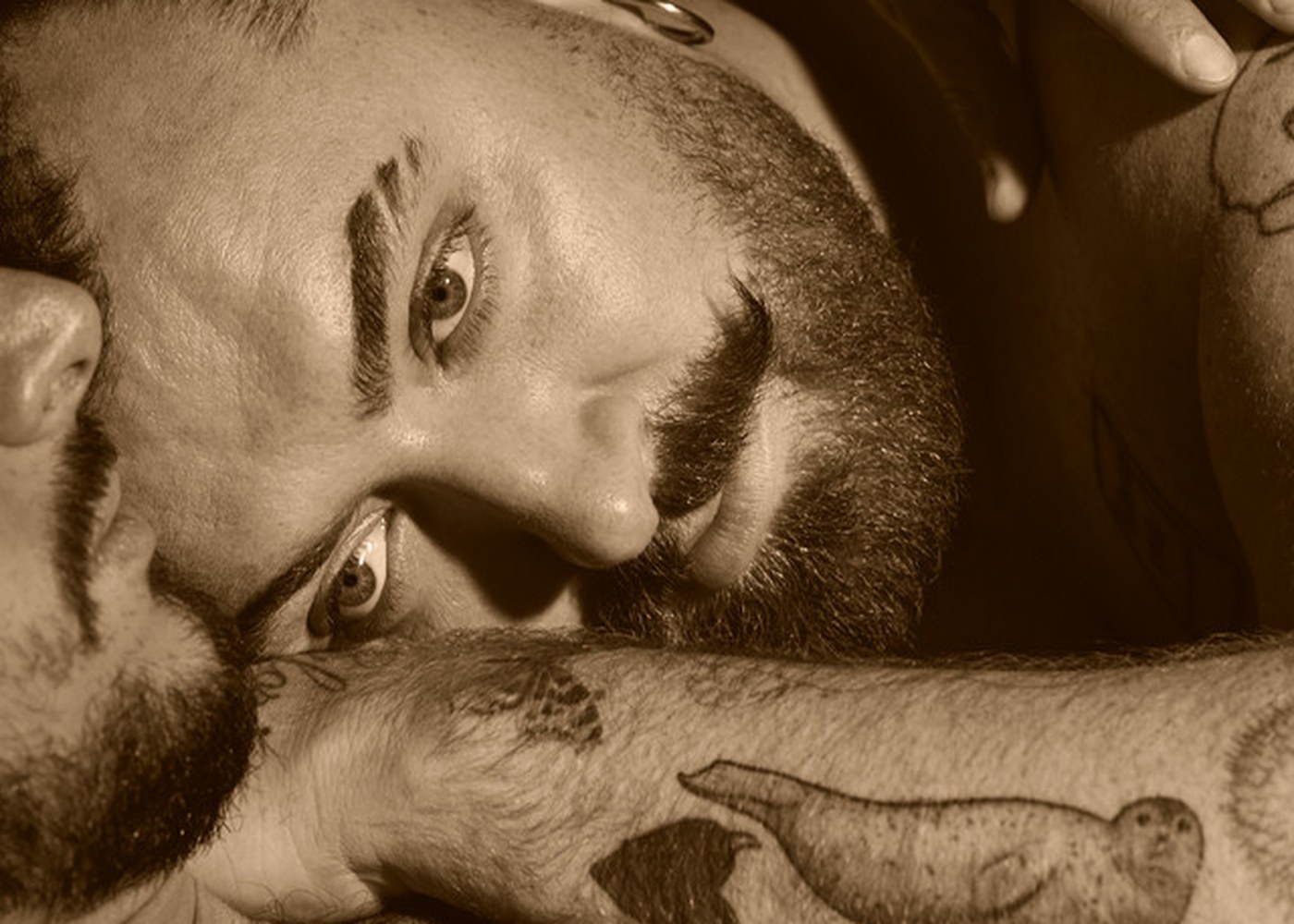
You know that feeling when you've been holding it together so long that being loved almost undoes you? That's where "Hazel Eyes" lives. Not in the giddy rush of new attraction, but in the exhale that comes after - the terrifying, tender moment when someone's presence makes you realize how much you'd been bracing.
Sam Smith's central argument in this song is counterintuitive and deeply true: the safest place is the one where you're finally allowed to fall apart.
A Portrait Built From Specific Details
The first verse is a love letter written in fragments. Autumn leaves. A summer breeze. Raven hair. A father's way of caring. The narrator isn't describing a type - they're cataloguing a specific person, one detail at a time, the way you do when someone has gotten under your skin so thoroughly that you notice everything.
"Got your mother's raven hair / Your father's son in how you care"
That second line does something the first one doesn't. Hair you can see. Care is something you feel over time, something you only notice after it's been extended to you repeatedly. The narrator isn't just observing this person - they've been paying attention. Closely. Long enough to see the inherited tenderness in how they move through the world.
The "evergreen" image ties it together. Seasons change, flowers freeze, but this person remains. The narrator is already telling us, before the chorus arrives, that this isn't seasonal feeling. This is the real thing.
The Chorus: Where the Song Turns
Most love songs reach for strength. I'll be your shelter. I'll protect you. I'll hold you up. This chorus goes the other direction completely.
"In this moment, finally, I have found a place where I can fall apart / Inside your hazel eyes"
That word "finally" carries so much weight. It's not just relief - it's exhaustion releasing. The narrator has been carrying something, holding something in, for a long time. And this person, these hazel eyes, are the first place that felt safe enough to set it down.
Falling apart inside someone's eyes sounds vulnerable to the point of exposure. But the song frames it as arrival, not collapse. The line I keep coming back to is how the chorus doesn't ask for anything from the other person - no rescue, no fixing. Just permission to be undone. That's a mature, specific thing to want from love, and it hits differently than the usual declarations.
Verse Two and the Bridge
The second verse trades the careful portraiture of the first for pure sensation. "A sugar rush at Halloween" and "bug collector beauty queen" are odd, playful, specific. The narrator has relaxed into this person enough to get a little weird about them, which is its own kind of intimacy. The verse is brief and deliberately lighter, and it leads somewhere more urgent: "the more I need, need." The repetition isn't accidental. The need is building. The bridge is only vocalizations, so it earns a pass - emotionally it's a held breath before the final chorus drops.
The Outro Closes the Loop
The song ends where it began, returning to the autumn leaves and the evergreen. But it lands differently now. Before the chorus, those images were a portrait. After it, they're a reminder - the narrator circling back to what started all this, the specific details of a specific person who became the first safe place they'd found in a long time.
There's a reading where this song is simpler than I'm making it: a straight-ahead adoration song, all warmth and no shadow. Reasonable fans can hold that, and the sweetness of the imagery supports it.
But the word "finally" won't let me rest there. That word belongs to someone who has been searching. And a love song written from the place of finally finding safety after a long time without it is a different song entirely than one written from comfort. "Hazel Eyes" is tender because it's relieved. The falling apart isn't weakness - it's what happens when the guard comes down for the first time in a while, and the person on the other side just lets you.
Lyric analysis powered by Scalpel.



Comments
Loading comments…