

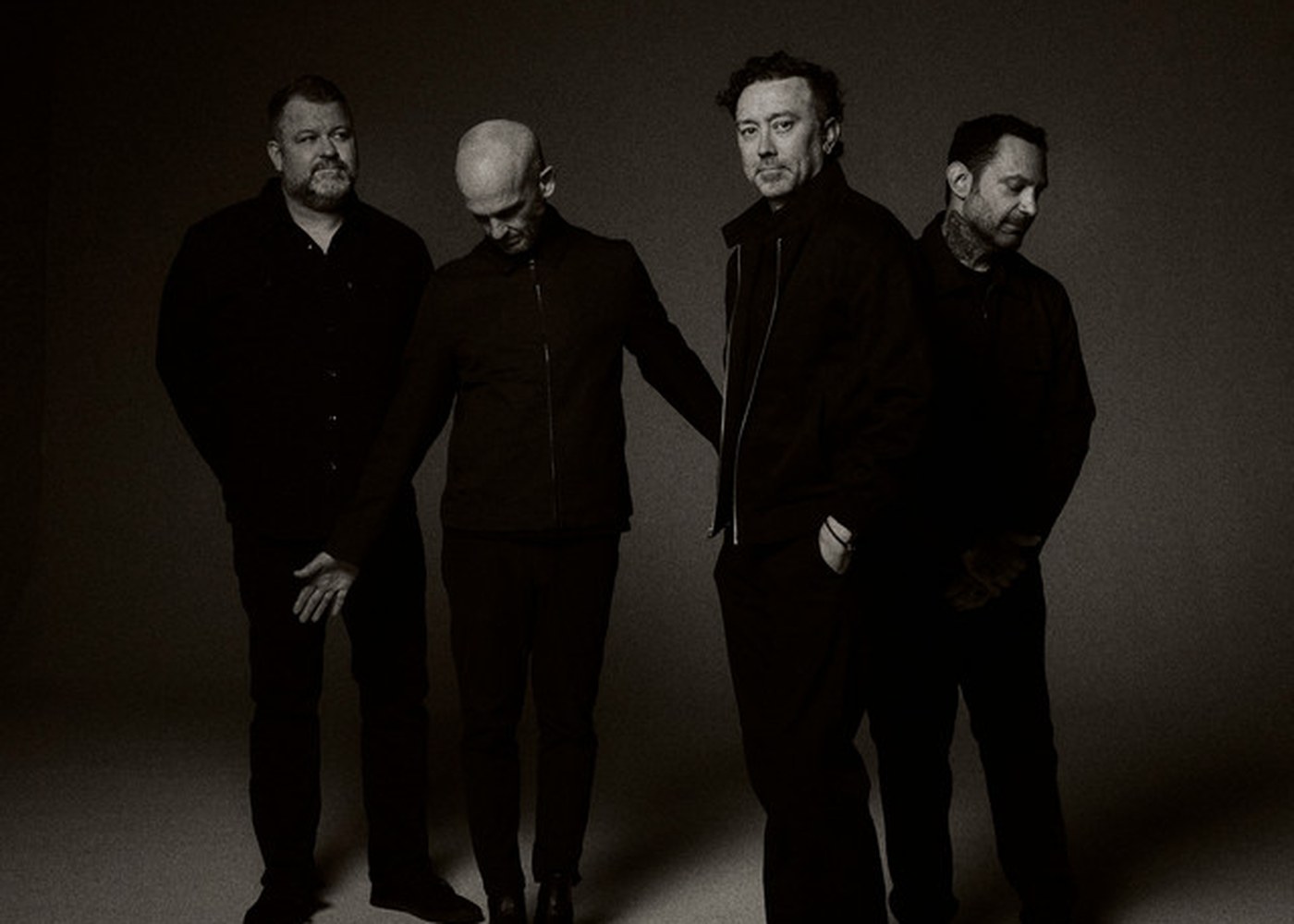
You know the feeling. The news is unbearable, the pattern is obvious, and you understand exactly what's happening, but you close the tab and go to bed anyway. Rise Against have built a career on songs that refuse that exit, and "Katy Bar the Door" looks like another one of those songs. Burning crosses. Raised fists. Tanks on Main Street. The imagery is defiant, the guitars are coiled tight. But underneath all that urgency is something harder to say out loud: we're scared, we're frozen, and the song knows it.
The Flag and the Fist
Verse one sets the terms fast. The cross is burning. History is looping. Then comes the line that sounds like a rally cry but lands with a smirk:
"I see your flag and raise you a fist / Ask me to abide, I'll blow you a kiss"
That's not rage. That's defiance wearing a grin, the gesture of someone who knows the game is rigged and refuses to pretend otherwise. It's a sharp move. The narrator rejects compliance without announcing a plan. They name the problem, centuries of repeated mistakes, good men standing by while things burn, and then stop just short of offering a solution. The fist goes up. That's all we get.
The Chorus That Asks a Question It Can't Answer
The chorus is where the song does its real work, and it's more complicated than it sounds on first listen.
"How will we know / When it's safe to come out now"
That question is not rhetorical. The song means it. A peace sign painted on a bullet-scarred wall is graffiti on the ruins of something. "Katy, bar the door" is an old idiom for bracing against something catastrophic, locking up because what's coming is too dangerous to face. The song uses it as a warning echoing down empty streets after the fight is already over, or maybe still ongoing. Nobody can tell. The chorus keeps asking when safety returns and never once answers. That silence is the point.
Verse 2: Where the Honesty Gets Uncomfortable
The second verse is where Rise Against earn something most protest songs don't bother reaching for.
"But most of the time we just look away / 'Cause it's all just too hard to face / We close our eyes and count the days / From our hiding place"
Tanks on Main Street. A generation manipulated into fighting each other in a race to the bottom. And then, instead of another call to arms, the song pivots to confession. We look away. We hide. The narrator includes themselves in that we. This is a speaker in the crowd, eyes closed, counting days, not one standing above it and pointing fingers. That admission hits harder than any raised fist because it's true in a way protest anthems usually refuse to be. Outrage is easy. Sitting with the shame of inaction is not.
The Bridge: Where the Armor Falls Off
The bridge strips everything back, and it's the most revealing thirty seconds of the song.
"Just a voice, just a name / Just a cog in this machine / Just a face on a screen / Telling me what I don't need"
That opening barrage catalogs how systems reduce people to functions. But then the bridge turns inward:
"Just someone break us free / Anyone but me"
There it is. The line I keep coming back to. After verses of clear-eyed political anger, after naming the corruption and the complicity, the narrator admits they're waiting for someone else to act. Anyone but me. It's the most honest thing in the song, maybe in Rise Against's catalog, because it refuses the comfortable lie that understanding the problem automatically makes you brave enough to solve it. The bridge doesn't dramatize this as defeat. It just says it plainly, and that plainness stings.
A reasonable reading of the song pushes back here: maybe "anyone but me" is collective exhaustion rather than personal cowardice, a community so beaten down it can't imagine being its own hero. That reading doesn't let anyone off the hook, but it changes the weight of the line.
What the Song Actually Argues
"Katy Bar the Door" is a protest anthem about why people don't make it to the barricades, not one that rallies you there. The fist goes up in verse one. By the bridge, the fist is waiting for someone else to throw the first punch. The peace sign on the wall has bullet holes through it. The door is barred not against the enemy but against the reckoning itself.
What the song ultimately reveals is that political clarity and political courage are not the same thing, and the distance between them is where most of us live. Rise Against name that distance without mercy, and without pretending the song itself closes it. The question echoes down every street: when will it be safe to come out? The answer the song keeps refusing to give is the whole argument.
Lyric analysis powered by Scalpel.

Comments
Loading comments…