

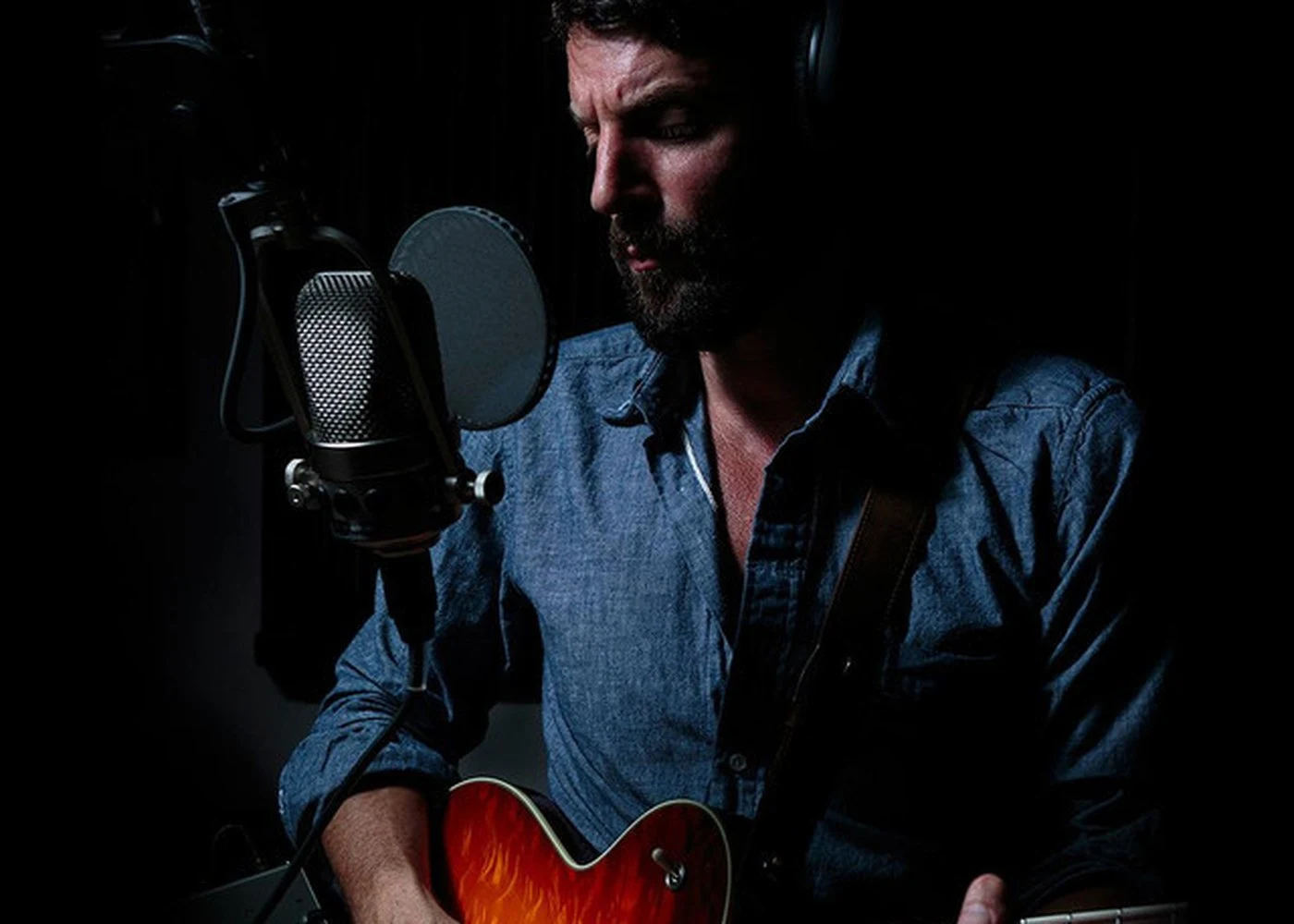
Halfway through the first chorus of Ray LaMontagne's "Jolene," the narrator wakes face-down in a ditch, reaches into his jeans, and finds the whole song in there: "A picture of you, holding a picture of me." Everything else he owned is gone, sold, or soaked, and the one thing he kept is a photograph of a woman holding his photograph. A man who carries that against his body knows exactly what love means, so when he insists twice that he doesn't, he is lying to keep himself on the road. "Jolene" is about a drifter choosing exile over going home, because home is the one place where someone would actually see what he's become.
Spokane, and a coat traded for smoke
The song opens with a body already on fire. "Cocaine flame in my bloodstream," and then, almost in the same breath, a sale. He hits Spokane and sells his coat.
"Bought myself a hard pack of cigarettes / In the early morning rain"
Look at that trade. Warmth turned into cash, cash turned into smoke, and now he's standing in the rain without the coat he just got rid of. It's such a bad bargain it's almost funny. (Then again, anyone who's been broke and jittery at dawn knows the smokes win that argument every time.) It's also the most honest bookkeeping in the song, because it shows a man who will spend what keeps him alive on what keeps him numb.
His hands "don't feel like mine." His eyes are "stung with dust," and he's blind. The verse closes on the only history we get: he held her once and lost her anyway. He states it flatly, like a weather report, which is how people talk about the thing they think about most.
"It's too late": the decision, and the relief
Then he says her name. Jolene. And the song changes posture.
"I ain't about to go straight / It's too late"
Up to now he has been reporting. Here he decides. "Go straight" carries both its meanings at once: get clean, and go straight back to her. He refuses both, and the voice behind the refusal sounds stubborn and a little relieved, the way a person sounds when they finally stop pretending they're going to make the call.
The ditch comes next, and it arrives as evidence. Booze in his hair, blood on his lips. He offers the image almost like a lawyer would, as proof he's right that it's too late. Notice, too, that after this the drugs vanish. The second verse never mentions cocaine again, because the problem was never really the chemistry.
The picture in the pocket
Now the line that unlocks everything. In that ditch, in the pocket of his blue jeans, he carries a picture of Jolene holding a picture of him.
"A picture of you, holding a picture of me / In the pocket of my blue jeans"
It's the only embrace left in the song, and it's twice removed. She isn't holding him. She's holding an image of him, and he's holding an image of that. And in the photo, she's the one doing the holding, which tells you who loved whom and who walked. He sold his coat. He kept this. It rides against his hip through the rain and the dust and the ditch, closer to his body than anything else he owns.
Then, immediately, the denial.
"Still don't know what love means / Still don't know what love means"
The line I keep coming back to is the second time he says it. Once is a confession. Twice is a man talking himself into something, with the evidence against him sitting in his own pocket the whole time he speaks. If he admitted he knew what love meant, he'd have to admit he knows the way back, and that it runs straight through someone who would see the blood on his lips. Claiming confusion keeps the door shut. It lets "too late" stay true.
A fair reader could hear it straighter than I do: a man so burned down by the road that love has genuinely gone blurry, a word he can't define anymore even while he clutches its proof. That version is sadder and maybe gentler. I just think the repetition gives him away, because people don't usually insist on something twice unless part of them disagrees.
A nine-pound hammer or a woman like you
The second verse is lonelier and plainer. It's been so long since he's seen her face, "or felt a part of this human race." He's lived out of a suitcase too long, which is a whole house shrunk down to a handle.
"A man needs something he can hold onto / Nine-pound hammer or a woman like you"
On the surface it's brutal. He ranks her with a tool. A nine-pound hammer is heavy, steady work, the kind you swing until your arms go numb and your head goes quiet. "Either one of them things will do," he shrugs, as if she were interchangeable with an afternoon of breaking rock.
But he never calls the hammer's name. He calls hers, right after, the way he does at the end of every stretch of this song. The shrug is the same move as "don't know what love means": a tough-guy flattening of the one thing he can't put down. What he wants is grip, something to stop his hands from feeling like somebody else's, and he picks the hammer because the hammer can't look back at him.
Conclusion: a name said instead of a road taken
The song ends without words. Jolene, then la-la-la, then Jolene again, until the name wears down into a sound. We never learn whether she hears any of it. Maybe she's on the other end of a phone; maybe he's saying it to a motel ceiling. Either way he does the one thing that costs him nothing, which is to keep saying her name rather than going to her. That's how I hear the whole song: a man who knows precisely what love means, carries it in his jeans, and has decided he'd rather be lost than be seen. The saddest thing he owns is a photograph in which somebody is still holding on to him.
Frequently Asked Questions
What is "Jolene" by Ray LaMontagne about?
The song follows a drifter strung out on the road, selling his coat for cigarettes and waking up in a ditch, while calling out the name of a woman he once loved and lost. He insists it's too late to go straight and claims he doesn't know what love means, yet he carries her photograph in his pocket. It's a song about choosing exile over facing the person who knew you best.
What does "Nine-pound hammer or a woman like you" mean in Ray LaMontagne's "Jolene"?
The narrator says a man needs something to hold onto, and that either a heavy work hammer or a woman would do. On the surface it coldly ranks Jolene alongside a tool for numbing, repetitive labor. But he immediately calls her name again, which shows the shrug is bravado covering how much she still matters.
What does "Still don't know what love means" mean in "Jolene"?
The line comes right after the narrator describes keeping a picture of Jolene holding a picture of him in his jeans pocket. Repeating that he doesn't know what love means, with that keepsake on his body, works as self-denial: admitting he understands love would mean admitting he knows the way back to her. Some listeners hear it as genuine confusion from a man worn down by addiction and the road.
Lyric analysis powered by Scalpel.

Comments
Loading comments…