

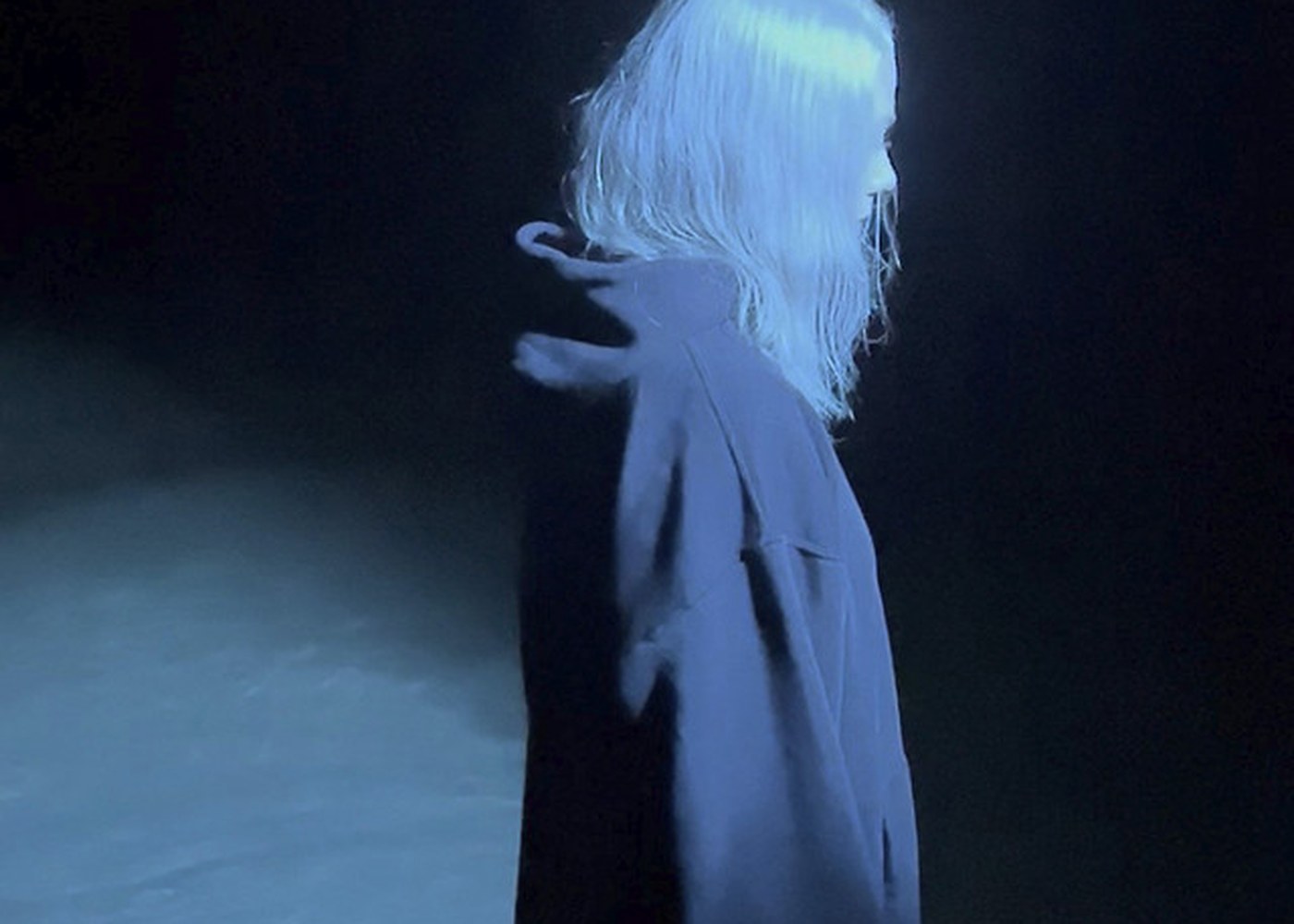
Most songs about watching someone self-destruct collapse into either accusation or grief. "On Video" refuses both. Phoebe Bridgers writes from the vantage point of someone who saw it happening and could not stop it, and the entire song is about the unbearable clarity of that position. The witness has the footage in their head. The person they were watching nearly vanished anyway.
The opening image sets the terms immediately.
"Face painted white with blue butterflies"
This is a girl at a party, dressed up, made up, putting something beautiful on her face for other people. The white paint and blue butterflies are costume and disguise at once, the kind of effort that says I am here and I am performing being here. "Wasting wishes on the world" follows, and it seals the register: someone spending themselves on a night that will not give anything back. "Birthday girl, I've got it all" tips into irony so light it barely announces itself. She says she has it all. The witness knows she doesn't. The song does not editorialize. It just holds the image.
The chorus arrives before we've fully processed what kind of night this is.
"I saw you making angels in the snow"
That image is childhood and wonder and the body spread open and vulnerable against cold ground. On video. The witness didn't reach in to help. They watched it recorded, or recorded it themselves, and that preposition "on video" is doing something precise: it frames the whole night as footage the narrator has replayed, cannot stop replaying, can see perfectly and can do nothing to change. The snow angels are beautiful. They are also a body lying down.
And then the second verse moves closer to the thing the song has been circling.
"They sing so loud you can't hear yourself"
A party so full of noise that the birthday girl loses her own voice inside it. "Fragile like a child at the fair" gives her the specific vulnerability of someone overwhelmed by sensation and brightness but pretending to enjoy it. This is the environment in which the next line lands.
"You took too much, but it was not enough"
The line I keep returning to in this song, because it holds two facts that refuse to resolve. She took too much of something, a quantity that should have been enough to end things, and it was not enough to do that. The "not enough" is relief stated without relief, because the witness is still inside the terror of how close it was. "You had us all so scared, my china doll" gives the affection a name: something precious, something breakable, something you handle with care because you know what it costs to drop it. "I saw it all" closes the verse with the weight of complete and useless witness.
The second chorus introduces one addition that quietly shifts everything.
"Watching you like a common criminal"
The narrator watched this person the way surveillance watches someone suspected of something. Alert, at a remove, trying to catch what comes next before it happens. The simile makes the watching itself feel like a transgression: to surveil someone you love is to reduce them to a subject, and the narrator knows it, and did it anyway because the alternative was looking away. There is guilt in the line. Not guilt for what happened, guilt for the watching, for being the one who recorded and witnessed and still could not intervene.
A fair reading of the song could stop at overdose narrative and not be wrong. But the outro's repetition of "on video" opens another possibility: that this is about grief at a remove, about a generation that processes catastrophe through screens and footage and the strange secondhand intimacy of watching rather than touching. The snow angel, the face paint, the party noise, the fear. All of it filed as footage. The witness holds it like evidence of something they cannot prosecute.
"On Video" argues that love sometimes arrives in the form of attention, and that attention can be total and useless at the same time. The birthday girl was seen, completely, by someone who could not save her. The snow angels are still there in the narrator's memory, pressed into the ground, the shape of arms that almost stopped moving. What the song leaves with you is not grief and not relief but the image itself, running on loop, the way certain nights refuse to become the past.
Frequently Asked Questions
What is "On Video" by Phoebe Bridgers about?
"On Video" is told from the perspective of someone witnessing a friend's overdose at a birthday party. The narrator watched it happen, saw the signs, and was unable to stop it. The song processes that experience as footage, something the witness can replay perfectly but cannot change.
What does "you took too much, but it was not enough" mean in "On Video"?
The line refers to someone taking a dangerous quantity of a substance, enough that it should have been fatal, but who survived. The phrase holds both facts at once: the terrifying excess and the fragile relief of survival. It is the emotional center of the song, capturing how close the night came to ending in death.
What does "face painted white with blue butterflies" represent in "On Video"?
The image describes a girl at a party wearing face paint, performing celebration for the people around her. The costume functions as both adornment and disguise, someone making themselves visible in a way that also hides how they are actually doing. It establishes from the song's first line that what is on the surface and what is underneath are two different things.
Lyric analysis powered by Scalpel.


Comments
Loading comments…