

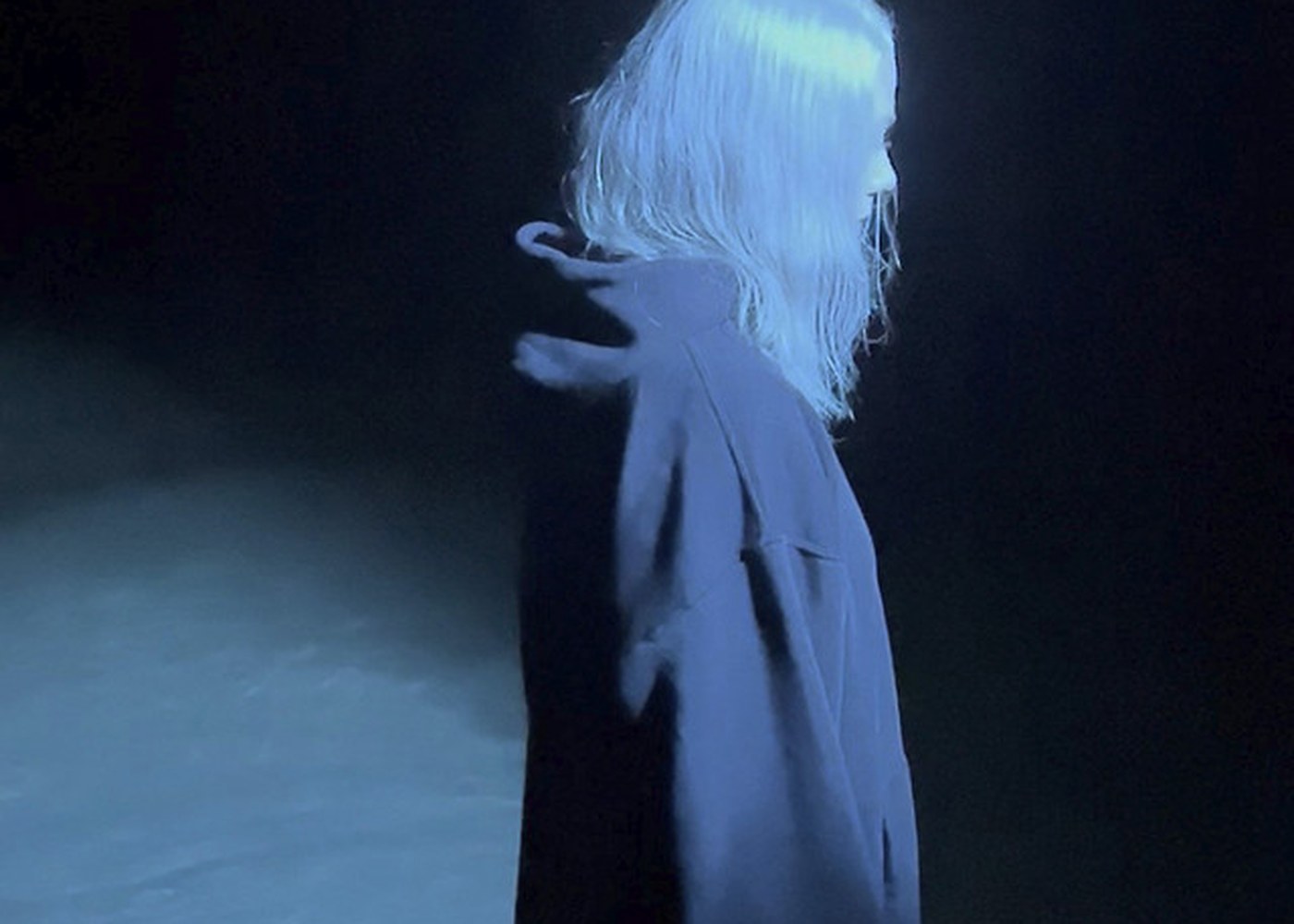
Someone kissed the narrator hello at a Halloween party and tasted like a flower with chemical petals. That one image carries more dread than any screaming chorus could. Something was living and fabricated at once. Something beautiful that you probably should not put in your mouth.
"Kill Me" is a song about the slow erasure of certainty, and it uses the occasion of other people growing up to measure how far the narrator has drifted from a self that once felt solid. The thesis arrives stripped down and blunt: this is gonna kill me. But the comma and the wait change everything. That pause belongs to a speaker watching themselves come apart and narrating it in real time, almost clinically, still breathing.
The People Who Moved On
The first verse does something uncomfortable. It opens on ordinary milestones, boys getting married, turning twenty-one, and positions them as evidence of something the narrator has lost.
"I'm not, but I was once certain, always / Now all I know is the ending"
The line break between "always" and "Now" is where the grief lives. The certainty was not just confidence in specific things. It was a baseline state, a way of moving through the world. And it is gone. What replaced it is not wisdom or nuance but a narrowing: now all the narrator knows is how things end. That is a person who has been watching long enough to pattern-match on loss, not cynicism performing as cool detachment.
The brevity of this verse matters. Five short lines and then the chorus. No lingering, no self-pity. The tempo of someone who has gotten efficient at feeling bad.
Bobby and the Flower with Chemical Petals
The second verse is weirder, and it earns the most space because it carries the song's real emotional charge. A costume party. A thinning veil, which could mean Halloween's association with the dead crossing over, or the veil between a performed self and whatever is underneath. He kisses the narrator hello. And then that image.
"He tastes like a flower with chemical petals"
A flower is alive and natural and supposed to be safe. Chemical petals are synthetic, possibly toxic, certainly wrong in a way that looks right. The narrator can tell the difference between what should be real and what is actually there, and that discernment is not comforting. It is exhausting. Bobby taught them that they know nothing, which reads as a kind of gratitude for being disabused of false certainty, but the lesson left a gap where a self used to be.
Who Bobby is, the song does not say. A ghost, a mentor, an ex, someone who died. The veil was thinning when the kiss happened, which places this encounter in the territory of the supernatural or at least the threshold. The line I keep coming back to is the matter-of-fact finality of "Bobby, you taught me that I know nothing." There is no resentment in it. The narrator reports it the way you report weather. That absence of anger is the most unsettling thing in the song.
Tamam Shud and the Invitation to Vanish
The outro repeats one phrase in a chant and one in a breath: Tamám Shud and let's go missing. Tamám Shud is Persian, meaning "it is finished" or "it is ended," and it is the phrase found on a scrap of paper in the pocket of an unidentified man discovered dead on an Australian beach in 1948, a mystery that was never solved. The man had no name. No one came forward. He simply ended, and nobody could say who he had been.
"Let's go missing / Listen, listen"
The "let's" makes this an invitation, not a solo act. The narrator is not disappearing alone. They are asking someone to come. And the "listen, listen" underneath it all pulls the listener into the room, into the ritual, into whatever ceremony is being proposed.
Does the song want to die, or does it want to be unidentifiable, unlocatable, free of the self that has been so methodically dismantled? That distinction matters, and the song refuses to draw the line for you. The Tamám Shud reference leans toward ending. The "let's go missing" leans toward escape. I am not sure they are different things here, and I am not sure the narrator is either.
The Wait That Changes Everything
The chorus is two lines repeated with one added word at the end: wait.
"This is gonna kill me, wait"
Read it as a pause and it becomes the narrator catching their breath, stalling, not quite ready. Read it as an instruction and it becomes the narrator asking something or someone to hold on while they process what is happening to them. Either way, the killing has not happened yet. The song lives entirely in the anticipation. Not the grief itself, not the event, but the long corridor before it.
That is where the song's real argument is. The certainty died first. The narrator is still here, cataloging what got lost, tasting the synthetic flowers, chanting the word for "finished" over and over. What is coming to kill them is not death in any literal sense - it is the completion of a process that started the moment they stopped knowing anything except endings. The wait is the whole thing.
Lyric analysis powered by Scalpel.

Comments
Loading comments…