

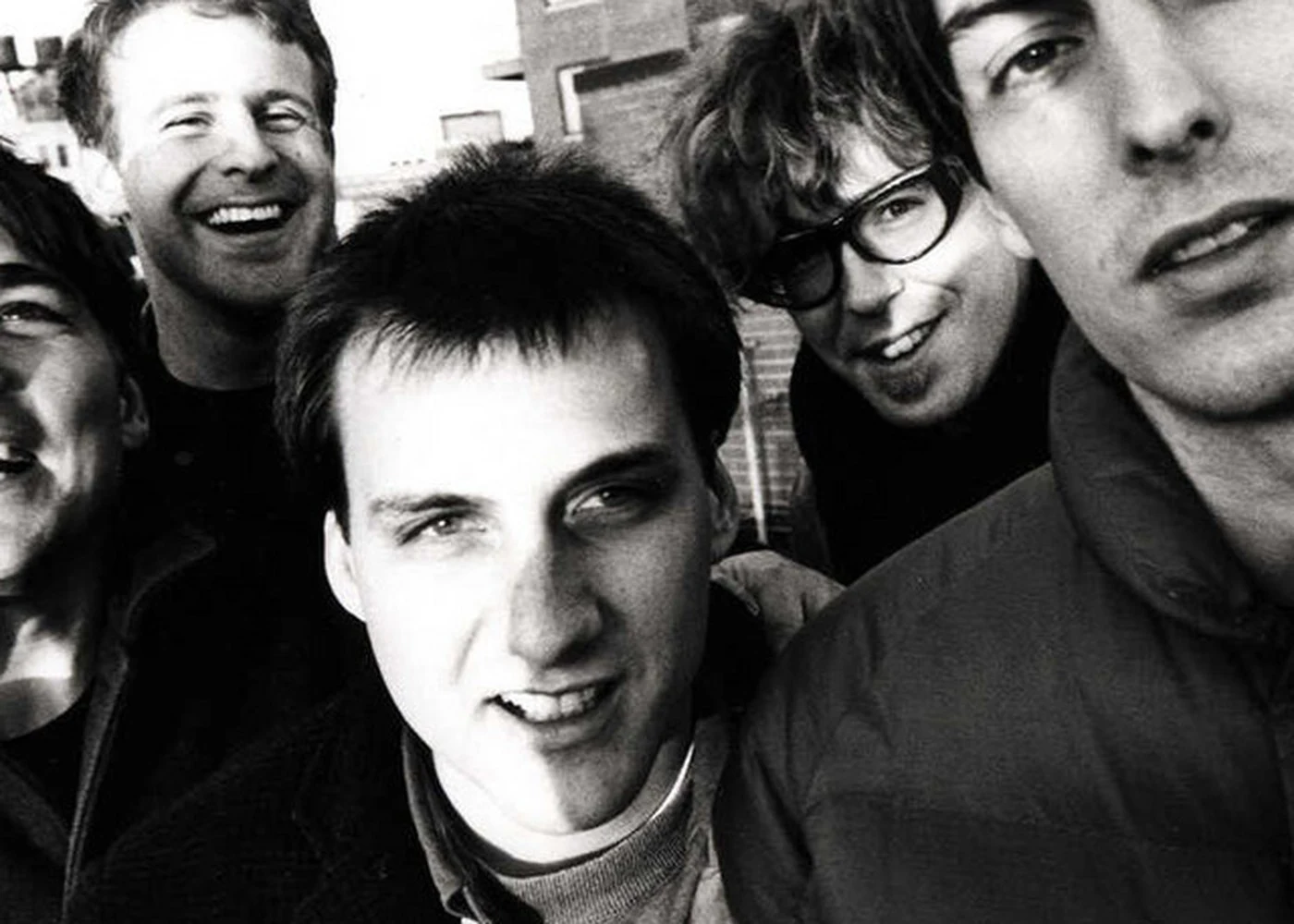
Advice songs usually come from someone who has earned the right to give it. "Harness Your Hopes" hands out relationship counsel from a narrator who can't finish a line without wandering off with a different word. The first instruction is to pin everything on one person, and four lines later the speaker is eyeing anything that moves. The song argues for commitment while slipping out of every commitment it makes, sometimes in the middle of a single word, and that slipperiness is the whole point.
The sermon and the slip
The opening is almost sensible. A harness straps one body to one load, so the logic holds, delivered with a raised finger and a little smirk.
"Harness your hopes on just one person / Because you know a harness was only made for one"
Then the advice gets strange. "Don't telegraph your passes" is a quarterback tip and a flirting tip at once, and both versions say the same thing: hide your moves. That's odd counsel from someone preaching devotion. Show your hand and you end up "cauterized in syrup," a wound sealed shut with something sweet and sticky. Getting caught wanting someone, in this world, means getting stuck.
The line I keep coming back to is the correction:
"And I'm checking out the asses, the assets that attract us"
The narrator says the crude word, then swaps it for the business word, as if tidying up would help. Neither version sticks. And the next phrase, "to anything that moves," snaps the harness clean off. One person has become everyone within eyeshot. "We're deep inside the grooves" lets the record admit where it lives: in the vinyl, in the habit, spinning in a circle and calling it a direction. Somewhere a needle skips.
A threat nobody could collect on
The song keeps announcing its own twists. "The plot it turns again, the reference starts at ten" is a narrator narrating, winking at you over the top of the page. Then comes the dare readers always ask about.
"Well, show me a word that rhymes with pavement / And I won't kill your parents and roast them on a spit"
Try it. Nothing good rhymes with "pavement," and the song knows that, which is why it drops the band's own name in as the impossible test. The threat is built backwards too: it's phrased as a promise not to do something gruesome, so the violence gets cooked and retracted in one breath. A few lines later the punishment shrinks to catching "a bad, bad cold." Spit-roasting to sniffles. The narrator won't be pinned to a rhyme any more than to a person, and makes a joke of anyone who tries.
White House to lighthouse
Then the song leaves the room.
"And the freaks have stormed the White House / I moved into a lighthouse"
The rhyme does the plotting. Chaos breaks out at the center of things, and the narrator relocates to a scenic quay, "so far away / Far away from the beginning." That beginning is literal: the opening verse, where all that confident advice lived. A lighthouse is a funny hideout for someone who warned against telegraphing, since its entire job is broadcasting a signal while never moving.
The "you" disappears here. What's left is a list: a linen shroud, heartbreak rhymed with earthquake, kiwis "home baking" that could be birds, fruit or New Zealanders, and the song refuses to pick. A leisure suit gets waved off as "nothing to be proud of in this late century." A reasonable fan could argue the White House line is the real subject, a whole country going weird and the narrator checking out. I'd grant the chill, but the song rhymes the coup away in a single bar, which tells you how much weight it lets politics carry.
Held with two fingers, or three
When the "you" returns, it's only to be asked for something, and the request is tiny.
"And I'm asking you to hold me just like the morning paper / Pinched between your pointer, your index and your thumb"
Count again. The pointer and the index are the same finger. The narrator lists three and names two, padding even the inventory of how they want to be touched. It's the grip you use on something you'll skim and toss, light enough to drop on the bus. After a song about harnesses, the one embrace actually requested comes down to a fingertip pinch.
The song immediately shows the alternative. A semi-automatic, believers "ecstatic," people who "cling" to "the cold metallic sting." That's the hard grip, the true believer's grip, and the song makes it look frightening. Holding on too tight to a cause or a weapon ends in cold metal. The narrator would rather be held like newsprint.
"And I'm living in a coma for Donna de Varona"
The song never tells you who Donna de Varona is, and it doesn't need to. The rhyme picks her. "Coma" chimes with "Varona," so devotion arrives as a body switched off, adoration of a name with nobody attached. It parodies the one-person harness from the opening: total loyalty, zero consciousness. Right after, "the harness made of hopes" comes back, but now "the lovers on the ropes," pinned against a boxing ring's edge. The harness has turned into the ring.
"Nun is to church, as the parrot is to perch"
That's a standardized-test analogy, the format of a question with one right answer. A nun belongs to her church by vow. A parrot belongs to its perch by habit, and a parrot is famous for repeating words it doesn't understand. The pairing quietly asks which kind of devotee the narrator is, and the next line answers by repeating itself. "Minds wide open truly" from earlier becomes "my heart's wide open," the same phrase squawked back with one word changed.
But the very end turns soft anyway. "Truly" sits alone on its own line, with no joke attached and no rhyme to hide behind. After a whole song of dodging, one word gets left out in the open.
Conclusion
So can the escape artist commit? The song's answer is yes, sort of: a wide open heart with a two-finger grip. Everything that demands total devotion in these lyrics, the harness, the coma, the clinging believers, ends up sticky, numb or dangerous. The narrator keeps choosing looseness and calls it love. I think the song means that "Truly," which makes it the right thing to put on walking home from a party where you flirted with everyone and promised yourself to no one. The heart stays open because nobody is allowed to hold it very hard.
Frequently Asked Questions
What is "Harness Your Hopes - B-side" by Pavement about?
The song opens with advice to pin your hopes on one person, then spends every line after that drifting away from the advice. The narrator eyes "anything that moves," retreats to a faraway lighthouse, and finally asks to be held as lightly as a newspaper. It's a song about wanting commitment while refusing to be tied down.
What does "show me a word that rhymes with pavement" mean?
It's a joke dare built around the band's own name, which has almost no clean rhymes. The threat that follows is phrased backwards, as a promise not to roast anyone's parents, so the violence cancels itself out. It shows a narrator who can't be pinned down, even to a rhyme.
What does "Nun is to church, as the parrot is to perch" mean in the song?
The line borrows the format of a test analogy to compare two kinds of belonging: a nun tied to her church by a vow, and a parrot tied to its perch by habit. Since parrots repeat words without meaning them, the line raises the question of whether the narrator's devotion is sincere. The song then repeats its "wide open" phrase like a parrot, before ending on a lone, tender "Truly."
Lyric analysis powered by Scalpel.


Comments
Loading comments…