

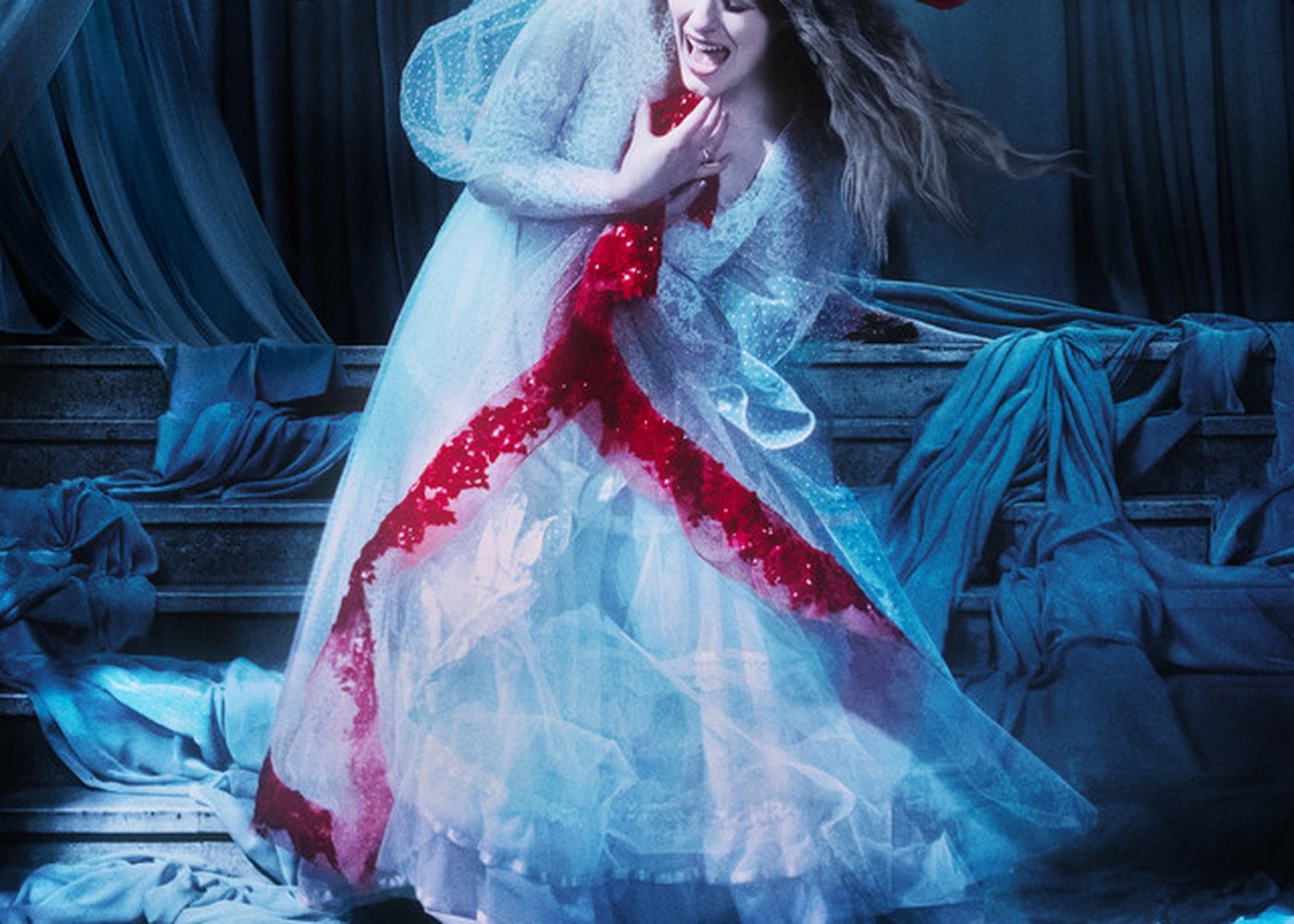
The song is tiny and the feeling it describes is enormous. Both of those things are true, and somehow neither one overwhelms the other. "I Cry in Front of Paintings" holds a love so specific and so quietly transformative that it reshapes the narrator's interior life - and it does all of that in about ninety seconds of verse, with almost no explanation offered.
That restraint is the whole argument. The song trusts you to feel the size of what it's describing without spelling it out. And once you track what it's actually saying, the brevity stops feeling minimal and starts feeling like the only honest option.
The Austen Confession and What It Hides
The first line plants the song's central intimacy: two people who mirror each other in language, who both have a way with words. It's a tender observation, but the second line cuts underneath it fast.
"Is there a universe in which we didn't meet?"
That question sounds like romantic wonder, but read it again. The narrator isn't marveling at luck. They're reaching for the terrifying alternative, the version of themselves that never knew this person. The question is less about gratitude and more about a kind of vertigo. How close did I come to never becoming this?
Then comes the Austen allusion, borrowed from Emma: "And if I loved you less, then I could talk about it more." Paris Paloma flips the grammar slightly, and the flip matters.
"And if I loved you less, then I could talk about it more"
In Austen, the line is a confession of excess. Here, it carries that weight but also something stranger: the narrator can't contain this feeling in language, and they're a person who lives in language. The love has exceeded their most practiced tool. That's not just romance. That's transformation.
Orpheus Turning Back
The Orpheus image is where the song makes its boldest claim. The myth everyone knows ends with a failure of nerve: Orpheus looks back, loses Eurydice, can't sustain the faith required. The standard reading is tragedy. Inevitability. He was always going to turn.
"Orpheus's turning head before he's finished the long walk / And I do not believe that he was fated to at all"
The narrator refuses that reading. Fatalism, they're saying, is an excuse. The turn wasn't written into the cosmos. It was a choice, and a failure. And the reason this matters in a love song is that the narrator is implicitly making the opposite choice. They are walking forward. They are not looking back at the life before this person, not second-guessing, not mythologizing the loss into inevitability.
That's a kind of declaration, stated by negation. I will not be Orpheus. I will finish the walk.
The line I keep coming back to is the one that closes the verse.
"I cry in front of paintings now, but not the ones I thought"
This is the song's thesis delivered as a casual aside. The narrator has been opened. They feel things they didn't expect to feel, in front of art they didn't expect to move them. The love has rearranged their sensibility. Something in them shifted, and the proof is that their emotional responses no longer belong to the version of themselves that existed before. That's a genuinely specific description of how deep love can restructure a person's inner life - and it goes deeper than hyperbole can reach.
The Second Verse
The second verse is lighter, more domestic in its register. "Oh, there you are, my darlin', what kept you down the hall?" is so ordinary it almost disappears, and that's precisely the point: the mythological scale of the first verse folds into the dailiness of a shared life. The stardream and the morning choice sit side by side, neither canceling the other out.
"I dream of you in starlight, and I choose you in the morn"
Two sentences. That's the whole architecture of long love. The unconscious, and then the waking act of will.
"Less Met" as the Song's True Center
The bridge is five words, and it's the moment the whole song has been building toward.
"And I less met you / I less met you than found you"
"Meeting" implies an event, a handshake, a beginning that could have not happened. "Finding" implies the thing was already there, waiting, the way an object is found rather than conjured. The narrator isn't saying the love was fated -- they already rejected fatalism when they dismissed the Orpheus myth. They're saying something stranger: that this person felt like recognition rather than encounter. Not destiny, but something more like inevitability after the fact. You understand it only once it's happened.
The grammar of "I less met you than found you" is doing real work. The comparative construction makes finding the dominant verb, meeting a diminishment by comparison. It rewrites the story of how they came together, mid-song, in the most economical possible way.
A reasonable reading of the bridge pushes back on mine: you could hear "found" as exactly the fatalism the first verse rejects, the language of the universe placing things where they belong. I think the song holds that tension intentionally rather than resolving it, which is probably the more honest thing to do.
What the Song Leaves You With
The outro is vocalizations only, and the song doesn't need another word after that bridge. The feeling has been named as precisely as language allows. What's left is just sound: the excess that the words couldn't hold, which is, of course, the whole point the narrator made in the first verse.
"I Cry in Front of Paintings" argues that love's real evidence shows up in what you become capable of feeling. New paintings. New grief. New openness you didn't vote for and can't entirely explain. The narrator reports on what love did to their interior life and finds that the changes go deeper than they have language for. The song's own brevity enacts that. It stops not because it's finished saying something, but because it has reached the edge of what saying can do.
Lyric analysis powered by Scalpel.


Comments
Loading comments…