

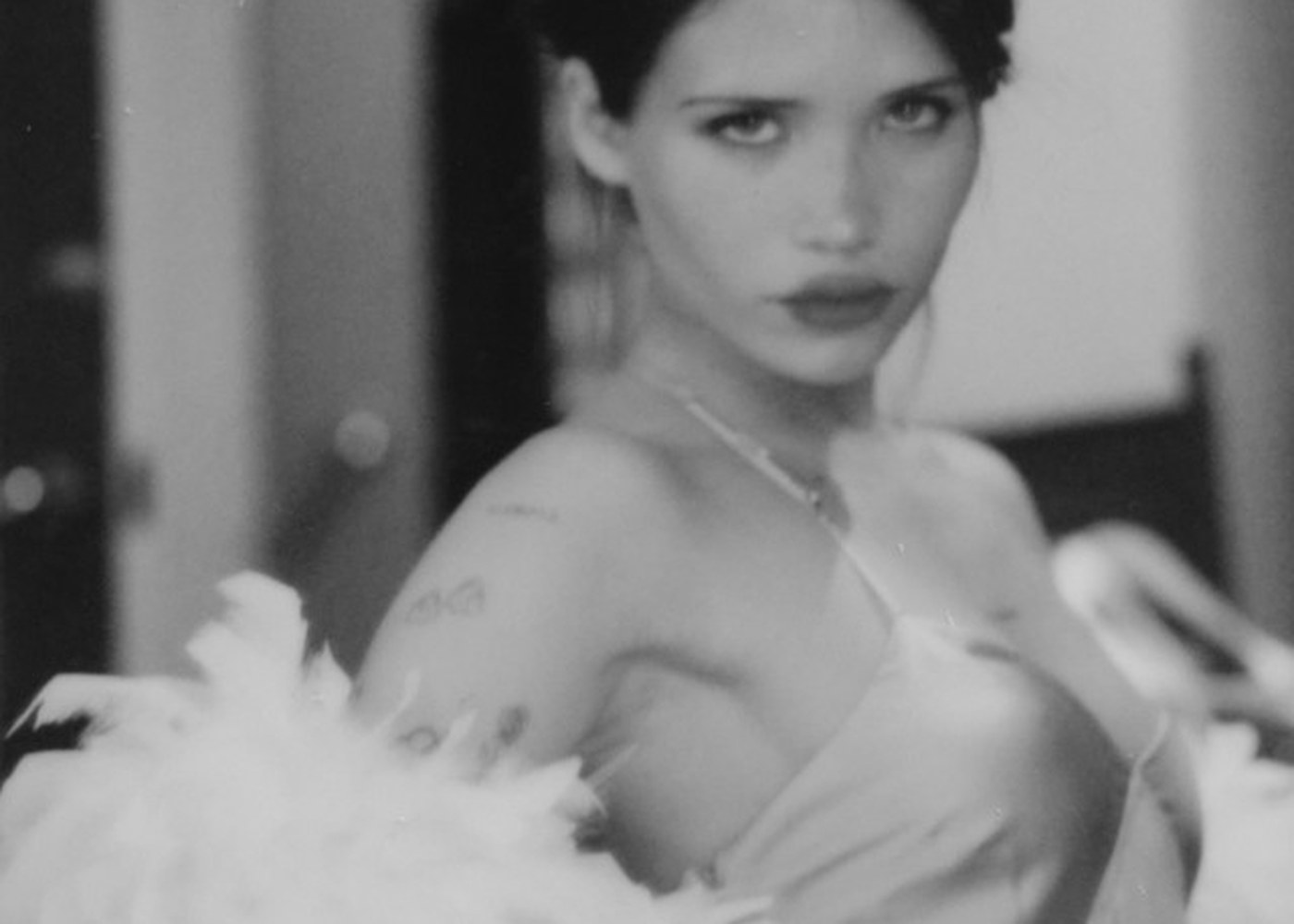
"Fetish" by Nessa Barrett is about a narrator who names her own diagnosis out loud, "two fifty milligrams of lamotrigine," and then turns it into a dare. The song's central claim is that the partner isn't tolerating the chaos. They're addicted to it. And the narrator knows exactly what that means about both of them.
Introduction
"I think that you might have a fetish for crazy." That line is the whole argument in ten words. Everything before it is evidence. The narrator isn't unraveling or asking to be saved. She's building a case, stacking receipts, and delivering the verdict directly to the person who keeps showing up anyway. "Fetish" works because it refuses the usual framing where mental illness is something a partner nobly endures. Here, it's what they came for.
Verse 1: The Origin Story She Won't Let You Romanticize
The song opens with "suicide girl seven years ago" and that's a lot to drop in the first three seconds. But the narrator moves through it fast, which is the point. She's not lingering for sympathy. She came back, she's Marilyn Monroe now, and she spent your money just to watch you flinch.
"But, baby, I'm just good at being bad" arrives like a shrug, but it's doing real structural work. The narrator is preempting the pathologizing. Before anyone can frame her behavior as a symptom, she reframes it as a skill. She owns it. The entire second half of the song depends on this reframe landing first.
Verse 2: The Line That Changes Everything
"I'm not high, baby, that's just BPD" is the line I keep coming back to, because the correction is so fast and so specific. The partner has clearly misread her, assumed the intensity is substance-altered, something temporary and explainable. She cuts that off immediately. The 250 milligrams of lamotrigine are named because lamotrigine is a mood stabilizer prescribed for borderline personality disorder and bipolar conditions. She isn't confessing. She's clarifying. The distinction matters.
"Two fifty milligrams of lamotrigine / I'm not high, baby, that's just BPD"
What follows is "west coast cowboy, borderline in love / watch me dance while I wave around my gun." The "borderline" is a double hit: the diagnosis and the emotional state occupying the same word. And the image of dancing while armed is pure BPD shorthand, the intensity that looks like danger from the outside but is just how the narrator experiences being in love. Full volume, all the time.
The Chorus: The Diagnosis as Dare
The chorus pivots from confession to confrontation, and the tone shifts with it. "Do I look pretty for you, darlin'? / Am I too crazy for you, daddy?" The questions sound performative, almost mocking, but they are also real. The narrator is testing whether the partner can hold both things at once: the prettiness and the intensity, the sweetness and the chaos.
"I think that you might have a fetish for crazy"
The verdict lands without apology. The narrator hasn't concluded the partner is tolerating her in spite of the disorder. She's concluded they're drawn to it. That's a harder truth, and the song has the nerve to say it plainly. It implicates the partner without excusing them, and it positions the narrator as the one who sees the dynamic most clearly.
"Only if you have a death wish" and "too mean to be a sugar baby" are the wry side of the chorus, the provocation with a smirk behind it. The sugar-baby line is a smart pivot: she knows what that dynamic usually looks like, compliant, palatable, soft. She's asking the question and answering it herself. No.
Verse 3 and the Bridge: Where the Extremes Live
The third verse escalates fast. "Callin' me Belladonna in the sheets" drops a name that means both beautiful woman and poison plant. The nickname is affectionate and lethal at once, and the narrator seems to take genuine pleasure in it. "Burn this house down, I don't give a damn" is defiance, but "I'll die for my baby, I'll die for my man" is devotion, and both exist in the same breath.
That's the emotional signature of BPD that the song keeps returning to: the intensity isn't instability in a pejorative sense. It's scale. Everything at full commitment, no middle register.
The bridge replays both verses back-to-back, the origin story and the diagnosis, which collapses the distance between who she was and who she is now. The Marilyn Monroe line means something different the second time. She came back from the worst thing. And she came back with all of this. Whether the partner can actually handle that is the one thing the song leaves open.
Conclusion
"Fetish" doesn't soften the diagnosis or use it to win sympathy. It names it precisely, doses and all, and then watches what the partner does with the information. The narrator already knows the answer. They stay because the intensity is the attraction. The song's argument is that recognizing this is power, not devastation. The narrator sees the fetish clearly, names it, and decides to keep dancing anyway, gun still raised, completely aware of the room.
Frequently Asked Questions
What is "Fetish" by Nessa Barrett about?
"Fetish" is about a narrator who is open about her BPD diagnosis and turns the emotional intensity it brings into a challenge directed at her partner. The song argues that the partner isn't staying despite the chaos but because of it, and the narrator sees that dynamic clearly enough to name it as a fetish.
What does "I'm not high, baby, that's just BPD" mean in "Fetish"?
The line is a correction the narrator delivers to a partner who has misread her emotional intensity as drug-altered behavior. She names her actual diagnosis, borderline personality disorder, and the specific medication she takes for it, lamotrigine at 250 milligrams, to make clear that this is who she is, not a temporary state. It reframes her intensity as something to be understood on her terms, not explained away.
Why does the narrator call herself "Marilyn Monroe" in "Fetish"?
The Marilyn Monroe line follows a reference to being a "suicide girl seven years ago," framing her transformation as a survival into something iconic and commanding rather than fragile. Monroe carries associations of both glamour and volatility, which fits the narrator's self-image in the song. The name claims power and cultural magnetism while keeping the danger in the frame.
Lyric analysis powered by Scalpel.


Comments
Loading comments…