

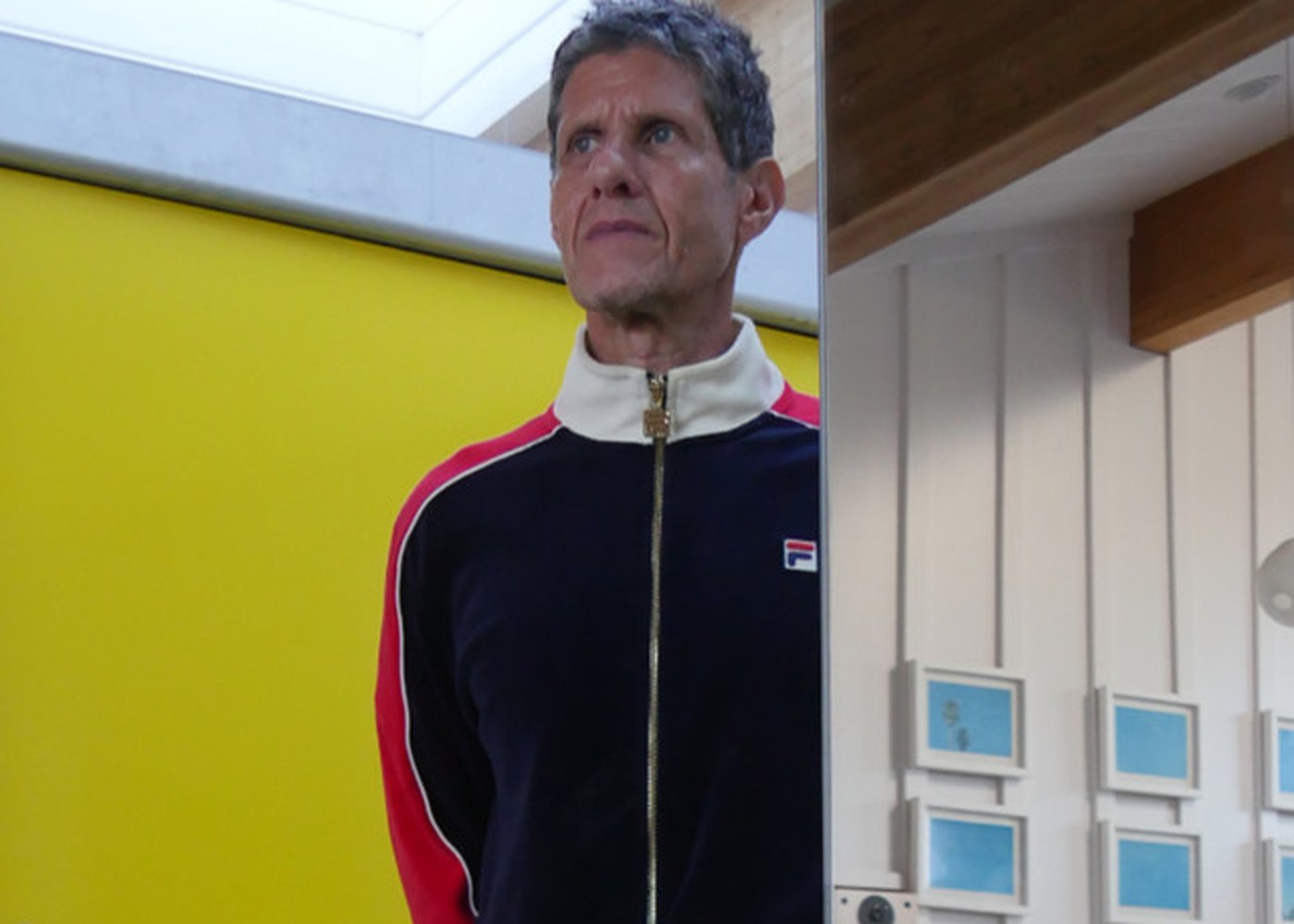
Some songs about being misread spend their whole runtime trying to correct the record. "That's Right" does the opposite. Mike D clocks that the argument is already over, and he's not interested in reopening it.
The song's central claim is that self-possession is the only move left when someone else has already decided your story. Not anger, not a counter-narrative. Just the refusal to be moved.
The Fuse That Was Never Yours
The first verse drops into a situation that's already mid-escalation. Something happened, someone set it off, and the narrator is holding the bag.
"You went and lit the fuse / You look at me confused"
That second line is where it gets interesting. The confusion isn't genuine. The person who lit the fuse knows exactly what they did. The look of confusion is the performance, the way you manufacture innocence after the fact. Mike D isn't rattled by the explosion. He's rattled by the audacity of the face worn after.
"Won't be refused" follows immediately, and it lands as reflex rather than declaration. He's not begging for anything. He's stating a boundary that was always there.
The Scheming Dressed as Interpretation
The second verse is weirder, and it earns that.
"Pretend there's hidden meaning / And all those ways you're scheming"
This is the song's sharpest line, and I keep coming back to it because it does two things at once. The target is someone who projects complexity onto the narrator's words and actions, finding hidden meaning that justifies a narrative they were already building. It's a very specific kind of bad faith: not outright lying, but framing and selecting until your version of events looks inevitable. "All those ways you're scheming" names the method without going into the receipts. The narrator doesn't need to prove it. The pattern is the proof.
"Got all the world believing / I'm in my own world dreaming" lands as the payoff. The narrator has been successfully painted as checked-out, delusional, absent. And here's the move: Mike D doesn't fight it. He acknowledges the perception and keeps walking.
Time Pressure and the Walls Closing In
The middle section of the song gets looser, almost fragmentary, and that looseness is doing real work. "I'm out of time / Run from what's on my mind" and the cascade of rhyming half-thoughts that follow feel like a mind circling something it can't quite grab.
If you're listening to this on headphones at 2am, this part of the song is going to find you somewhere uncomfortable.
"Stuck inside / Look inside / Realize / To sympathize" reads less like a verse and more like notes someone left themselves. The rhymes are almost accidental, the way actual thinking sounds when there's no audience for it. Then "It's summertime / So visualize" arrives and cracks the pressure. Summer as an instruction to stop grinding against the wall. The word "summertime" shouldn't do that much work, but here it functions as a reminder that the outside world exists and will continue to regardless.
"Don't know if I'll make it through" is the one moment of genuine vulnerability, and the song earns it by not staying there. It's a flash. Then the chorus returns.
"Whatever Way I Choose" as a Mantra That Accumulates
The outro repeats the hook until it stops sounding like a line and starts sounding like a decision being practiced. "Whatever way I choose / It doesn't matter what I do / This is just what I choose." By the fourth or fifth variation, it's less about defiance and more about the work of actually believing something about yourself when the outside pressure says otherwise.
A reasonable reading of this song is that the narrator is more shaken than he's letting on, that all the repetition is compensation rather than confidence. That tension is real. The song doesn't fully resolve it, and that's probably the point.
What holds it together is "It's just my point of view," which comes up more than once and functions as the song's governing principle. Not "I'm right." Not "you're wrong." Just: I'm standing here, and I'm not leaving the position to make you comfortable.
Mike D has spent decades in a band that built an identity on not explaining itself. "That's Right" sounds like someone who learned that lesson early and never stopped applying it. The song doesn't prove anything to anyone. It just holds its ground, which, in the end, is the only thing you can actually control.
Frequently Asked Questions
What is "That's Right" by Mike D about?
"That's Right" is about being misrepresented by someone acting in bad faith and choosing not to argue back. The narrator acknowledges the situation, refuses to be destabilized by it, and keeps repeating his own point of view as a form of self-possession rather than self-defense.
What does "you went and lit the fuse / you look at me confused" mean in "That's Right"?
The lines describe someone who caused a problem and then performed innocence afterward. Lighting the fuse is the inciting action; the look of confusion is the cover story. The narrator sees through both and refuses to accept blame for the fallout.
What does "pretend there's hidden meaning / and all those ways you're scheming" mean?
These lines call out a specific kind of bad faith where someone manufactures complexity in the narrator's words or actions to build a narrative that suits them. The scheming is not open conflict but selective framing, projecting intention onto the narrator until a convenient version of events looks credible to everyone else.
Lyric analysis powered by Scalpel.

Comments
Loading comments…