

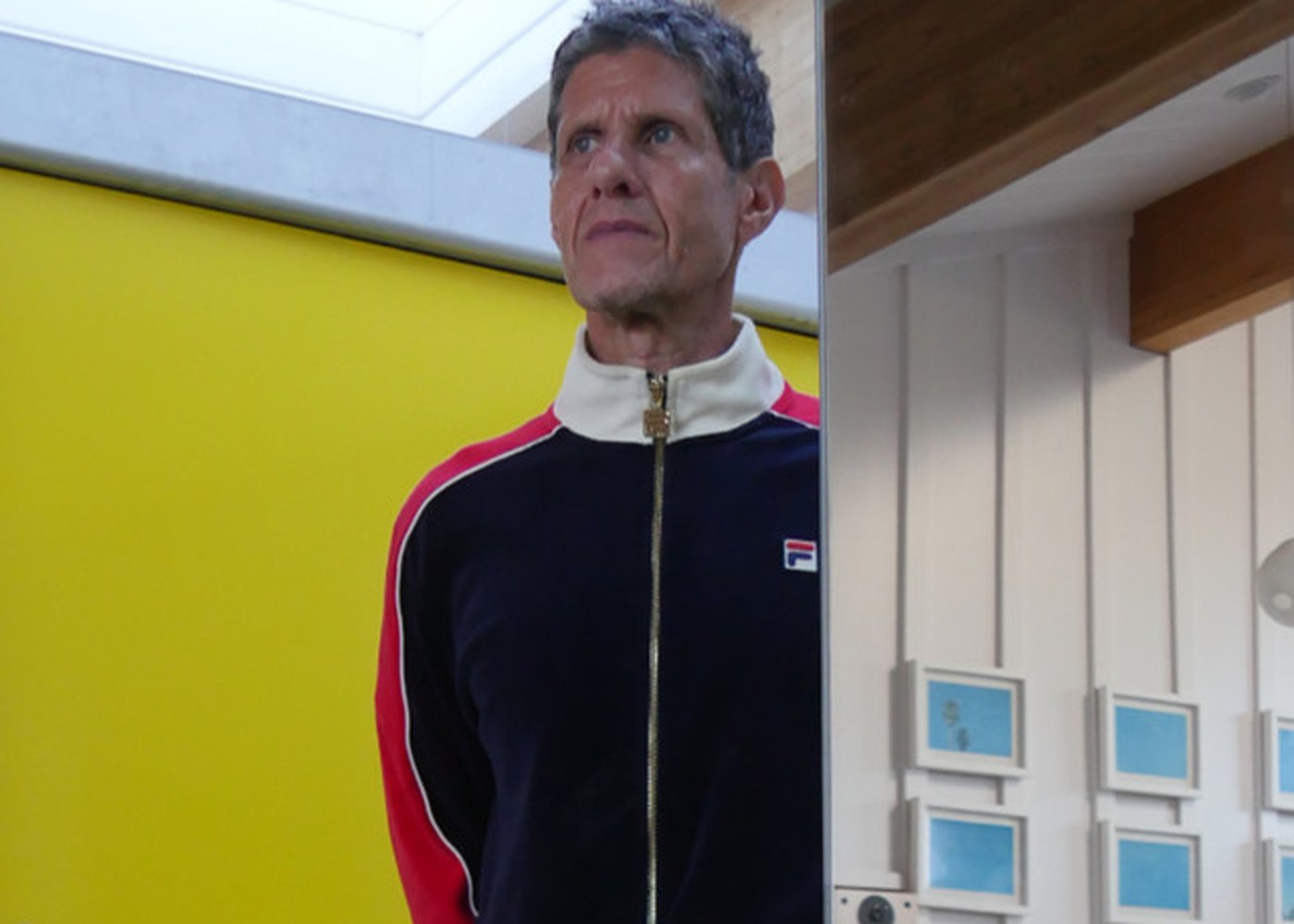
You know the feeling before you can name it. Something between resignation and wanting out, but you haven't left yet. "Here We Are" drops you there and keeps you there, and by the time the chorus loops back around, you realize the song isn't building toward a resolution. The whole point is that there isn't one. Mike D is writing about the place you reach when a relationship has quietly stopped working, and both people know it, and neither one moves. That's the trap the song builds, and it's precise enough to sting.
Waking Up and Patching Over It
The song opens with something that could pass for optimism if you weren't paying attention.
"Woke up feeling love / Up above, it's all love"
That's a mantra, not a feeling. The narrator says it twice in the first few lines and then immediately undercuts it: "We all disappoint / Gonna disappoint." The warmth is something being reached for, not something that arrived. So the narrator does what most of us do when the real thought is too heavy to sit with first thing in the morning.
"So I put on a song and I sing that instead"
Which, when you think about it, is exactly what this song is. A thought too uncomfortable to hold, converted into something you can hum. The line isn't ironic, but it is honest in a way that sneaks up on you. Starting small, nothing heroic. Just getting through the morning without letting the real thing surface.
Two Doors, One Problem
The verse that does the heaviest lifting in this song is deceptively simple on its surface.
"So you settle the score and you walk out the door / And I settled the score when I closed the door"
Read that twice. The pronoun shifts. You walk out. I close the door. They're doing the same emotional action from opposite sides of the same argument, and neither version of "settling the score" actually resolves anything. It's a separation ritual that both people have performed independently, which means they've been closing doors on each other for long enough that it's become a pattern. The next line lands like a thud: "Born with enough but we always want more." That's not a cheap aphorism dropped in for color. In context it's about a relationship where neither person can admit they've been okay, that what they had was enough, because wanting more is easier than looking at what's already there. Then: "disconnected and it feels like a chore." That word "chore" is brutal. Not painful, not dramatic. Just flat and exhausting.
If you're listening to this at 2am with headphones in, that line is the one that finds you.
The Chorus and What's Actually in the Dark
The chorus is where the song stops moving forward and just holds the moment still.
"Here we are lost in the dark / Looking for the door"
This is the image the whole song has been building toward. Two people in the same space, disoriented, both reaching for an exit they can't quite find or won't quite take. What's interesting is the chorus doesn't just say "lost in the dark." It asks: "What's in the dark?" That's a different question entirely. Being lost is passive. Asking what's there is at least a half-step toward curiosity, toward doing something. But the follow-up is "scared to take a look," so neither person actually goes. The courage doesn't arrive. The door stays hypothetical.
A reasonable read of this chorus is that the dark is the relationship itself, everything left unexamined because examining it might end things for real. The looking-for-the-door line supports that. The exit exists; they're just circling it.
"My Back's to Your Back"
The second half of the song reprises the verse and then makes one devastating pivot in the last spoken section before the final chorus.
"But here I am right back where I'm at / And here we are my back's to your back"
The line I keep coming back to is that second one. Back to back. It's the most physical image in a song full of abstractions, and it lands because it's so exact. They haven't left the room. They haven't faced each other. They're present, together, and completely turned away. It's not estrangement in the dramatic sense. It's just the ordinary, daily choice to not turn around. The narrator walks out the door and ends up right back where they started, which makes the walking-out itself feel hollow, all that "settling the score" amounting to nothing more than a loop.
That single image does more work than a paragraph of emotional explanation could. You see the bedroom. You see the posture. You feel how familiar it is.
What the Song Leaves Unresolved
"Here We Are" doesn't offer the conversation that would fix things, and it doesn't dramatize the final break either. It parks in the before. That's a choice, and it's the right one, because the before is where most people actually live inside a struggling relationship, not in the breakup scene, but in the long stretch of closed doors and backs turned and mornings where you put on a song instead of saying what you mean.
The outro, just the words "bouncing and bouncing" on a loop, either suggests the cycle continuing or, if you want to be slightly more hopeful, the energy of trying anyway. Both readings work. The song earns either one. What it doesn't do is tell you which exit to take. It just shows you that the door exists, and that being scared to look doesn't make the dark go away.
Frequently Asked Questions
What is "Here We Are" by Mike D about?
"Here We Are" is about two people stuck in a relationship that has stopped working but hasn't officially ended. The song captures the paralysis of knowing something is wrong, going through the motions of settling scores and walking out, but never actually leaving or fixing anything. It lives in the moment before a decision, not after it.
What does "my back's to your back" mean in "Here We Are"?
"My back's to your back" is the song's most physical image and its emotional core. It describes two people who are still in the same space, still together, but completely turned away from each other. They haven't left, but they've stopped facing each other, which the song frames as its own kind of being lost.
What does "here we are lost in the dark, looking for the door" mean?
The chorus uses darkness and a door as stand-ins for the unexamined problems inside the relationship. Both people sense the exit, the way out or the honest conversation that might clear the air, but the song says they're "scared to take a look" at what's actually wrong. The door exists; finding it would require facing something neither person is ready to face.
Lyric analysis powered by Scalpel.


Comments
Loading comments…