

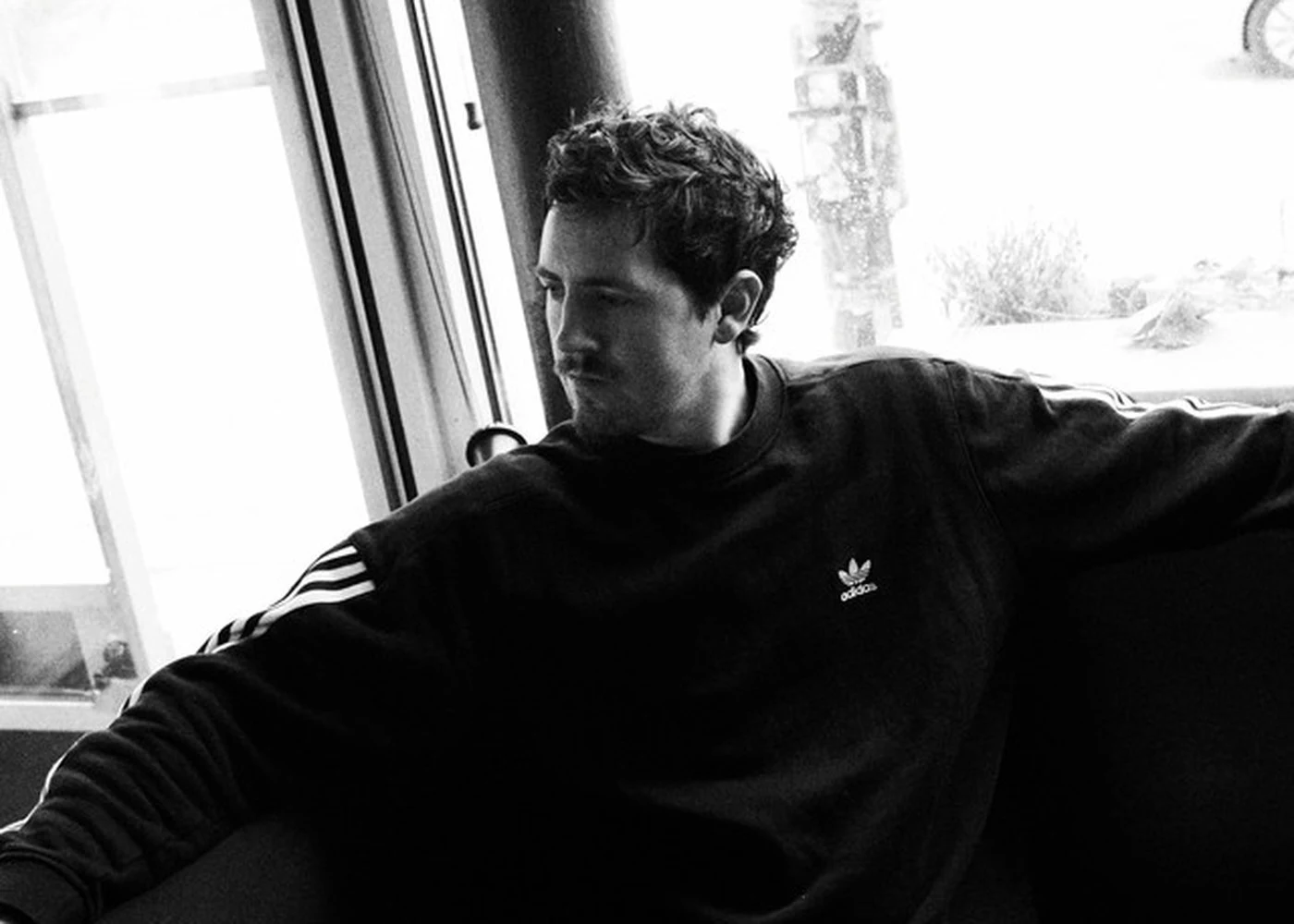
Ten words carry the whole weight of Michael Marcagi's "The Other Side": "You'll grow old before you're told to leave." Look at the assumption buried in there. The narrator treats leaving as something that needs a signal, a voice, somebody finally saying go, and the song is about what happens when that signal never comes. He swears he'll escape a cold, shrinking hometown, but by the end the town looks like something he was born into, and the triumphant last chorus sounds more like a man talking himself into staying.
A noise with no outside source
The song opens hunched over. Cold pushes "down heavy on this town," nobody's around, and there's a sound he wants someone to block out. Then he corrects himself. Twice.
"That is all in my head, no, it's all in my head / I'm holding it back 'til I'm lying in bed"
That's a routine. He white-knuckles the day, then lets it flood at night, when the bedroom walls start creeping inward. Anyone who has lain awake in a room they were supposed to have outgrown knows that squeeze.
Hold onto that insistence that it's all internal, because the song won't. By the bridge he's cursing a goddamn town. The narrator keeps swinging between blaming his own head and blaming the place, and the whole song lives inside that swing.
The chorus asks someone to leave their words underneath his feet and take the demons off his street. Who "you" is stays blurry: a person, the town, maybe the narrator talking to himself. The promise, though, is crisp: "I'll find my way out / And never look back."
Born to drown, waiting to be told
The second verse is darker. "As the years go" sets the clock running, and then comes the line about growing old before anyone tells you to leave. Nobody in this town gets an announcement. People just age in place, still waiting for the permission slip.
"I was born just to drown / So bury my dreams"
Drowning is the only water in the song, and it echoes the opening cold pushing down heavy. Same pressure, now over his head. And you bury bodies, so he's holding a funeral for his own ambitions. The killer word is "so." He presents giving up as simple logic: I was made to go under, therefore stop hoping.
Some fans hear "the other side" as death, and with drowning and burial sitting right next to it, that reading has real weight. The song never shuts it down. Still, a man vowing to never look back is planning to be somewhere, and the chorus keeps pointing at a place.
The vow loses its back half
Here's the detail most people miss. The second chorus stops at "I'll find my way out." The follow-through, "And never look back," just vanishes. The very next thing out of his mouth is a question he can't answer.
"What if I never run? I'm still my father's son"
Before this, escape was a promise. Now it's a maybe. And the second half of the line explains why the maybe scares him: the trap is inherited. The song gives no biography for the father, and it doesn't need one. Being "still" his father's son means the father is the version of himself he'd become by staying, the man who grew old waiting to be told.
I've sat with that exact question in a parked car, engine running, and it's the most honest moment in the song.
Then he overcorrects. "I'll take it all and throw it away," he says, and offers to be "the one to blame." Taking the blame sounds brave, but it also folds everything back onto himself again, the head, the bed, the walls. Then comes the boldest claim of all: "There'll be no one to stand in my way." He says this right after spending a whole song listing the cold, the noise, the walls, the demons, the years, his own blood, every one of them standing squarely in his way. The bravado is the tell.
Everyone on the same track
The bridge widens the frame. Suddenly it's not just his head.
"And everyone I know / Is running in circles"
He finally uses the verb he doubted, running, and it goes nowhere. It's a track with no exit, and the whole town is lapping it. (Honestly, the swear is the best-placed word in the song. It's the only moment the lyric drops its manners and just gets mad.)
Conclusion
The last chorus restores "And never look back." The fist goes up. But it's the same chorus, word for word, sung after he's admitted he might never run. I hear the vow coming back because he needs it, and a vow you keep needing is one you haven't kept yet. The narrator ends the song where the listener probably is: in the hometown parking lot, engine on, not pulling out. Nobody is ever coming to tell him to leave. If he goes, he'll have to be the one who says it.
Frequently Asked Questions
What is "The Other Side" by Michael Marcagi about?
The song follows a narrator stuck in a cold, suffocating hometown who keeps promising he'll escape. As it goes on, he starts doubting he'll ever leave, connecting his stuckness to his father and to everyone around him running in circles.
What does "What if I never run, I'm still my father's son" mean?
It marks the moment the narrator's escape plan turns into a question. He fears that staying means repeating his father's life, so the trap he's describing is partly inherited rather than purely geographic.
Is "The Other Side" by Michael Marcagi about death?
Some listeners hear it that way because of lines like "I was born just to drown, so bury my dreams." The lyrics leave room for that reading, but the chorus talks about finding a way out and never looking back, which points most strongly toward leaving the town.
Lyric analysis powered by Scalpel.

Comments
Loading comments…