

Introduction
"They may seem rearranged." Tucked in the middle of the chorus, that line is the key to the whole song. "Backwater" spends its few minutes shuffling a handful of images around, changing almost nothing, and then telling you that's how it goes. The song is about being stuck in one place, waking up in the same slack water every morning, and the surprise is that the narrator doesn't seem to mind much at all.
Morning, with a knife in it
It starts warm. Somebody wakes up and feels daybreak on their face. Plain, physical, nice.
Then the sunrise turns into an operation.
"There's a blood that's flowin' / Through the feeling, with a knife"
"To open up the sky's veins"
Read it as a picture and it's dawn: red streaks across the horizon, the sky looking cut open. Read it as a feeling and it's the jolt of being alive again, blood moving through you as the light hits, a little violent because waking always is. The knife belongs to the morning itself, slicing the night open so the day can bleed out, and the narrator just lies there taking it in like it's the most ordinary thing in the world, which, every single day, it is.
That calm matters. The song drops gore into a sunrise and never flinches. Nobody screams. The violence is weather.
"I find ways": the boast of someone who never left
The second verse is weirder. Someone "should of been gone a long time" and laughs it off with "I find ways." There's no subject on that laugh. It could be the narrator, could be some old-timer at the end of the bar. Either way it's a brag about resourcefulness from a person who has, by their own admission, overstayed.
That's the joke the song is in on. Finding ways is exactly how you end up circling in the backwater. You keep making do, and making do keeps you put.
"Just when we're sheltered under paper / The rockets come at us sideways"
Paper is the cheapest roof there is, and rockets come from the angle no roof covers anyway. I love how unbothered this couplet is. Trouble shows up from the wrong direction, the shelter was never going to hold, and the verse just moves on to the chorus with something close to a shrug.
The chorus and its backwards crowd
The chorus gives you the people of this place. "They stand there looking backwards / Half unconscious from the pain." Bodies turned the wrong way, too dazed to turn around.
"In the backwater swirling, there is / Something that'll never change"
A backwater is the side-pocket of a river where the current gives up and just turns in circles. The water moves constantly and goes nowhere. So the line holds two things at once: endless motion and a fixed center, and the song locates permanence inside that swirl, as if staying put is the one thing you can count on.
Here's the fair counterpoint. "Half unconscious from the pain" is not a happy phrase, and a fan could hear the whole chorus as a lament for people numbed into staying. I hear the melancholy too. But the narrator never asks to leave, and that silence tips it toward acceptance for me.
Blind, fine, and the one word that moves
Then the shortest section in the song, a little chant: "Hey, I'm blind / Good, fine / Roll the time / On whose dime." Clipped. Almost cheerful.
It doesn't add up, and that's the fun of it. The narrator claims blindness after describing dawn, blood and sky in vivid detail. "Good, fine" answers the claim like a bartender humoring a regular. And "on whose dime" drags a bar-tab question into a song about the sky's veins. Even a cosmic hemorrhage has to settle up.
And then the first verse comes back, almost word for word. Almost.
"There's a blood that's flowin' / Through the ceiling, with a knife"
"Feeling" became "ceiling." One rhyme, one swap. The blood that was running inside the narrator now runs overhead, part of the house, part of the room they wake up in. What was a private sensation has become architecture.
That single change is the only real rearrangement in the whole song, and it proves the chorus in real time. Things "may seem rearranged." A word slides over, the rhyme still holds, the sunrise still lands on the same face. The song's own shape demonstrates its argument: you can swap the furniture and it's still the same backwater, and the narrator wakes up inside it again without complaint.
After that, the chorus repeats twice. Nothing new gets said. The repetition becomes the swirl, round and round, a lull you sink into instead of fight.
Conclusion
So what do you do with a song that cuts the sky open every morning and calls it ordinary? You live in it. "Backwater" pictures stuckness as a place with its own warmth: sun on your face, paper over your head, rockets you can't stop anyway, and somebody laughing that they find ways. The feeling-to-ceiling swap is the song admitting that the inside of you and the room around you have become the same thing. Some people would call that a trap. This song calls it morning, and pours another cup.
Frequently Asked Questions
What is "Backwater" by Meat Puppets about?
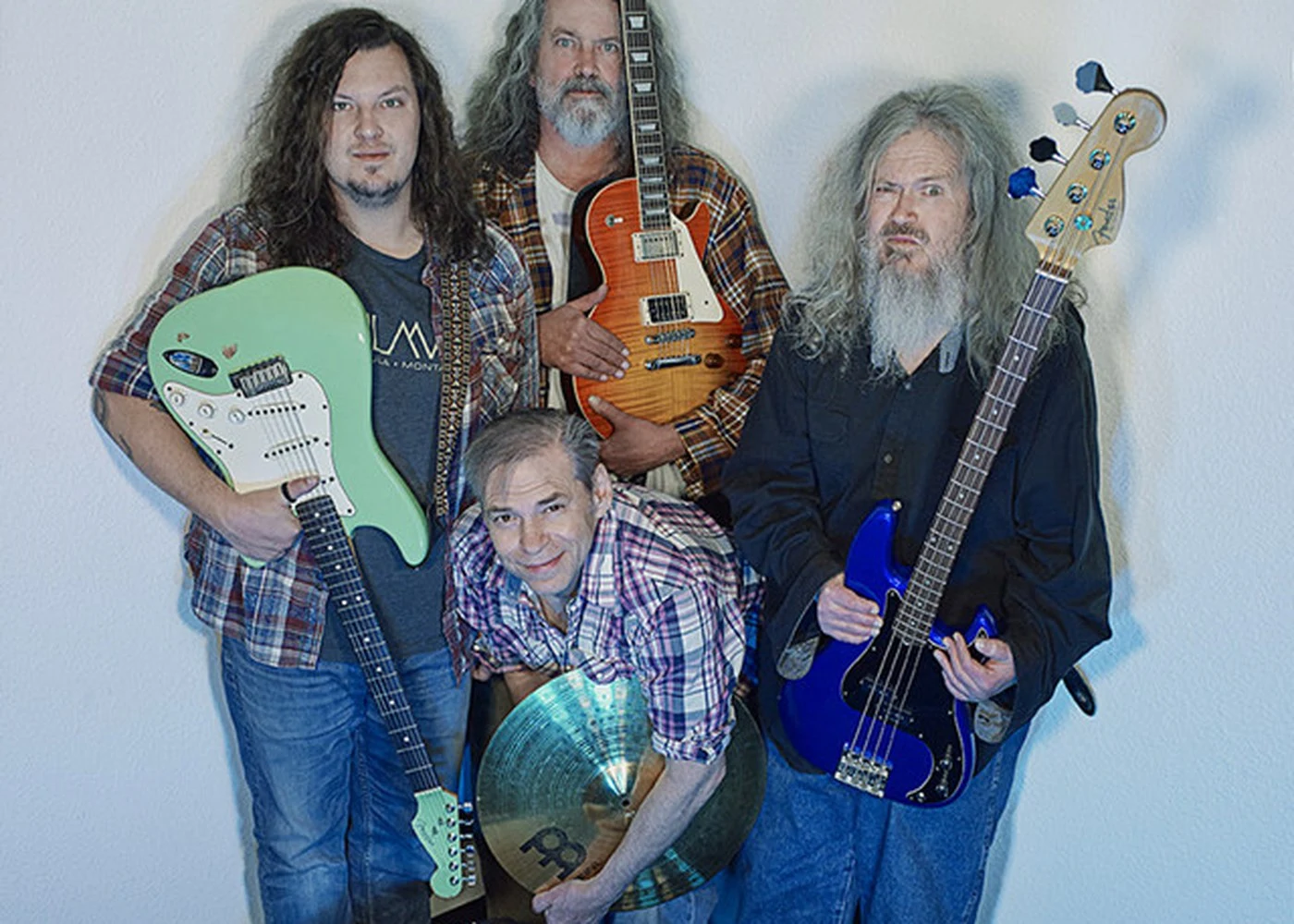
"Backwater" is about being stuck in one place and making peace with it. The narrator wakes each morning to the same sunrise, and the chorus insists that some things never change even when they seem rearranged, like water circling in a backwater instead of flowing downstream.
What does "a knife to open up the sky's veins" mean in "Backwater"?
The line turns a sunrise into surgery: red dawn streaks look like the sky cut open and bleeding. It also captures the jolt of waking up, blood moving through the body as light hits the face. When the verse returns, the blood flows "through the ceiling" instead of "through the feeling," moving from inside the narrator into the room around them.
What does "in the backwater swirling, there is something that'll never change" mean?
A backwater is a slow side-pocket of a river where water circles without going anywhere. The line finds something permanent inside that constant motion, suggesting that life can keep moving and still stay exactly the same. The song mirrors this by repeating its verses with only one word changed.
Lyric analysis powered by Scalpel.


Comments
Loading comments…