

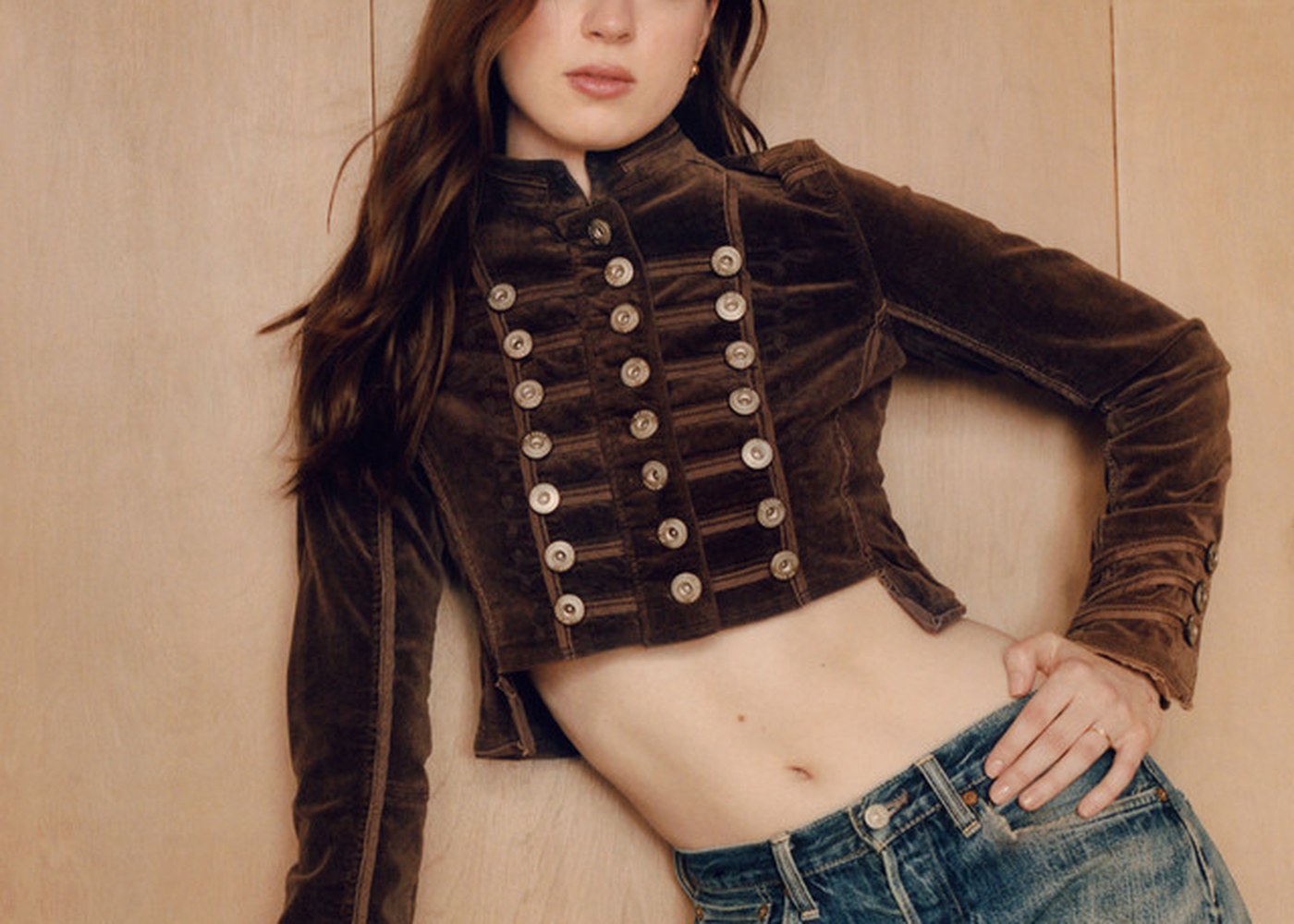
"The moon" is a song about the gap between the person you think you are in love and the person you actually become. The narrator wants power, wants distance, wants to stay on their own straight path toward freedom, and then another person breathes near them and all of it collapses.
The first verse sets up something harder to name than desire. The narrator wants something mythic: desert sand, flashing light, the night itself. "Be somebody new, be two" is almost a spell. It's the voice of someone who needs to transform the person in front of them into something large enough to justify what they already know is coming.
The pre-chorus is where the narrator's self-image lives. A straight, long path. A known song. A beat that leads to freedom. It sounds like discipline. It sounds like someone who has done the work of becoming independent and intends to stay that way. They know the road to freedom by heart.
Then the chorus arrives and rewrites everything before it.
"I am in your debt, I am no freer than the moon"
The moon doesn't get to choose its orbit. It circles the earth because gravity says so, not because it decided to. That's exactly what the narrator is confessing here: this isn't a choice they made. The pull is structural. The debt they feel toward this person isn't financial or moral, it's gravitational. They owe something they can't name and can't repay, and so they stay in orbit. The image of the handsome prince and maiden fair sits right before that line, and it stings a little, because fairy tales are supposed to end in freedom and love at once. This one ends in a beautiful captivity.
The second verse is the most honest section, and it's the one that costs the narrator the most to sing.
"I want to feel like I'm the center and you revolve around me"
The word "feel" is doing real work there. Not "I want to be the center." Not "I am the center." Just the feeling of it, borrowed and temporary. The narrator knows they aren't. They want the fantasy of control because the reality is its opposite. And then:
"But with just one kiss, I am down on my knees"
The contrast is brutal in the best way. One verse above, strings to pull, wishes granted, total command. One kiss later, kneeling. The narrator doesn't fall slowly. They don't negotiate or hold out. One gesture from the other person and the whole architecture of independence folds. "How do you do this to me?" isn't rhetorical. It's genuine bewilderment from someone who built themselves a map to freedom and watched it dissolve on contact.
The third verse circles back to the pillow, to the same request for transformation, but something has shifted. "Right up to the moment no one can erase" pulls in time, in permanence. The narrator isn't just asking the other person to be mythic anymore. They're asking them to be permanent. To be the time and place. That's a much larger ask, and it comes from someone who has already accepted the kneeling.
The line I keep returning to is the moon image, because it does something most songs about surrender don't bother to do: it refuses to frame the loss of freedom as tragedy. The moon is still the moon. It still shines. Its orbit is also its defining feature. The narrator isn't destroyed by this attachment. They're shaped by it, held by it, made legible by it. A fair reading exists where the song celebrates the surrender rather than mourning it, where "no freer than the moon" is something close to peace. I don't fully hold that reading, but it's genuinely there.
What the song finally argues is that self-determination and love are not things you can carry at the same time, at least not the way the narrator wanted to carry them. The path to freedom was real. The beat was real. And then a person lay down on a pillow, and the path is still there, straight and long, and the narrator is not walking it. They're in orbit. And the devastating, tender thing is that they already know the song well enough to see exactly where they are.
Frequently Asked Questions
What is "The moon" by Lizzy McAlpine about?
"The moon" is about the tension between wanting independence and being completely overtaken by love. The narrator has a clear sense of their own path toward freedom, but one intimate moment collapses it entirely. The song uses the moon's orbit as a metaphor for an attachment that feels less like a choice and more like gravity.
What does "I am no freer than the moon" mean in "The moon"?
The line compares the narrator to the moon, which orbits the earth not by choice but because of gravitational pull. The narrator is confessing that their attachment to this person isn't voluntary in any meaningful sense. They are bound the way the moon is bound, structurally, and the word "freer" makes clear they once believed they were building toward something different.
What does "with just one kiss, I am down on my knees" mean?
The narrator spends the second verse imagining themselves in control, pulling strings, having their wishes met. The kiss immediately undoes all of it. The line shows how fast and completely the narrator's sense of power dissolves in the presence of the other person. "How do you do this to me?" that follows is the narrator's genuine confusion at how little their own willpower holds up under a single act of intimacy.
Lyric analysis powered by Scalpel.


Comments
Loading comments…